

Short answer: the present structure is run by a nonprofit that produces the annual burning man event, while separate entities handle trademarks, permits, and public channels.
The phrase who owns burning man can mean different things. It can refer to the group that stages the event, the legal holder of the name, or the team that manages official communications. This article explains the current setup and why it changed over time.
We will separate verified facts from online rumors and give a brief history so the present arrangement makes sense. Expect clear sections on what the gathering is, the nonprofit that runs it, the legacy of Black Rock City LLC, governance, permits, finances, and intellectual property.
If you want a quick related read about event culture, see a comparison of outdoor stays at what glamping is.
Key Takeaways
- Today a nonprofit produces the annual burning man event and manages core operations.
- “Ownership” splits across production, trademarks, and official channels.
- This article focuses on the present-day structure with needed historical context.
- We separate verified records from common online claims.
- Upcoming sections cover governance, permits, finances, and intellectual property.
Burning Man in a Nutshell: What It Is and Where It Happens</h2>
Every year as summer wanes, participants assemble a transient city in the Black Rock Desert focused on art, participation, and self-reliance. Since 1990 the event takes place at Black Rock City in northwestern Nevada (about 100 miles north-northeast of Reno; coordinates 40.7869°N, -119.2042°W).
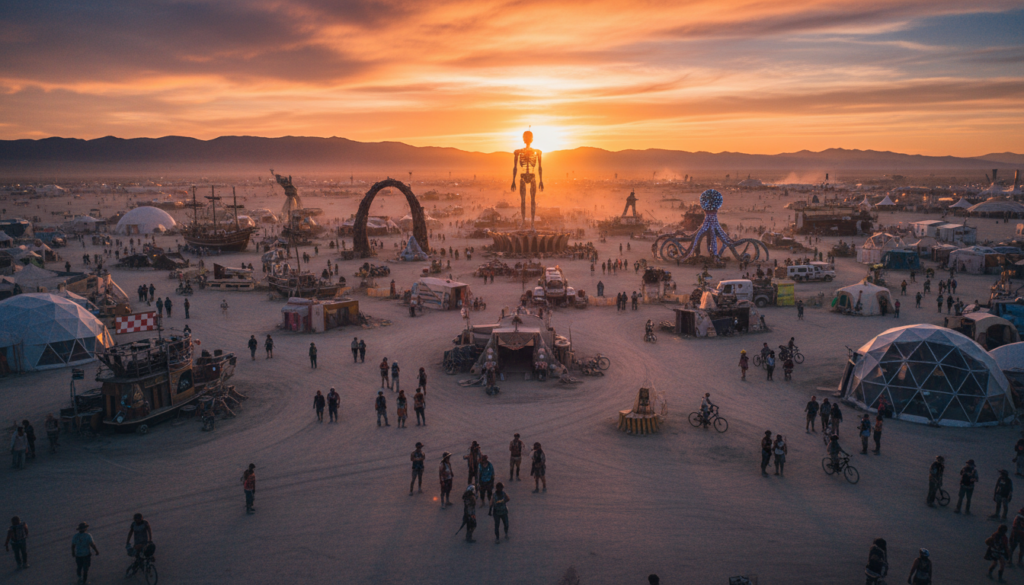
Black Rock City in the Black Rock Desert, Nevada
Black Rock City is a planned temporary city built on playa each late August and early September. The remote desert setting matters: limited services, intense weather, and flat open space shape how the city runs.
What makes it different from a typical festival
Rather than a concert-style lineup, this place is a collaborative experience. Attendees create art, performances, and camps. There are no traditional headliners; community-driven projects become the events.
The ethos is “no spectators.” You build, share, and participate. That expectation of participation and self-reliance changes logistics, safety, and permitting compared with standard festival models.
- Timing: week-long, building up to major burns in late August/early September.
- Structure: temporary streets, services, and volunteer-run systems.
- Culture: art, radical participation, and leave-no-trace responsibility.
who owns burning man</h2>
Short answer: Today the event is organized and operated by the Burning Man Project, a nonprofit that runs the annual gathering and related programs.
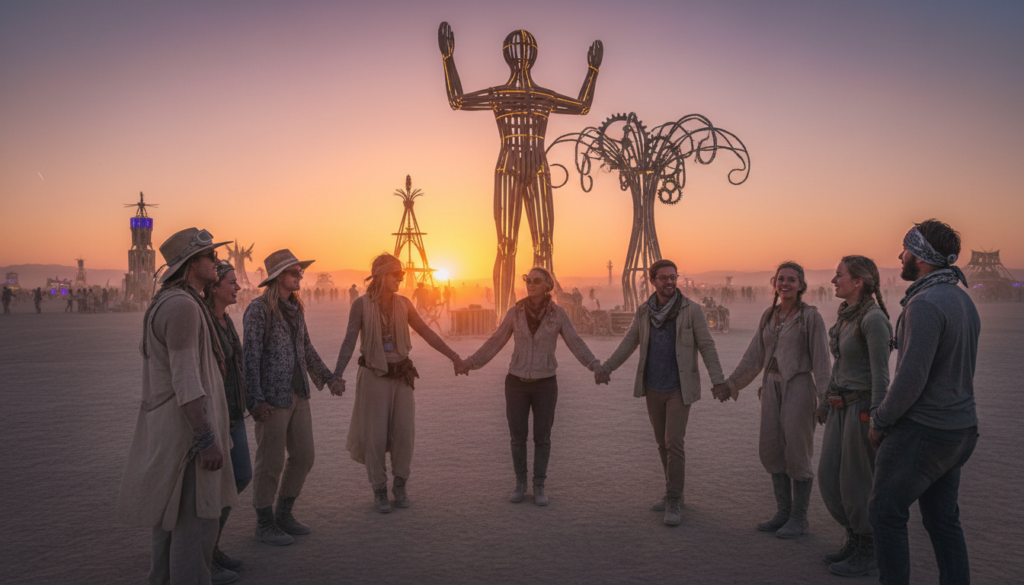
The short answer: the Burning Man Project
The Burning Man Project is the legal nonprofit that succeeded Black Rock City LLC in 2013. It produces the event, manages the official website, and oversees creative grants and year-round work.
What “owned by a nonprofit” means in practice
Nonprofit ownership means revenue from tickets and donations is reinvested into operations and programs. Governance follows nonprofit rules: a board, mission focus, and public reporting.
That status shapes priorities. Decision-making weighs cultural values and safety over profit. Public communications and fundraising are framed around mission and community responsibility.
- Event vs land: The nonprofit runs the event; the desert land is public and used under federal permits.
- Official info: For policies, tickets, or statements check the Burning Man Project and its official site or verified channels.
- Historical note: Earlier for-profit structures like Black Rock City LLC existed as the event grew; the nonprofit shift reflected years of expansion and new responsibilities.
For a quick related read about community-focused living and projects, see new homesteading.
The Organization Behind the Event: The Burning Man Project</h2>
A staffed nonprofit stewards the event’s values and a wider cultural ecosystem all year. The Project’s mission is to “facilitate and extend the culture that has issued from the event into the larger world.” In plain terms, it supports art, civic engagement, and community projects beyond the week in Nevada.
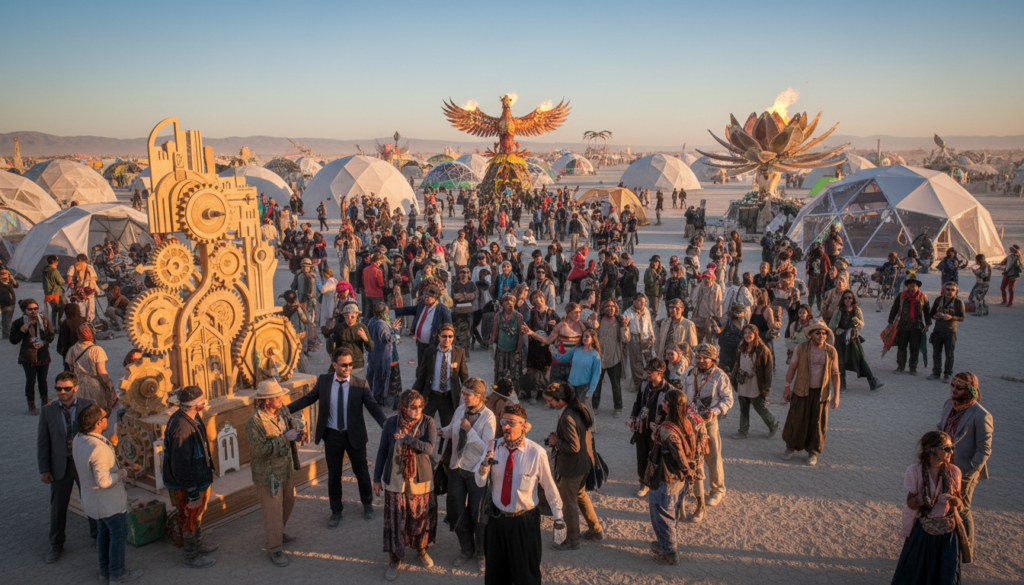
Mission and year-round role beyond the event
The Burning Man Project funds grants, runs training, and builds programs that spread core ideas. It supports regional events and networks so culture can live in many places, not just at the playa.
How the organization supports culture and communities
Support includes education, civic programs, and grants for creative work. Teams provide logistics help, leadership training, and disaster-response projects like Burners Without Borders.
- Education & training: workshops and toolkits for organizers and artists.
- Grants: funding for projects that reflect participation and responsibility.
- Regional support: resources to build local communities and events.
Visit the official website for verified programs, updates, and ways people can take part. This stewardship shows ownership is as much about culture and care as it is about gates or permits.
Black Rock City LLC Explained: The For-Profit Entity That Came First</h2>
In 1999 organizers formed a formal company to handle the event’s growing legal and logistical needs.
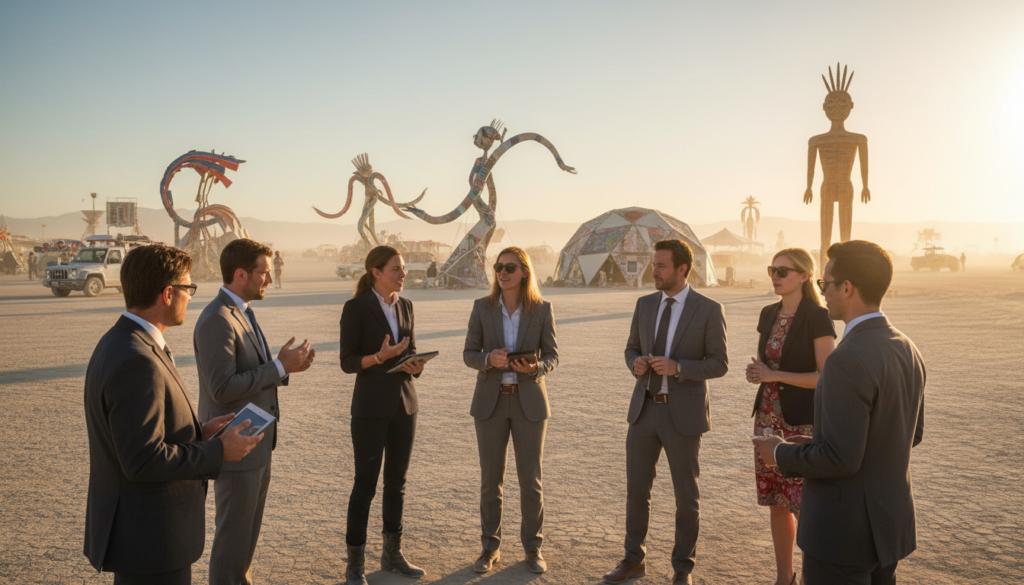
What the LLC was: Black Rock City LLC was a for‑profit legal entity created to manage contracting, permits, and rising liability as the gathering scaled up.
Why an LLC made sense in 1999
The founders needed a single accountable company to sign contracts, hire vendors, and carry insurance. An LLC limited personal liability for key members and streamlined operations during busy years of growth.
Founders and structure
Founding members included Larry Harvey, Harley K. DuBois, Marian Goodell, Crimson Rose, Will Roger Peterson, and Michael Mikel. Naming real members makes the history verifiable.
The 2013 change: In December 2013 the nonprofit became the parent organization and Black Rock City LLC became a subsidiary. That shift moved governance under the Burning Man Project while preserving some operational channels originally set up in the company.
- Not a separate owner: the LLC is now part of the nonprofit structure, not an independent owner.
- Practical role: some contracts and operations still run through the subsidiary for legal clarity.
From Baker Beach to the Desert: A Quick Origin Story (1986–1990)
A wooden effigy burned on a San Francisco shoreline in June 1986 and set a cultural ripple in motion. That first night on Baker Beach was organized by Larry Harvey and Jerry James, who built and lit the original figure.
What started as a small, creative ritual on Baker Beach grew over a few years. By 1990 the gathering had outgrown its urban place. Organizers needed more room, fewer city limits, and a safer setting for larger art pieces.

San Francisco roots at Baker Beach
The early events in san francisco were informal and community-driven. People gathered to watch the effigy burn and to join the creative experiment.
Larry Harvey and Jerry James as early builders
Larry Harvey and Jerry James are credited with the first build and burn. Their act became a repeating ritual and a focal point for a growing community.
The move to the Black Rock Desert
In 1990 the event moved to the black rock desert. The change allowed a planned temporary city, room for large-scale art, and fewer urban constraints. This shift turned a simple beach ritual into a multi‑day cultural gathering that differed from a typical festival.
“The move to the desert created space to scale art, participation, and community responsibility.”
- Timeline: 1986 first burn on Baker Beach; by 1990 the desert hosted the event.
- Why it mattered: more space, lower risk, and the start of a planned temporary city.
- Not a standard festival: early years were creative rather than commercial; growth later demanded formal rules and structure.
For a related look at outdoor stays and creative camping, see beach glamping.
Key Founders and Early Builders: Who Shaped the “Project”</h2>
Key people from San Francisco’s creative scenes turned an occasional stunt into a repeatable community event.
Larry Harvey, John Law, and early collaborators
Along with Larry Harvey and Jerry James, John Law played a clear role in shaping the early direction. These founders mixed simple construction skills with an appetite for public performance and large-scale art.
The Cacophony Society as an ideas pipeline
The Cacophony Society’s Zone Trips fed a culture of pranks, participatory stunts, and improvisation. Those experiments supplied many of the core ideas and methods that migrated to the black rock playa.
Community safety and the origin of the Black Rock Rangers
Harsh desert conditions made practical help essential. Volunteers organized to assist each other long before formal teams existed.
Michael Mikel, known as “Danger Ranger,” helped found the Black Rock Rangers as a peer-to-peer safety group. Rangers focused on de‑escalation and aid, not traditional security. That model reinforced shared responsibility among members and visitors.
These early choices—practical aid, creative participation, and mutual care—shaped the culture that later guided the nonprofit Project. The governance philosophy still reflects those roots: community norms, active participation, and stewardship over black rock events for years to come.
How Ownership and Governance Changed Over Time (1996–2013)
Governance for the event shifted in fits and starts as attendance climbed in the late 1990s. Early organizers moved from informal partnerships to formal legal steps to protect the name and manage growing risk.
Trademark and early partnerships
In 1996 a formal partnership was created to hold the official name. That move meant legal control and new responsibility for how the name was used across media and merch.
Liability and the switch to an LLC
By 1999 rising attendance, complex art builds, medical needs, traffic planning, and permit demands led to the formation of Black Rock City LLC. A company structure helped limit personal liability and simplify contracts with vendors and agencies.
The 2013 nonprofit realignment
In December 2013 Black Rock City LLC became a subsidiary of the Burning Man Project nonprofit. That change aligned legal form with long-term cultural stewardship and mission, shifting governance toward community-focused oversight.
| Year | Action | Why it mattered |
|---|---|---|
| 1996 | Partnership formed to own the name | Created legal control and brand responsibility |
| 1999 | Black Rock City LLC formed | Handled liability, contracts, and permits |
| 2013 | LLC became nonprofit subsidiary | Aligned governance with mission and long-term success |
“The shift from company to nonprofit reflected maturity: scale brought legal duty and community stewardship.”
Who Runs Burning Man Today: Leadership, Board, and Decision-Making</h2>
Leadership today combines long-term strategy with hands-on event logistics to keep Black Rock City functional. Governance rests with a nonprofit board and an executive team that set policy, not personal ownership.
Marian Goodell’s role
Marian Goodell is CEO of the Burning Man Project and a founding board member. She first attended in 1995 and has worked full-time since December 1996. Her role is operational: she guides staff, implements board decisions, and represents the organization publicly.
What leadership supports on the playa
Teams plan safety, build infrastructure timelines, run communications, recruit staff, and coordinate with federal and local agencies. Those tasks turn policies into a working temporary city.
Decision-making blends staff proposals, board approval, and community input. Policies are communicated through official channels and enforced by volunteer teams and paid crews.
“Leaders must balance radical self-expression with civic responsibility and public safety.”
| Area | Leadership Role | Outcome |
|---|---|---|
| Safety planning | Executive oversight & operations teams | Medical readiness and de‑escalation |
| Infrastructure | DPW scheduling and contractors | City grid and core services |
| Communications | Public affairs and on-site teams | Clear policy updates and emergency alerts |
| Agency coordination | Permits and interagency liaisons | Legal access and land use compliance |
For details on participant logistics and gear, see a related guide to planning a bell tent sleepover for group stays. Leadership choices shape how community expectations become lived experience each year.
The Ten Principles and Why They Matter to Ownership</h2>
The Ten Principles act as a cultural operating system that guides policy, branding, and behavior inside Black Rock City.
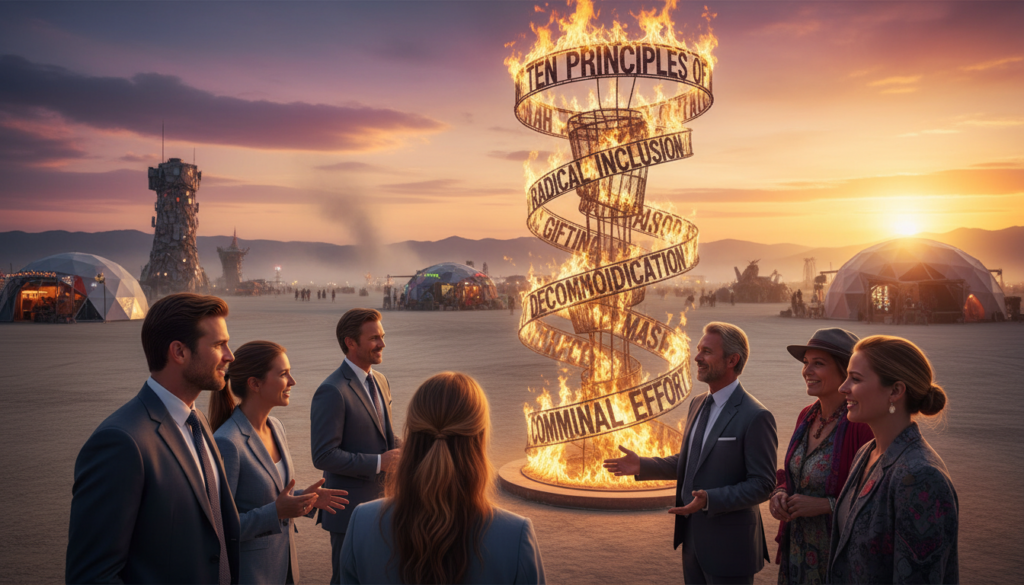
Decommodification, participation, and civic responsibility
Decommodification means limiting corporate sponsorship and visible ads. It keeps the event free from commercial pressure and shapes what the nonprofit permits on site.
Participation turns visitors into co-creators. That expectation changes logistics: people bring projects, share skills, and help run services.
Civic responsibility asks people to care for others and the place. This principle guides safety rules and community-led conflict resolution.
How principles shape real policies
- What’s allowed: art, gifting, and volunteer-run services.
- What’s discouraged: overt sponsorship and commercial sales.
- How conflicts are handled: peer teams and clear codes of conduct.
“Ten principles translate culture into rules that protect people and place.”
In short, these values justify governance choices. The nonprofit stewards a living culture, not just an event, and practical systems follow to protect life and the shared experience.
How Burning Man Is Built: Black Rock City Operations and the DPW</h2>
Skilled planners use a simple grid to turn an empty playa into a functioning temporary city. Teams arrive weeks early to stake streets, set infrastructure, and map addresses that first responders use.
The Department of Public Works (DPW), started by Will Roger Peterson and Flynn Mauthe, leads the build. DPW crews grade roads, place sewage and water systems, and erect core structures that keep the event running.
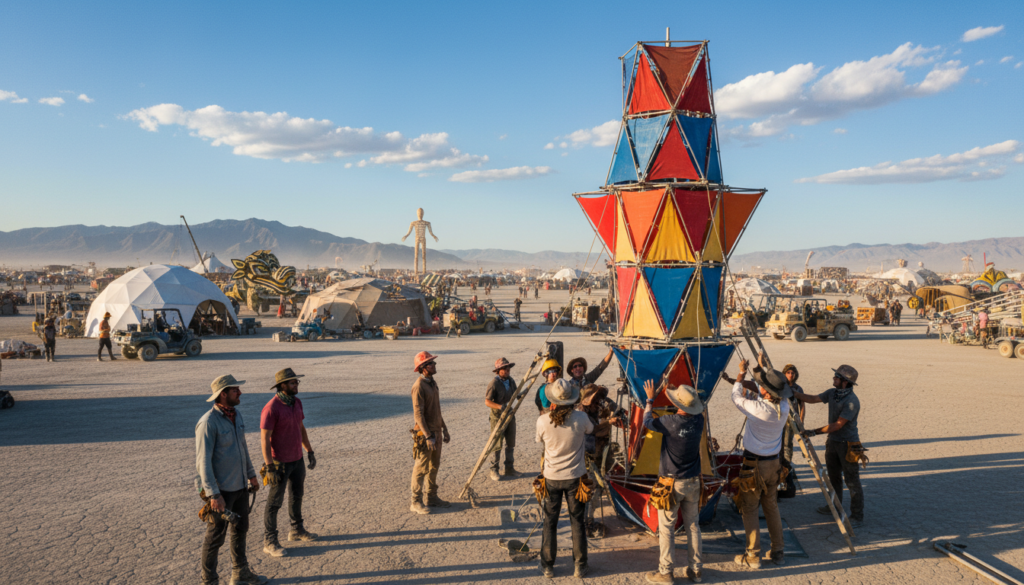
Department of Public Works and the grid layout
The grid is a creative choice and a safety tool. Clear addresses let medics and Rangers reach a location fast. Streets, blocks, and signs make navigation possible across a vast, flat site.
Rod Garrett’s design legacy
Architect Rod Garrett designed the city layout and many core elements, including several Man bases and Center Camp features. His plans made builds repeatable and safer year after year.
Art and the central effigy rely on engineering, not just inspiration. Large pieces need foundations, rigging, and coordination with DPW schedules.
“Repeatable infrastructure lets creativity scale without sacrificing public safety.”
| Function | DPW Role | Outcome |
|---|---|---|
| Grid & addresses | Stake and sign streets | Fast emergency response |
| Core structures | Build platforms and utilities | Reliable shared spaces (Center Camp, plazas) |
| Art support | Foundations and crane ops | Safe installation of large works |
| Logistics | Coordination with vendors | Functioning temporary city systems |
Ownership and operations link tightly: the nonprofit organizer must fund and authorize these systems. That responsibility covers design, safety, and the teams that keep the place running.
Many roles act like municipal departments: sanitation, traffic, communications, and safety. Volunteers and trained crews staff them, which leads naturally to the volunteer teams described next.
Volunteers, Teams, and Community Roles That Keep the Event Running</h2>
A small paid staff relies on thousands of volunteers to keep essential services flowing across the temporary city. More than 2,000 volunteers fill roles that turn an open playa into a working place people can live in for a week.
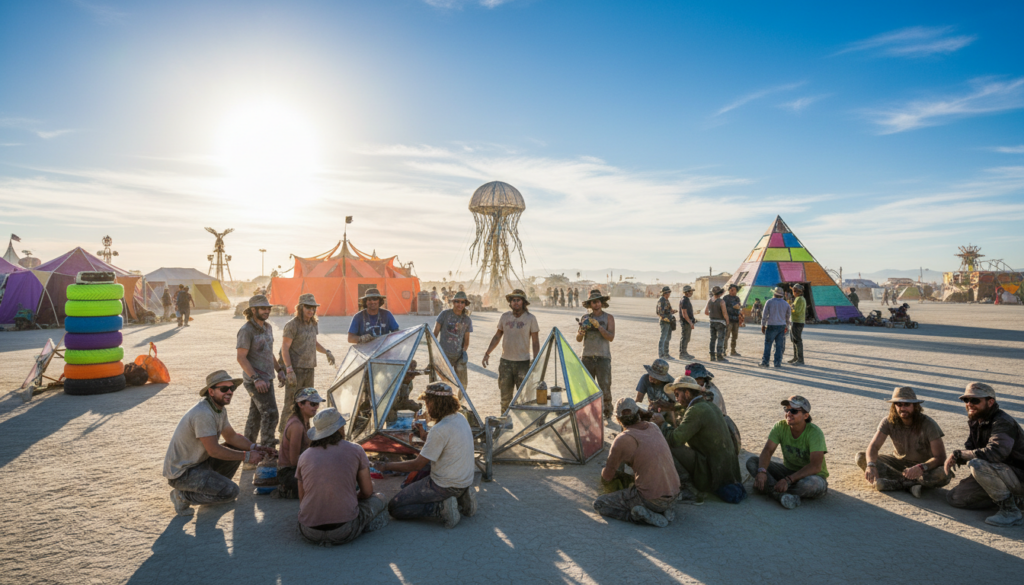
Volunteer-driven “city services” and community responsibility
Volunteers run sanitation crews, traffic teams, camp support, and logistics. These groups are the backbone of the experience.
That network is not a municipal government. Instead, coordinated teams provide services so attendees can navigate harsh weather, dust, and long days.
Rangers and other teams participants rely on
Rangers act as friendly responders focused on de‑escalation and peer support. Medical volunteers, DPW crews, and communication teams round out help that keeps people safe.
“Many services exist because people step up — not because they buy a package.”
- Participation matters: volunteering cements the culture and reduces spectator behavior.
- Expect to be responsible for your own survival needs; community help is available if things go sideways.
- That mix of personal responsibility and neighborly aid makes this event feel different from other large gatherings around the world.
For practical gear and temporary-stay ideas, see a related guide to a glamping tent.
Permits, Public Land, and Regulation: The BLM Relationship</h2>
Because the gathering takes place on government-managed land, organizers must follow strict conditions to run it each year.
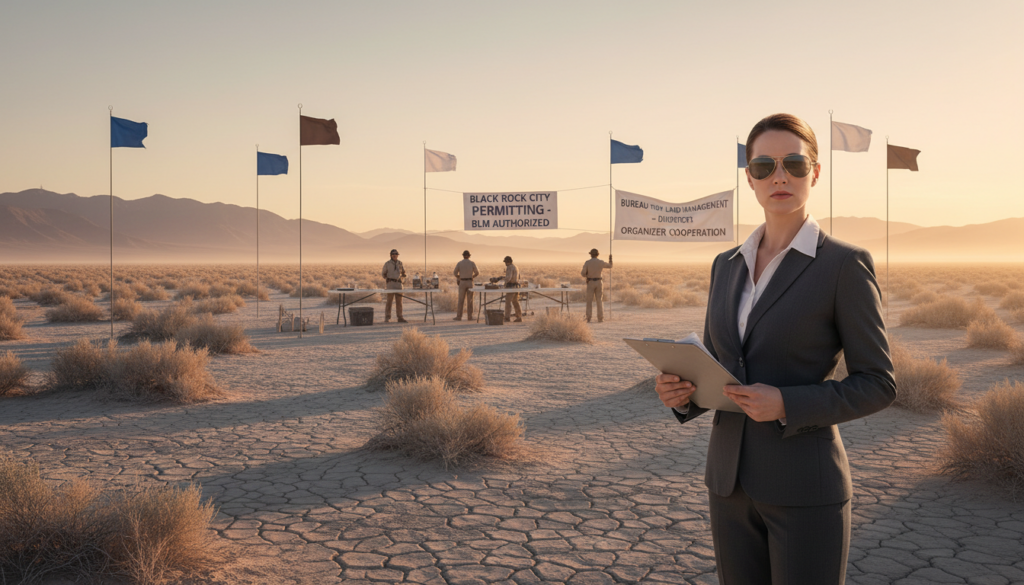
Why permits matter in the Black Rock Desert
Public‑land access requires permits. Since 1991 the Bureau of Land Management has issued conditions that let the event use the playa. That legal permission is why the nonprofit operates with formal plans, contracts, and predictable logistics.
Rules that shape the experience
The BLM sets practical limits that visitors notice immediately. A strict grid layout helps first responders find locations fast.
- Speed: a posted 5 mph limit in camp areas.
- Vehicles: driving is restricted to approved mutant and service vehicles.
- Burns: large works need approved platforms and protocols.
- Trash fence: a 9.2‑mile perimeter catches wind‑blown debris and marks the boundary.
Leave No Trace and environmental expectations
Leave No Trace is central. People pack out what they bring, follow fuel and burn rules, and avoid banned items such as fireworks or certain animals during some years.
“Permits mean compliance, not ownership; they let the event use public space responsibly.”
| Requirement | Why it exists | Visible effect |
|---|---|---|
| BLM permit (since 1991) | Legal access & conditions | Structured planning and reporting |
| Vehicle & speed rules | Safety and dust control | Slower camp traffic, fewer accidents |
| Approved burn platforms | Fire safety and air quality | Coordinated burns with inspections |
| Trash fence & LNT | Environmental protection | Less debris, easier cleanup |
Permitting costs and mitigation work add real expenses. Compliance affects ticket pricing and the long‑term sustainability of the event. For related ideas on caring for outdoor spaces, see a beautiful backyard garden.
Money and Sustainability: How the Event Is Funded and Why Finances Make Headlines</h2>
Behind the art and gifting culture lies a tight budget that funds a whole city for one week.
Tickets are the largest single revenue source. Ticket income pays for roads, sanitation, medical teams, the DPW build, radios, and permits that let Black Rock City operate.
Tickets, infrastructure, and the cost of building a temporary city
Costs rise quickly. Building a temporary grid, hauling gear, hiring contractors, and meeting environmental rules add up. Staff, vendor contracts, and safety systems are ongoing year‑round expenses.
Recent context: fundraising and 2024–2025 pressure
In 2024 tickets did not sell out for the first time since 2011. The nonprofit launched a $20 million campaign in October 2024. By December 2024 CEO Marian Goodell reported $14 million still needed toward 2025 goals. Reporting in 2025 again noted non‑sellout attendance and continued financial strain.
What unsold tickets mean operationally
- Cash flow: less revenue affects vendor deposits and prep costs.
- Planning confidence: uncertain demand complicates staffing and material orders.
- Mission tradeoffs: as a nonprofit, messaging stresses sustainability but real money keeps the event viable.
“Ticket revenue underwrites much of the city — without it, the logistics and safety budget shrink.”
Money is one part of the ownership story; next we look at brand and intellectual property control.
Related reading on community projects
Brand, Name, and Intellectual Property: Who Controls “Burning Man” and Black Rock City</h2>
A clear brand policy helps the community spot official channels and prevent misused promotions.

How the name became protected: In 1996 organizers set up a formal partnership to hold the name and related marks. That legal step created a simple rule: only authorized groups could call something official.
What the nonprofit controls today
The Burning Man Project manages the official website, branding rules, and production of the annual event. Control covers logos, approved uses of the title, and public messages published on the main site.
Why official language matters
Only text on the official website and authorized channels counts for ticket terms, safety rules, and policies. That protects participants and reduces confusion when similar events appear elsewhere.
- Protects the name from misleading promotions.
- Allows licensing for vetted regional events while keeping core values intact.
- Supports consistent standards across Black Rock City and affiliated projects.
“Brand control keeps the culture clear and the public safe.”
Burning Man Beyond Nevada: Regional Events and the Wider Network</h2>
Regional gatherings let people taste the event culture without crossing state lines. These smaller events follow the Ten Principles and mirror aspects of the big week in Nevada, while remaining independent in scale and logistics.
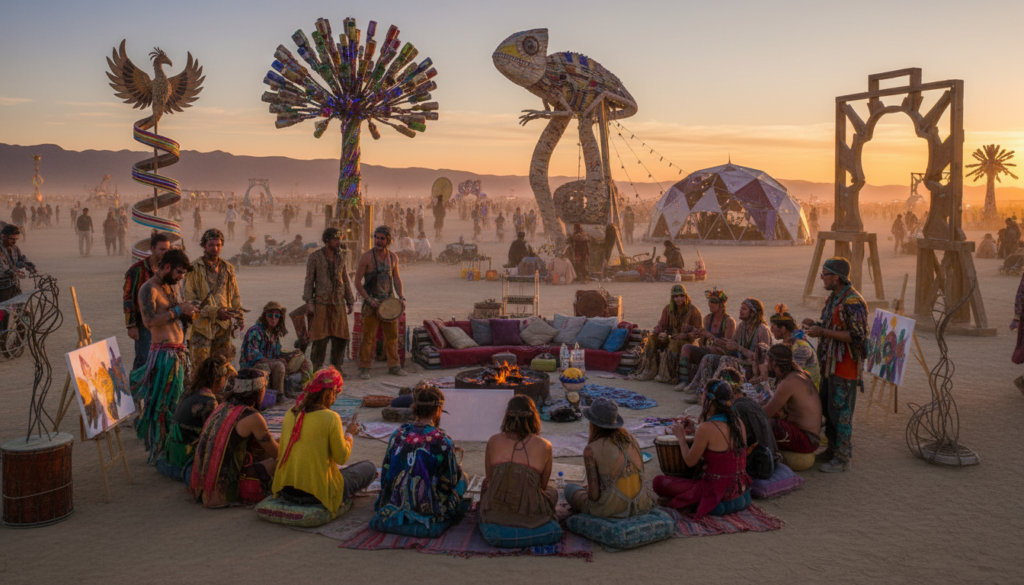
How the Burning Man Project supports regional communities and events
The Project endorses and advises many regional events worldwide. Support includes guidance on safety, alignment with core principles, and access to toolkits for organizers.
Official affiliation does not make a regional gathering identical to the Nevada event. Instead, it grants access to branding rules, training resources, and occasional grants.
Why the culture exists outside Black Rock City
Regional events spread participation and creative ideas back to the larger community. They let people join a similar experience closer to home and test new art, camps, or service models.
“Regional networks help culture travel: local events return ideas to the wider community while expanding access to participation and shared life.”
- What regional events are: smaller, independent gatherings guided by the Project’s principles.
- Project support: advice, principle alignment checks, and occasional funding.
- Benefits: easier access to community, more places to practice participation, and a flow of ideas into the main event.
- Limits: local scale can change norms; not every practice scales exactly the same.
| Aspect | Regional role | Effect |
|---|---|---|
| Scale | Smaller gatherings | Lower cost, local access |
| Support | Project guidance & resources | Safer, principle-aligned events |
| Brand control | Official affiliation rules | Clarifies what is “official” versus inspired |
| Community growth | Local participation networks | More frequent opportunities to practice culture |
Why ownership matters here: because the nonprofit protects the name and brand, it defines which gatherings can claim official ties. That clarity helps reduce confusion as the culture spreads across the world and limits misinformation about legal control.
Sorting Fact From Rumor About Ownership</h2>
Claims that a major tech firm bought a 51.2% stake are classic viral noise: a catchy number, a famous name, and little verification.
How to verify ownership claims using primary sources and credible reporting
Why rumors spread: the event’s fame attracts attention. When many people repeat a short post, confusion grows fast.
Red flags include satirical job titles, absurd “minor edits” that change the culture, or articles with no links to filings.
- Check primary documents: nonprofit filings and official statements.
- Look up reliable outlets for consistent reporting and expert quotes.
- Visit the official website for published policies and contact info.
“Verified sources show the Burning Man Project runs the event; Black Rock City LLC is a subsidiary and burningman.org hosts official communications.”
Scan the language and sourcing in any article or social text. If it quotes a real filing, you can follow the document. If not, treat the claim as unverified.
Why this matters: separating fact from rumor protects the community and helps people make sound choices about attendance, donations, and trust.
Conclusion</h2>
This conclusion ties the legal structure, history, and daily logistics into one clear answer: the nonprofit at the center now guides the festival, and the legacy company remains part of that framework.
From a small effigy on Baker Beach in San Francisco, built by Larry Harvey and Jerry James, the gathering moved to the Black Rock Desert and became a planned temporary city focused on art, participation, and principles.
Operations, permits, and finances shaped the change: growth required accountability, contracts, and sustainable systems. For ticket rules, policy, or official statements, consult the website and public filings for reliable information.
One more thing: each year brings a new theme and new art, but the same underlying structure keeps the desert experience possible. strong,