
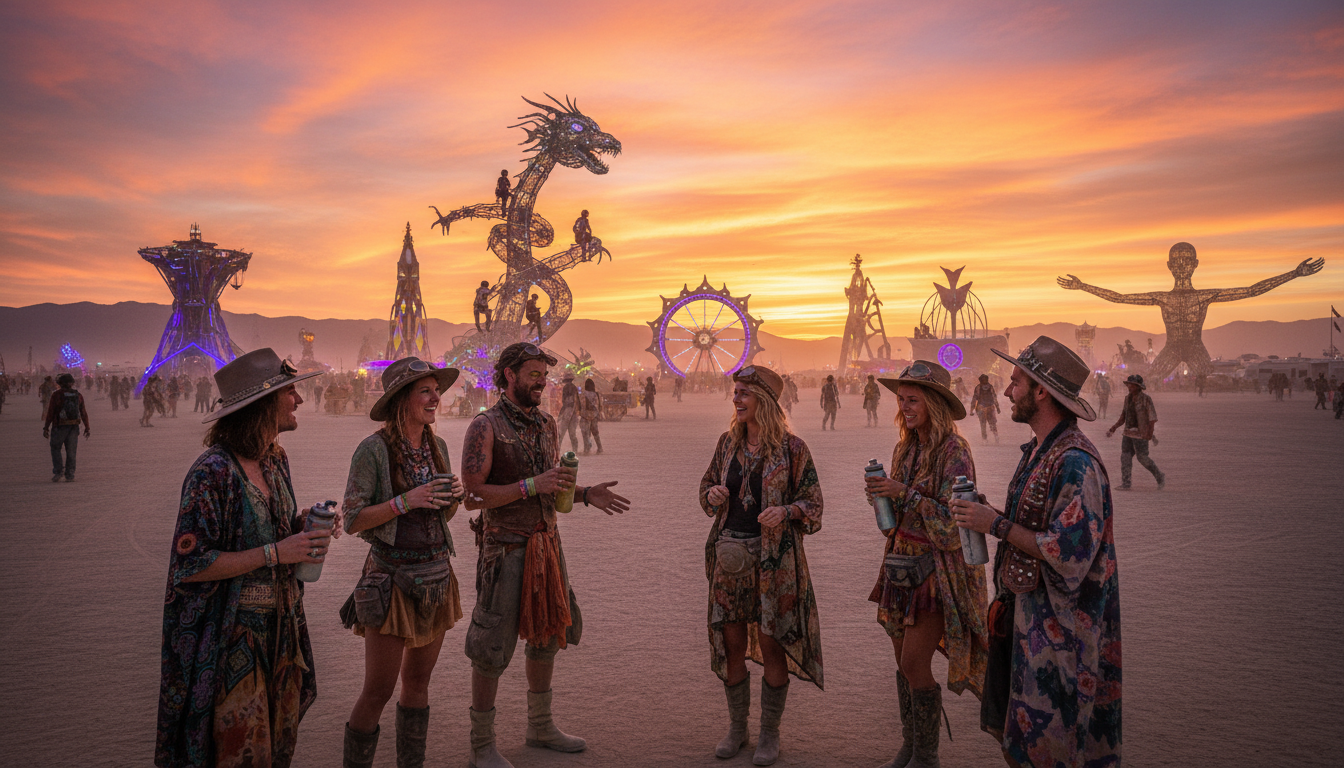
Burning Man 2025 opens on Sunday, August 24, 2025. More than 70,000 people are expected in the Nevada desert near Reno, forming Black Rock City for a unique week of art and community.
This short guide explains why you should plan early. Gate opening, your arrival, and build week are different ways to mark the event’s beginning. Your personal timeline depends on tickets, travel, and camp duties.
We will cover timeline, tickets, routes, packing, participation, principles, and safety. Expect no traditional lineup; the festival has no rostered shows, so prepare basics then stay open to discovery.
Show up prepared and ready to contribute. Black Rock City only works when participants take part. Plan well and you’ll face fewer surprises, a smoother setup, and a richer overall experience for the week.
Key Takeaways
- Burning Man 2025 begins Sunday, August 24, 2025; plan well in advance.
- “Start” may mean gate opening, arrival, or build week—choose based on tickets and camp roles.
- This guide walks through timeline, tickets, packing, and safety for a calm arrival.
- Black Rock City is a participant-driven temporary city; contribute, don’t just consume.
- No fixed lineup—prepare essentials, then embrace surprise and discovery.
when does burning man start and what “start” really means at Black Rock City
Figuring out the true “beginning” helps you schedule travel, camp duties, and supplies. There is no single moment that fits everyone; the event unfolds in stages.
Why the opening can include arrival, the gate, and a week of build
Some people mark the gate opening as the time the festival becomes possible. Others treat the day they first set up shade, water, and kitchens as the real kickoff. For many camps, build week is the operational start.
Plan backward from your goal: early arrival if you want to help construct or volunteer, later arrival if you mostly want to explore. Expect traffic and lines — your “time to park” may be hours after you hit the gate.
Where it takes place each year: Nevada’s Black Rock Desert
The event takes place on the flat playa of the black rock desert in the nevada desert. Each year participants build Black Rock City as a temporary place and then remove it when the day ends.
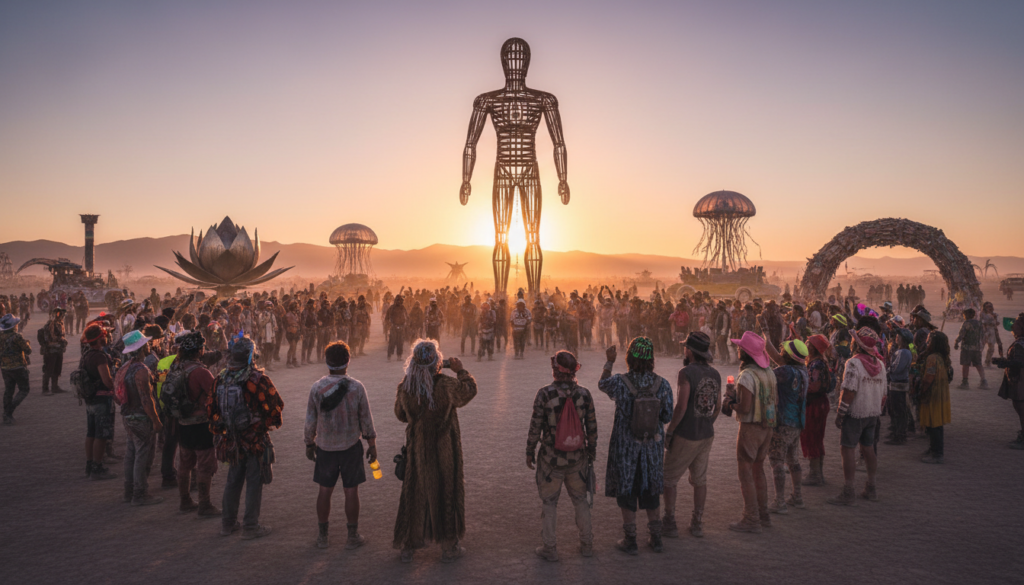
“Plan your arrival around your role: builder, volunteer, or explorer.”
- Gate opening, personal arrival, and camp build are distinct “starts.”
- Many people see arrival day as the true beginning because setup must happen first.
- Know that traffic can add hours to your expected start time.
Tip: Decide what kind of start matters to your crew, then coordinate rides and supplies to match that plan.
Burning Man at a glance: the event, the city, and the scale
What began as a small San Francisco gathering now fills a city-sized footprint of creative life.
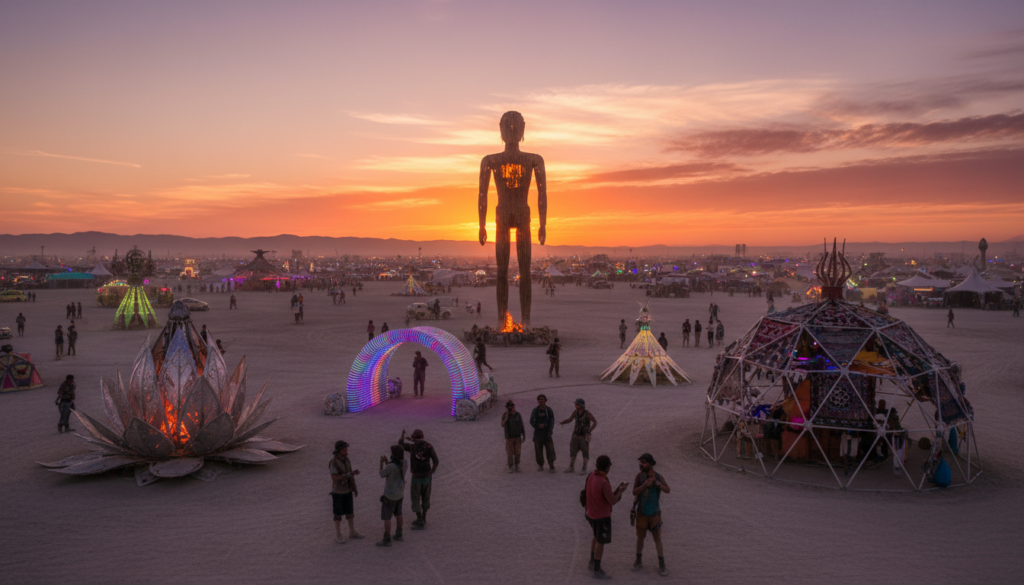
From a beach burn to a 70,000–80,000 festival
In 1986 a group of about 20 friends lit a wooden figure on Baker Beach near San Francisco. That simple act grew into a global cultural phenomenon.
Today the event draws roughly 70,000–80,000 people. Plan for water, food, navigation, and time at that scale.
Black Rock City as a temporary community
Black Rock City is a pop-up town built by its residents. Camps, services, and basic infrastructure come from participants and camps.
What sets this apart from other festivals
There is no set lineup of headliners. Instead, burners create events, theme camps, interactive art, and mobile art cars. You follow curiosity and invitations more than schedules.
For a sense of the roots, see the original San Francisco beach origins.
A quick history to understand today’s Burning Man culture
Understanding the early years clarifies how a small ritual turned into a city-sized experiment.
Baker Beach beginnings and Larry Harvey naming the ritual
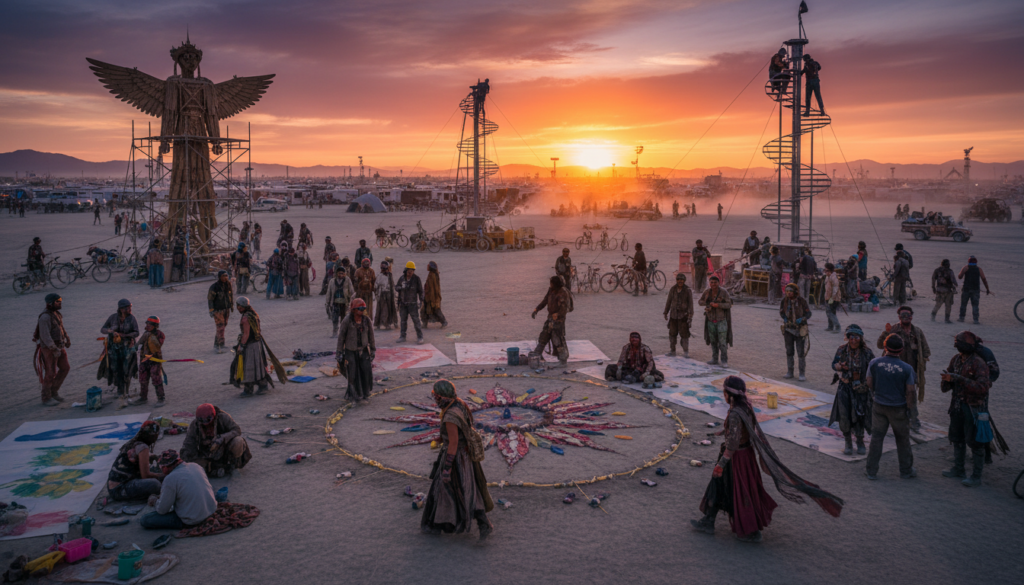
In 1986 a group on Baker Beach carried a nine-foot wooden figure to the sand and set it alight. The next year the figure grew to 15 feet, and by 1988 it reached about 40 feet. Larry Harvey gave the ritual its name, and that label stuck as the gathering grew.
The move to the Black Rock Desert and growth of the central figure
By 1990 some founders relocated the gathering to Nevada’s wide playa. The open landscape allowed larger art and a true temporary city to form. By the mid-1990s the structure and production became more elaborate, and yearly themes helped guide builders and camps.
How civic permission and planning shaped the modern event
Organizers later worked with the Bureau of Land Management for formal permits. That shift brought safety teams, rules, and planning requirements. These civic steps let the community host a large-scale festival while protecting the playa.
“What began as a small beach ritual became a participatory week where community and experiment lead the experience.”
For a look at the beach origins that seeded this culture, see beach origins. The history helps set expectations for the event’s scale, rules, and creative energy today.
The week in the desert: how the Burning Man timeline typically unfolds
A typical week on the playa moves from setup to discovery, with clear peaks and quiet moments.
Arrival means finding your camp and claiming shade. Set up shade, sleep, and a kitchen before you explore. Do that first so you won’t burn out.
Arrival and setting up camp in Black Rock City
Expect build tasks, shared tools, and plenty of hands. Coordinate with your camp on water, power, and trash plans.
Exploring art, mutant vehicles, and theme-camp happenings
Wander to see large installations and mobile art cars. Art and surprise events pop up any hour, so leave time for aimless roaming.
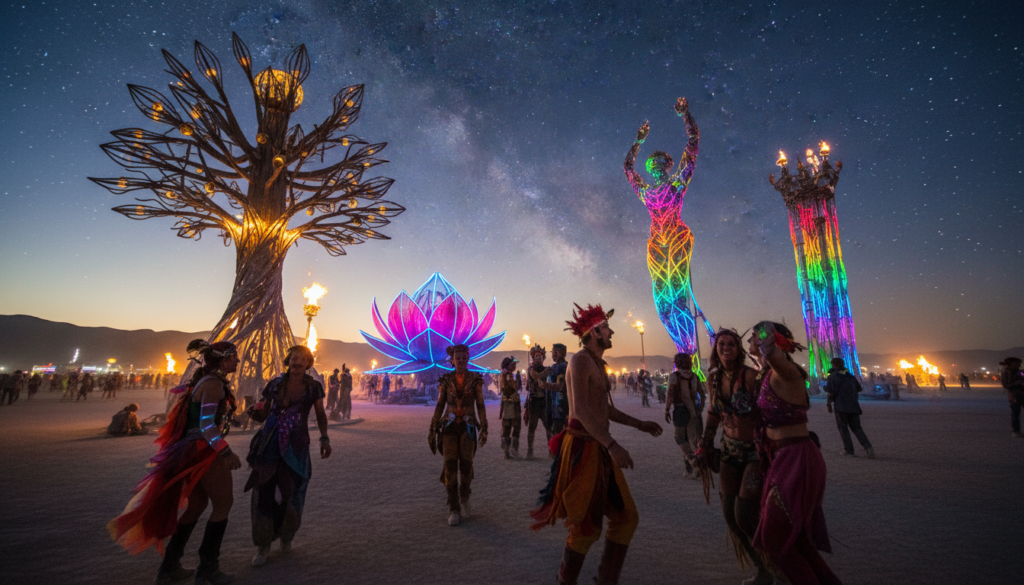
The Man as a nighttime beacon and a central gathering point
John Law’s neon tubes made the Man visible across the playa. At night it serves as a navigational beacon and a hub for big gatherings.
The Temple as a space for remembrance and reflection
The Temple acts as the event’s quieter counterpoint. People leave messages and grieve, often visiting at a slow, reflective pace.
“Plan your first day around shelter and sleep; everything else looks better from a stable camp.”
- Arrival and camp setup
- First explorations and art hunts
- Deep-playa nights and major burn ceremonies
- Reflection at the Temple and gentle wind-down
First-day reality check: set up shade, secure water, and get rest before chasing every event. Pace your time so you last the full week.
| Phase | Main focus | Quick tip |
|---|---|---|
| Arrival | Setup camp, claim shade | Assemble essentials first |
| Exploration | Art, mutant vehicles, theme camps | Leave white space to wander |
| Reflection | Temple visits, calm nights | Go slow; bring water and a flashlight |
Tickets and entry planning for Burners coming from the United States
Getting a ticket is permission to enter; treating it like a plan avoids last-minute stress. Start with a clear timeline after you secure access. This keeps packing, rides, and camp duties predictable and calm.
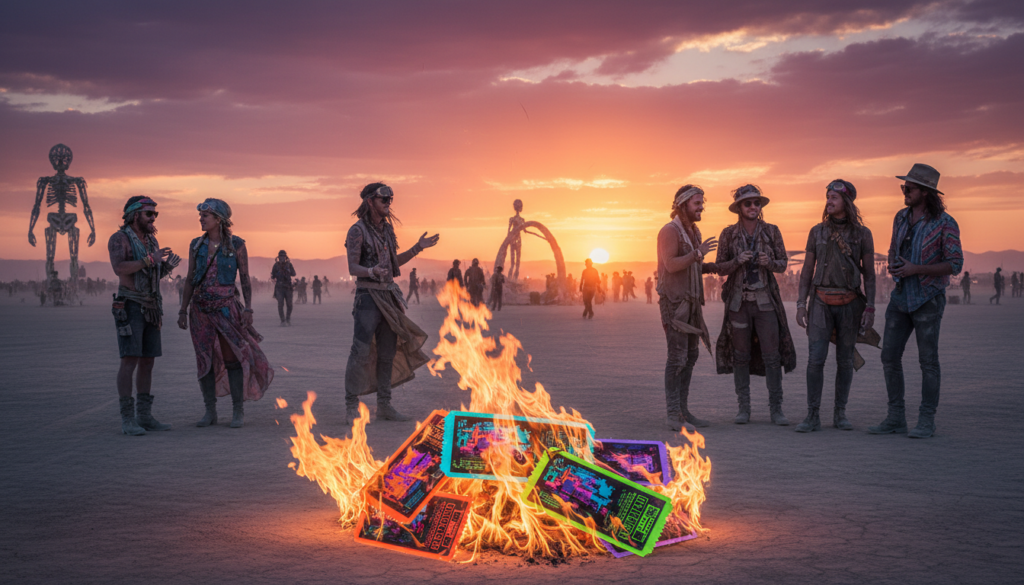
How the lottery-style ticketing system works and what to do early
The event uses a lottery-style ticketing system: register on the official site, wait for selection, then buy within the purchase window if chosen. Registration is required and demand is high.
Sign up early rather than hoping a last-minute option appears. Early planning gives you time to coordinate travel and group logistics.
What to double-check after you get tickets
Once you have tickets, confirm these items to keep your journey smooth and safe.
- Camp coordination: confirm role, schedules, and shared supplies.
- Vehicle plan: driver assignments, parking passes, and fuel stops.
- Checklist: storage bins, supply runs, and backup contacts if friends drop out.
- Timing: align arrival with build tasks and gate opening windows.
“A ticket gives entry; self-reliance gives comfort.”
Make sure your prep begins weeks ahead—packing, staging, and long desert drives take time. The smoother your pre-playa work, the more present you will be on-site.
Getting to Black Rock City: travel routes, timing, and what to expect on the way
Plan your road days like a mission: top off fuel, regroup, and leave a cushion for delays. Treat Reno as the last full-service stop before the nevada desert.
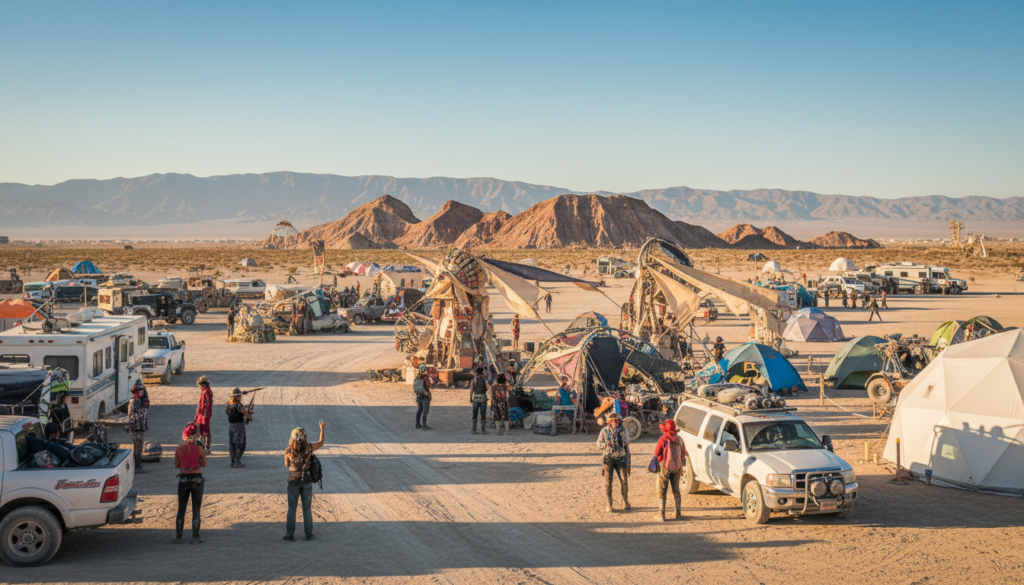
Why Reno makes sense as a staging point
Reno gives you last-minute supplies, easier meetups for caravans, and a calm place to reset before the desert. Many crews swap gear, check trailers, and finalize water plans there.
Route and timing mindset
Aim to arrive with buffer time. Plan driving shifts so no one is exhausted on entry day. Expect increasing traffic and checkpoints as you approach the playa.
Practical staging tasks
- Top off fuel and inflate tires.
- Finalize water and food packs; make sure critical items are accessible.
- Do a last grocery run and confirm caravan meeting points.
“Arrive with time to breathe — your day on the road matters as much as the day on the playa.”
What to bring for a week on the playa: self-reliance essentials
Packing smart for a week on the playa cuts stress and keeps you present for the whole experience. A short checklist makes it easy to cover the basics and avoid midweek emergencies.
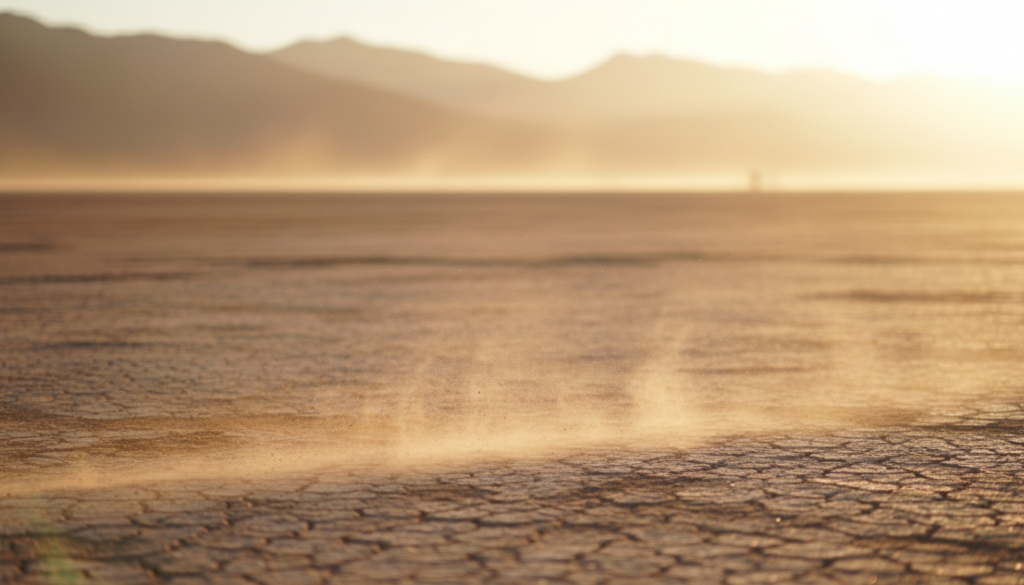
Water, food, and shelter planning for desert conditions
Bring enough water for drinking and cooking: plan at least 1.5 gallons per person per day. Pack calorie-dense, nonperishable food that’s easy to prepare.
Shelter should handle sun, wind, and cold nights—sturdy shade, sand anchors, and warm sleeping layers are essential.
Dust strategy: clothing, eye protection, and keeping gear functional
Dust is constant; treat protection as non-negotiable. Bring goggles, comfortable face coverings, and zip-locks for electronics.
Keep moving parts like bike chains and zippers wiped and lubed. Spare goggles and sealed containers save gear from early failure.
Hygiene realities: no showers on-site and how to stay comfortable anyway
There are no showers at Black Rock, so plan wipes, dry shampoo, and basin-rinse methods. Use camp handwashing stations and rotate clean sleep clothes.
Self-reliance reduces stress: the more prepared attendees are, the more they can relax and join the community.
- Don’t forget: extra headlamp batteries, spare goggles, sealed storage, and a compact first-aid kit.
How to participate instead of just attend
Black Rock City is built by hands, ideas, and small acts — participation turns a desert plan into a living scene.
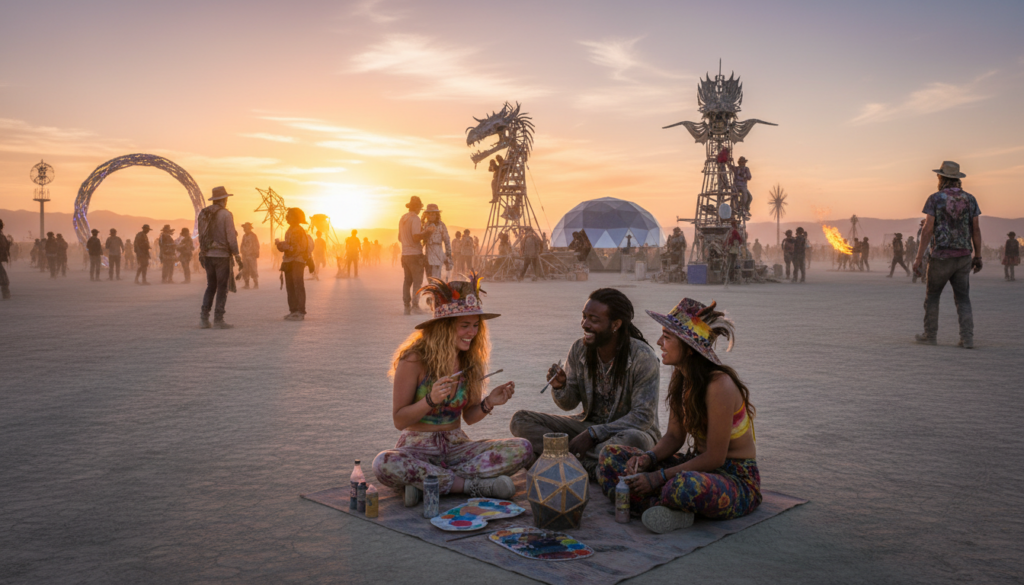
Reframe your trip: move from spectator to contributor. The event thrives because people pitch in with skills, time, and curiosity.
Volunteering and city support
Choose a high-level volunteer role to help keep the city running. Shifts support operations, safety teams, and camp logistics.
Many roles need basic training and a few hours a day. Volunteering gives structure and an easy way to meet neighbors.
Build or back art and camps
Participants design interactive sculptures, theme-camp activities, and mobile art cars. You can join a crew or offer practical help—carpentry, wiring, or cooking.
Smaller contributions matter: fix bikes, carry water, or host a short workshop. For simple build ideas, check a guide to DIY home decor projects for inspiration you can adapt on a budget.
Gifting culture in action
The gift economy shows up as free food, offers of help, or shared experiences with no expectation of trade. A cup of sunrise coffee or a helpful hand often becomes the most memorable thing you bring.
“Thousands of small offerings make the playa feel like a living community.”
The principles that shape the experience in Black Rock City
Think of the Ten Principles as cultural code: they shape choices more than enforce rules. Written by Larry Harvey in 2004, these statements explain why Black Rock City feels different from other events.
Ten guidelines, not a rulebook
The principles are community norms. They offer a shared description of values like Radical Inclusion, Gifting, and Decommodification.
They steer behavior and the overall experience without acting as law. Respect them to fit into the culture and help the city function.
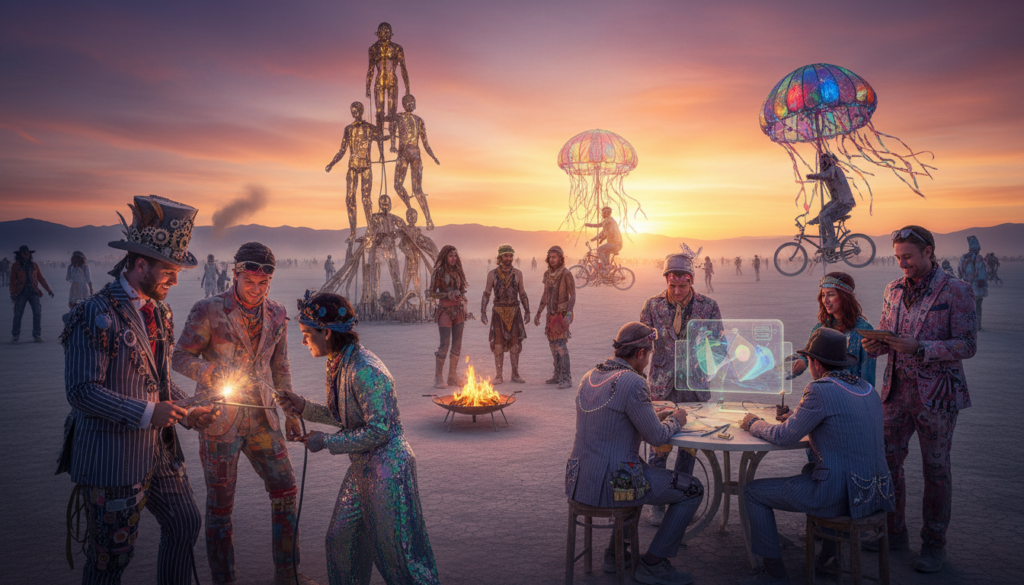
Practical self-reliance advice
Radical self-reliance means bring what you need and know your limits. Pack water, shade, spares, and basic tools so you can rely on yourself.
Don’t expect vendors to rescue you. Plan, test gear, and assign backup roles inside your camp.
Express yourself with care
Radical self-expression invites costumes, art, and bold ideas. Choose creative acts that are joyous and respect other people’s space and consent.
Bring materials for your contribution and think through safety and cleanup before you perform or install art.
Leaving No Trace and civic responsibility
Leaving No Trace is non-negotiable: prevent MOOP, secure trash, and dispose of waste before you leave. Small habits—like sealed bags and a cigarette-butt kit—make a huge difference.
Civic responsibility ties directly to safety and respect. Thousands co-create this temporary city; follow shared rules, respect boundaries, and pitch in for cleanup.
“The principles are the operating system that lets a diverse crowd build a functioning, creative temporary city.”
For packing tips that support self-reliance and camp contribution, see this glamping packing guide.
Safety, leadership, and rules to know before you go
Knowing who runs the event and what safety teams do helps attendees plan wisely. This section names leaders, explains the volunteer safety network, and covers key compliance realities so your week stays safe and permitted.
Who runs the event today
Burning Man Project is the nonprofit in charge. Historically, Black Rock City LLC (founded 1999) ran the weeklong production and now operates as a subsidiary of the nonprofit.
Leadership is clear: Marian Goodell is the director in charge of overall operations and strategic decisions for the organization.
Why the Black Rock Rangers exist
Michael Mikel — known as “Danger Ranger” — helped create a citizen-led safety presence to support people in the vast desert.
The Rangers focus on de-escalation, guidance, and hands-on support rather than standard security tactics. They act as neighbors who help keep the community safe.
Compliance realities and practical safety tips
Illegal drugs are prohibited at the event. Violations can harm your camp and the larger city’s permit standing with land managers.
Practical safety steps make a big difference:
- Use a buddy system after dark and share a simple check-in plan.
- Prioritize hydration and shade; monitor each other for heat or exhaustion.
- Ask Rangers or medics for help early — small problems become serious if ignored.
“Rangers de-escalate, guide, and support — they are part of the community safety net.”
| Role | Main duty | How they help attendees |
|---|---|---|
| Burning Man Project | Governance & permits | Manages legal, strategic, and nonprofit oversight |
| Black Rock City LLC | Event operations (historical/subsidiary) | Produces the weeklong city under nonprofit ownership |
| Black Rock Rangers | On-site safety & de-escalation | Respond to incidents, assist people, and offer guidance |
| Medics & Emergency Teams | Health response | Provide medical care and stabilize emergencies |
Making the most of your time once you arrive
Once you clear camp chores, the playa becomes a live map of surprise gatherings and open invitations. Treat your first hours as a soft launch: secure shade, stash water, then step out with curiosity.
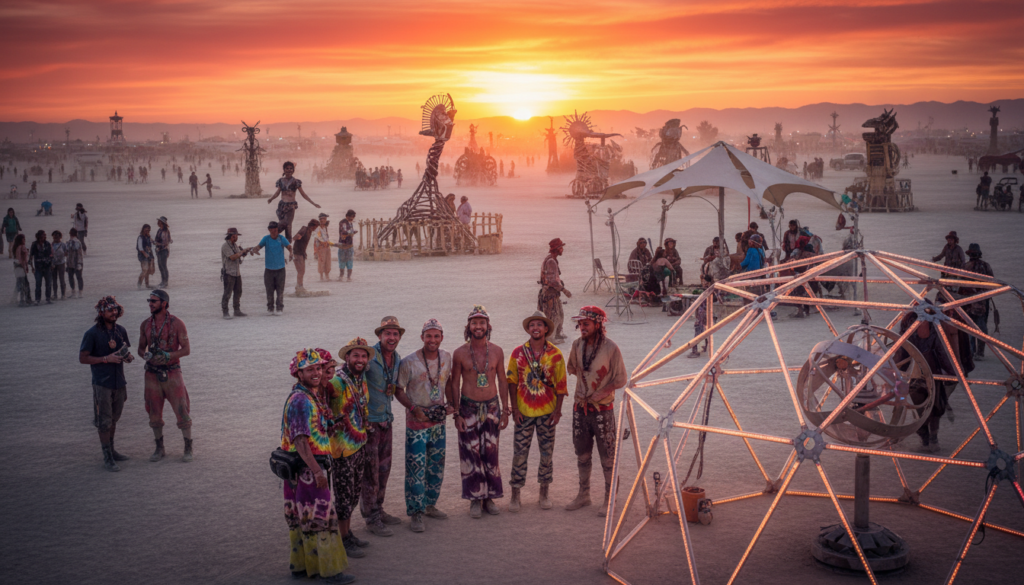
How to navigate without a schedule: embrace discovery and immediacy
Pick a direction and move. Say yes to genuine invites and trust that the best events often arrive unannounced. Use big art pieces, sound, and lights as waypoints.
Lost is part of the journey. Ask camp neighbors or follow a parade of people — those detours lead to memorable moments and new friends.
Social norms and community connection: greetings, inclusion, and participation
Introductions matter. A simple hello can turn into a deep chat that shapes your whole experience. People form quick bonds and call the playa “home” for the week.
Many burners are warm and tactile, but read the room and ask before hugging. Consent keeps connection safe and kind.
Participate to join the community fast: help with a camp task, lead a micro-workshop, or offer a small gift. Pace your days—sleep, hydrate, and eat real food—so your time stretches across the full festival.
“Small acts of presence turn strangers into neighbors.”
For campsite styling and communal comfort ideas, consider a quick decor guide like this campsite styling resource.
Conclusion
Good planning turns a single ticket into a week of smoother discovery and deeper connections. , Use this guide to lock basics early: secure tickets, set travel, and assign camp roles so logistics don’t steal your focus.
Black Rock City rises from the Black Rock Desert each year. It is a participant-built temporary city with no fixed lineup. That means art, music, and surprises replace a conventional festival schedule.
Must-dos: know your arrival timeline, pack for desert extremes, and plan to join camps or art projects. Treat the ticket as the start of preparation, not the finish.
Plan the year, show up ready, and contribute—then enjoy the event fully.