
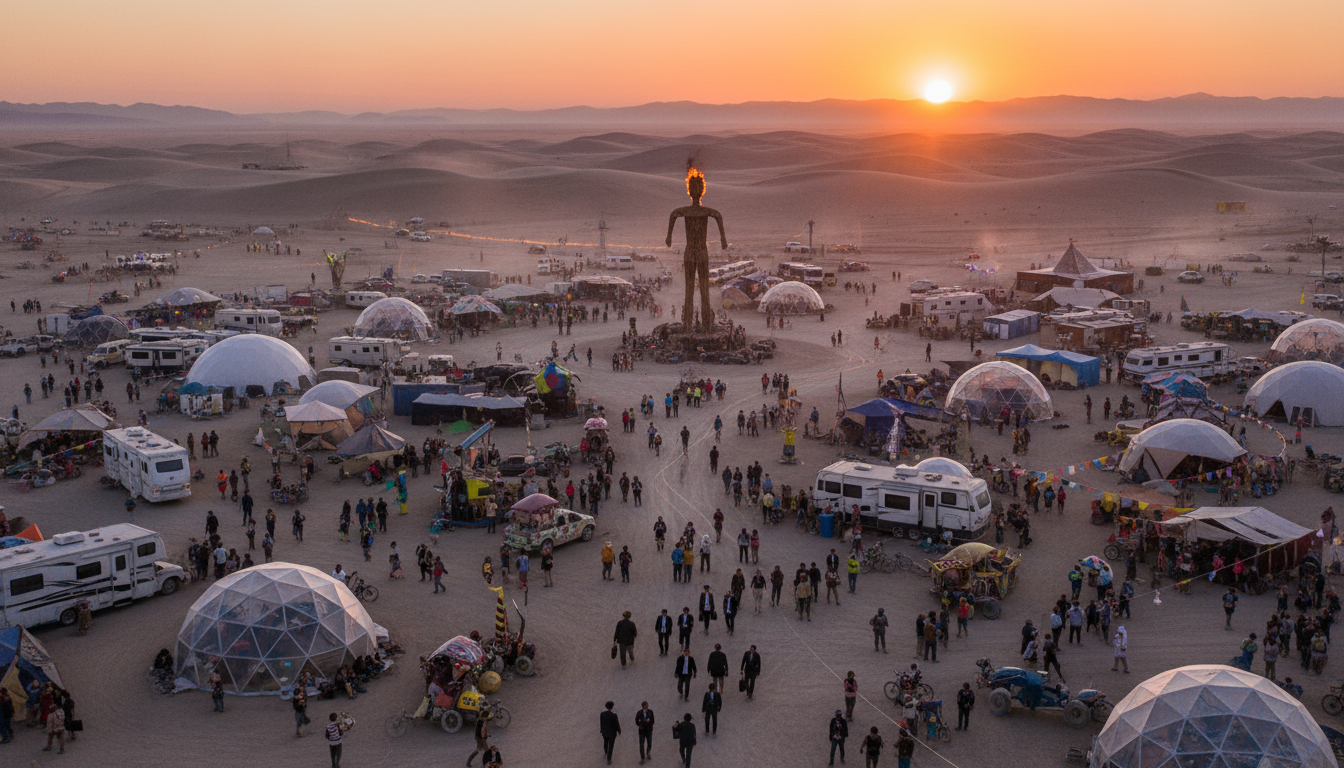
Quick answer: The Burning Man festival runs August 30 to September 7, 2026, at Black Rock City — a temporary city built on the playa in the Black Rock Desert, Pershing County, Nevada.
Black Rock City is a short-lived town that shapes travel, supplies, and safety plans for attendees. The remote desert setting means you should plan fuel, water, and shelter before arrival.
Event coordinates are 40°47′13″N 119°12′15″W (40.7869, -119.2042). Use them for map context only and follow official route guidance on site.
This date window is the key planning anchor for time off, bookings, and packing. Later sections will cover distance from Reno, what locals call the playa and Rock City, tickets and costs, weather, and culture.
Key Takeaways
- Event runs Aug 30–Sep 7, 2026 at Black Rock City in the Black Rock Desert.
- Black Rock City is a temporary city; bring supplies and plan logistics.
- Coordinates provided for map context; follow official travel routes.
- Use the dates as your planning anchor for travel and packing.
- Later content covers travel from Reno, costs, weather, and culture.
- For related camping-style options, see glamping basics.
Where is burning man this year?</h2>
Black Rock City sits on the flat playa in the Black Rock Desert of northwestern Nevada. The temporary city appears for the event and then disappears after cleanup.
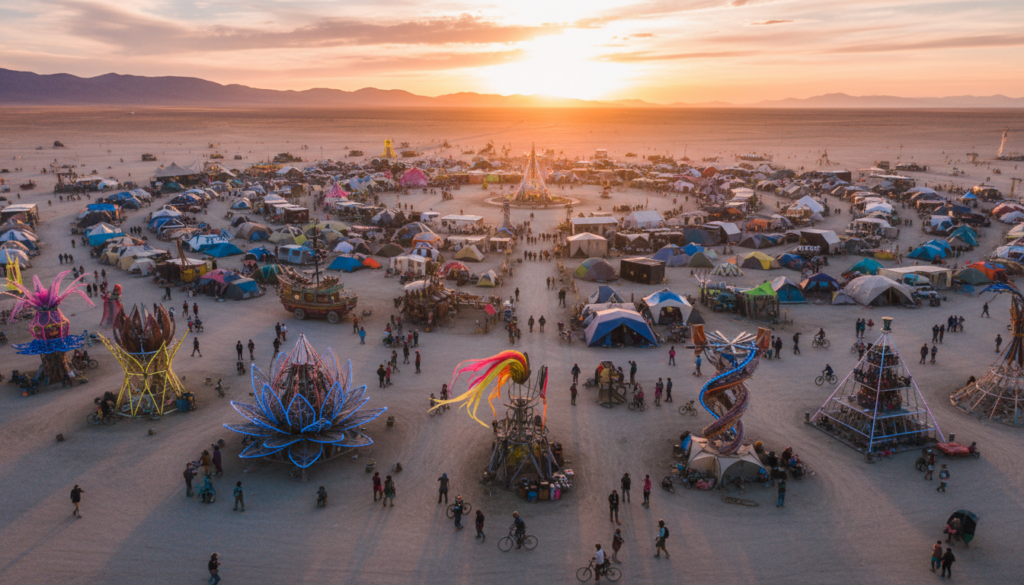
Black Rock City in the Black Rock Desert, northwestern Nevada
Burning Man takes place at Black Rock City, a planned temporary city constructed on the playa. The remote high desert setting means long drives from major airports and limited services nearby.
Pershing County, Nevada, United States
Jurisdiction: The playa lies inside Pershing County, Nevada. That matters for travel rules, official notices, and emergency updates.
Event coordinates for the playa site
Coordinates: 40.7869, -119.2042 — use these for map context when planning routes. Remember that “Black Rock” can mean the broader region, while Black Rock City refers to the temporary city on the playa.
- Plan fuel, water, and gear around the remote location.
- Expect a long drive through the rock desert from population centers.
- Use official guidance for access and timing before travel.
Burning Man location at a glance: Black Rock City on the playa</h2>
Black Rock City is a planned, temporary settlement built on the flat, hard-packed playa for the weeklong event. The grid of streets, theme camps, and large-scale art is laid out before gates open and removed after the close.
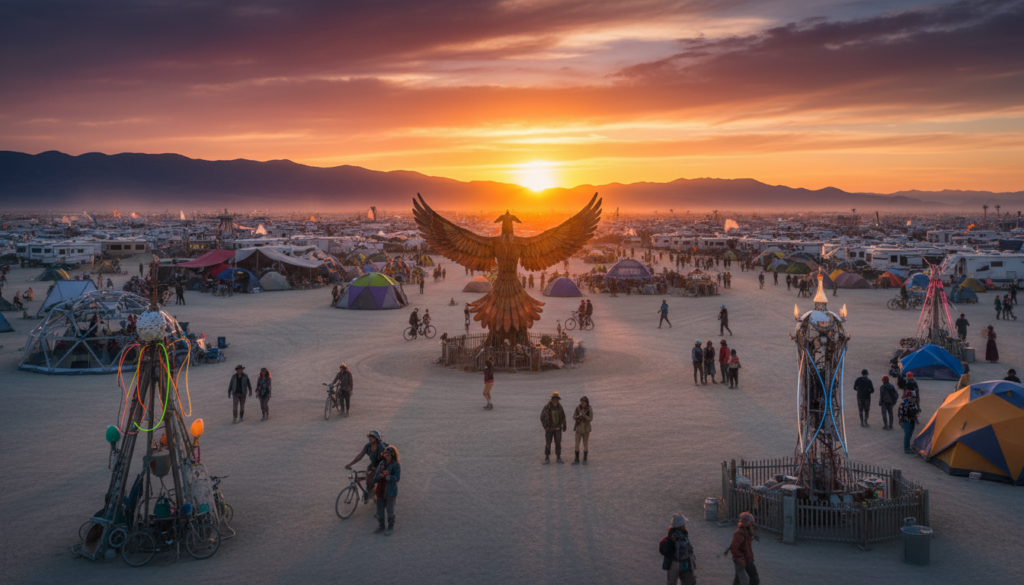
What the temporary city actually means
The city is made by participants, not by permanent vendors. People bring shade, kitchens, medical basics, and tiny services that keep life moving.
Expect no stores or hotels. Instead, the community builds everything together. That design supports self-reliance and shared responsibility.
Why the desert plays a central role
The playa is a dry lakebed that becomes a blank canvas for art and navigation. Wide horizons, dust, and wind shape daily routines, from packing to movement.
Those harsh conditions create the signature community spirit: collaboration, creativity, and problem solving among burners and participants.
- Temporary city: planned, built, lived in, removed.
- Playa surface: the open stage for art and streets.
- Participant-led: services and events are created by people who attend.
- Reality check: not a convention center—bring supplies and an open attitude.
Burning Man dates this year and the Labor Day schedule</h2>
Mark your calendar: gates open August 30, 2026, and the event closes September 7, 2026. Use those dates to align vacation requests, travel bookings, and build schedules.
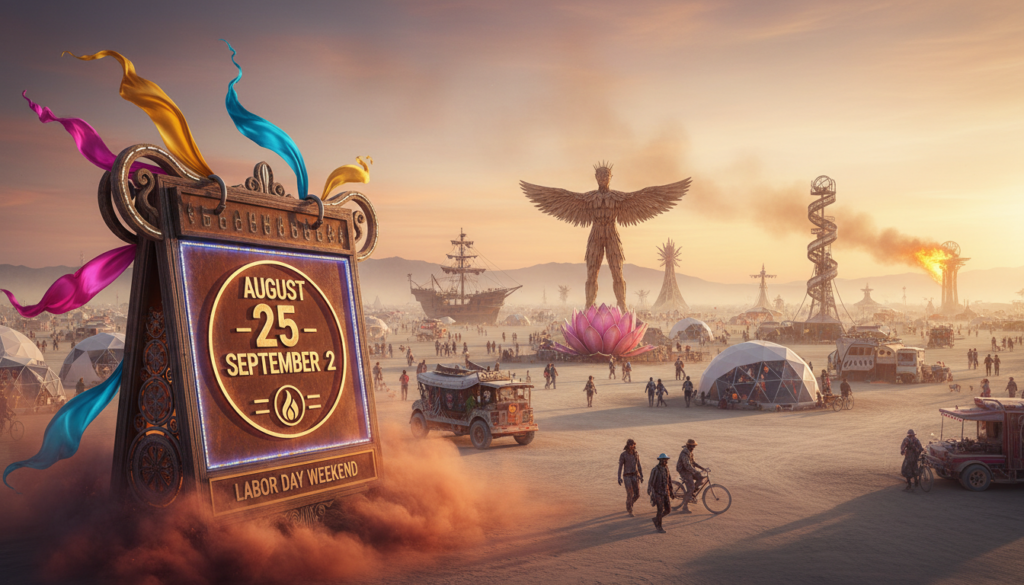
Start and end dates for the current event window
The festival runs August 30–September 7, 2026. That full window lets crews arrive early to set up and stay late to pack out.
Why timing centers on the Labor Day holiday
Scheduling around Labor Day gives many participants a long weekend for travel. It also eases time-off logistics for volunteers and artists coming from across the United States.
When the burn typically happens during the week
The iconic burn of the Man usually occurs on the penultimate night — the Saturday evening before Labor Day. The Temple burn and other main events follow near the close.
Plan with buffers: weather or safety can shift exact times. Arrive early, set up calmly, and leave extra time for exit traffic.
| Item | Date | Why it matters |
|---|---|---|
| Event window | Aug 30 – Sep 7, 2026 | Use for travel and build schedules |
| Man burn | Saturday before Labor Day (penultimate night) | Main public spectacle; plan arrival before |
| Temple burn | Near closing nights | Reflective ceremony later in the week |
How far is Burning Man from Reno and other major hubs?</h2>
Getting to Black Rock City from Reno takes more than distance — it calls for planning for gate traffic, fuel, and extra supplies.
Distance and drive-time context from Reno
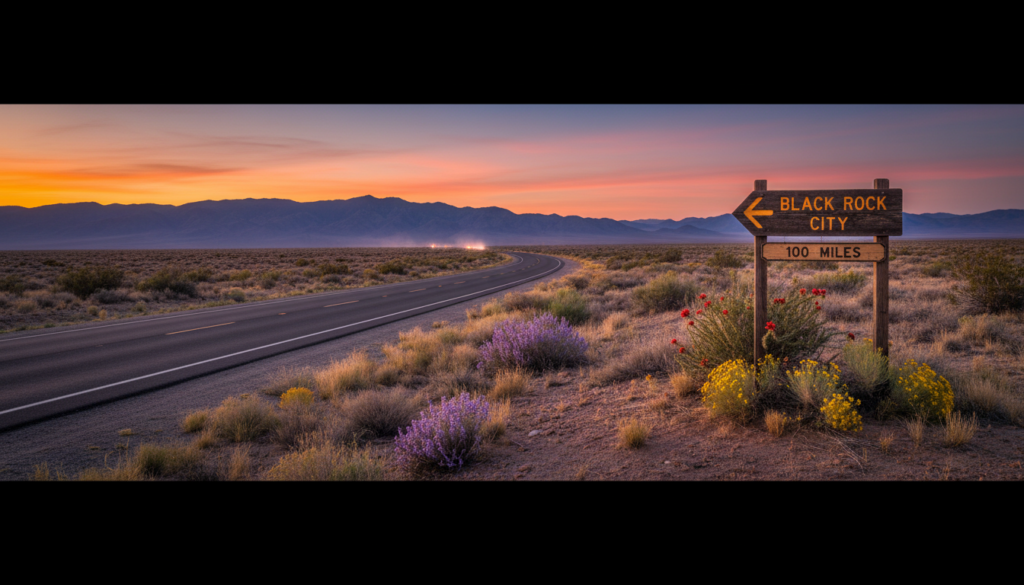
Mileage: reported distances vary. Many sources list roughly 100 miles (160 km) north-northeast of Reno, while others note about 141–227 km (87–141 miles) depending on start point and route. Use conservative time estimates.
What “north of Reno” means for planning supplies and fuel
North Reno is the last real metro area. Fill tanks and buy water, food, and last-minute gear there.
Traffic at gates, speed limits, and dust or weather can stretch drive time. Treat fuel and water as essentials and pack extra.
Nearest small towns and services to expect
Small towns like Gerlach and Empire offer minimal services. During the event they may be overwhelmed and limited.
Plan a Reno stop well before heading out. Tickets matter, but distance affects cost, time off, and how early to depart.
| From | Approx. distance | Primary planning note |
|---|---|---|
| Reno | ~100–141 miles (160–227 km) | Last major stop for groceries, water, fuel |
| Gerlach/Empire | 10–30 miles from playa edge | Limited services; can be busy during event |
| Highway exit / dirt road | Varies | Expect unpaved segments; slow travel and delays |
For gas-saving tips before you leave Reno, consider how to save money on gas to lower travel costs and reduce stress on arrival.
Map context: Black Rock Desert, Black Rock, and “Rock City” terms explained</h2>
Map labels around Black Rock can confuse first-time travelers and casual readers alike. A few short definitions clear up the jargon and make navigation simple.
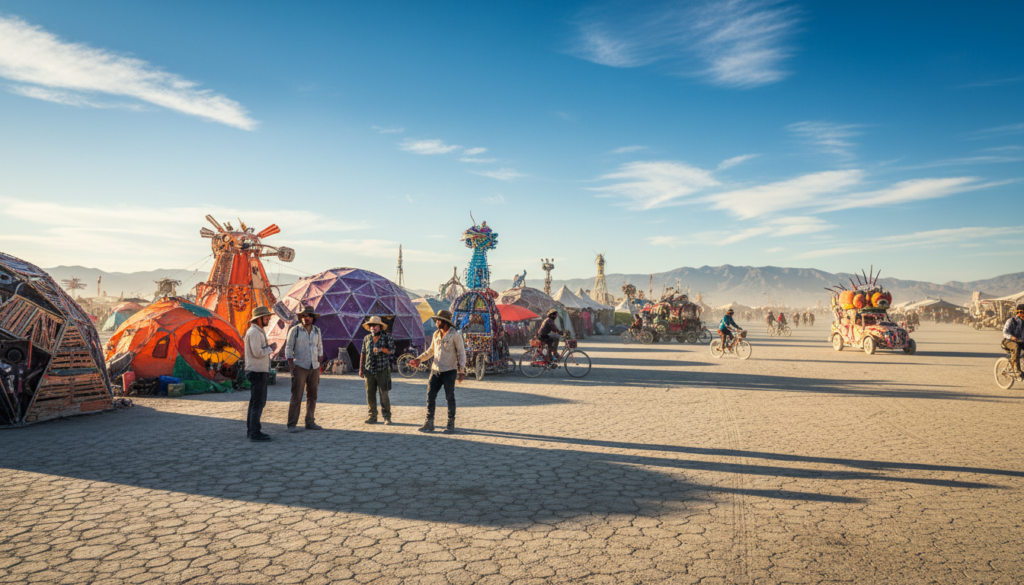
Black Rock Desert vs. Black Rock City vs. the playa
Black Rock Desert is the broad region — the geologic desert that covers miles of flat ground. It’s the larger location on your map.
Black Rock City is the temporary, participant-built city set up on the playa during the event. It’s the lived-in grid you will navigate once inside the Gate.
The playa means the hard-packed lakebed surface where camps and art sit. Think of it as the stage within the desert.
Why people say “Rock City” and travel tips
“Rock City” is casual shorthand many use for Black Rock City. It’s not a separate town; it’s a nickname for the temporary settlement.
Some sources say “rock desert,” which is an informal twist on the Black Rock Desert name. Search GPS for Black Rock City or use the event’s official routing to avoid errors.
- Search tip: enter Black Rock City or official coordinates in your GPS app.
- Approach tip: follow posted signs and event routing near the Gate — don’t rely on shortcut pins.
- Reassurance: community forums can help, but trust official maps for final directions.
What Burning Man is: community, art, self-expression, and self-reliance</h2>
At its heart, burning man centers on people building a temporary community of creativity and mutual aid on a desert plain.
The event is a weeklong experiment in collective creation. Participants bring ideas, tools, and energy. They build camps, artworks, and informal gatherings rather than relying on a main stage.
The event’s purpose in plain English
Simple goal: make a city together where art, shared responsibility, and personal expression guide daily life.
No headliners: how participants create the festival
There are no headline acts. Instead, participants offer music sets, workshops, and meetups. You find moments by exploring and joining offers from neighbors.
“Participation turns audience members into co-creators. That switch changes everything.”
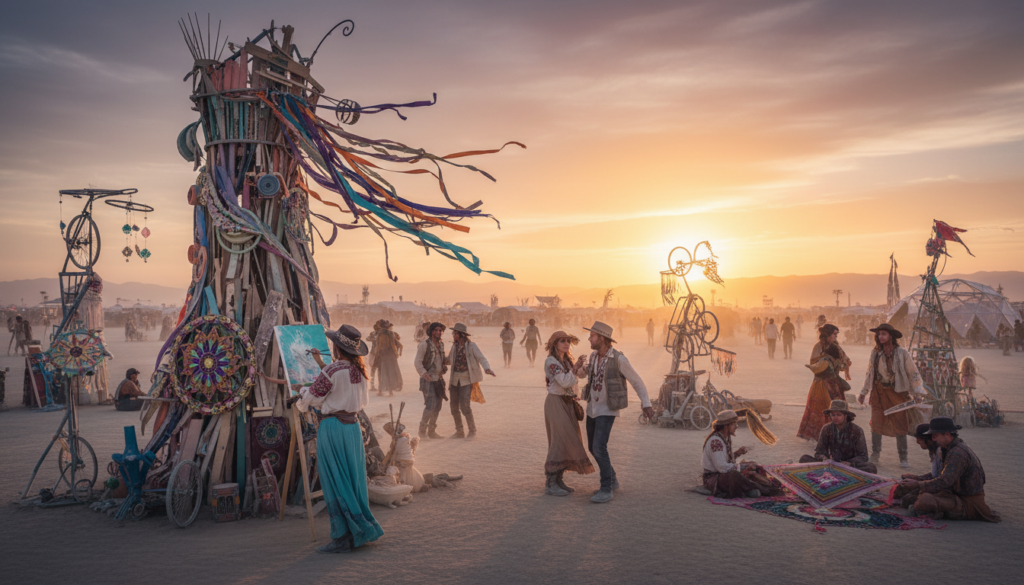
Day-to-day culture shows up as gifting, shared shade, tool lending, and spontaneous workshops. People bike between installations, visit theme camps, and join rituals.
- Co-creation: you contribute rather than just consume.
- Practical help: neighbors share water, shade, and tools.
- Creative play: art and music come from anyone willing to set something up.
| Core value | What you’ll do | Why it matters |
|---|---|---|
| Community | Join camps, help neighbors | Builds safety and belonging |
| Art | Explore installations, interact | Drives wonder and connection |
| Self‑reliance | Bring water, shelter, gear | Keeps you safe and ready |
The Ten Principles that shape Black Rock City culture</h2>
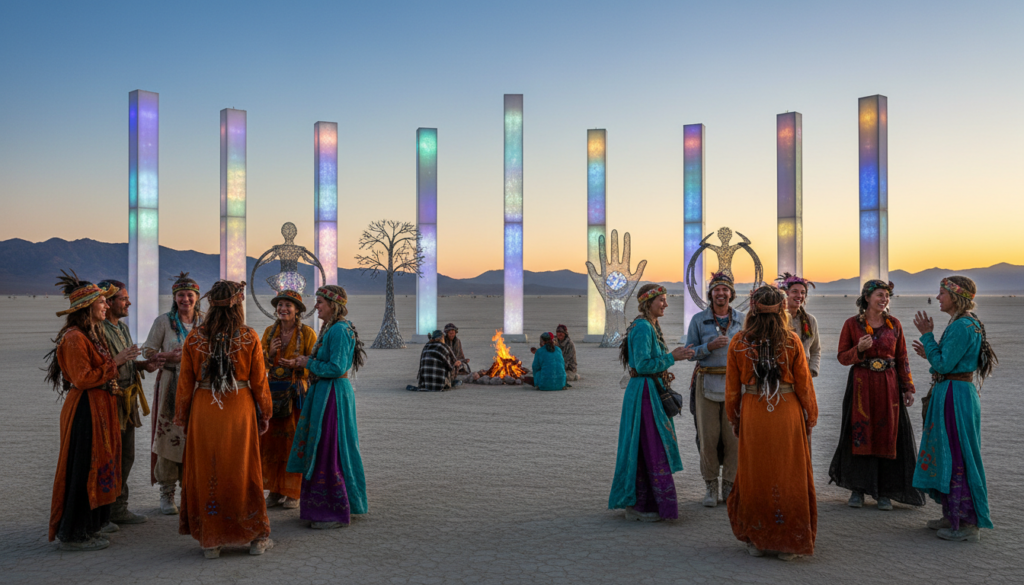
The ten principles act as a social compass for every camp, art piece, and meetup in Black Rock City. Written by co‑founder Larry Harvey in 2004, they describe expected behavior and shared values.
Quick definitions
- Radical inclusion: anyone may be part of the community.
- Gifting: give without expecting payment; offerings build trust.
- Decommodification: limit branding and sales to keep attention on presence.
- Radical self‑reliance: bring water, shade, and supplies for safety.
- Radical self‑expression: show up creatively while respecting others.
- Communal effort: cooperate to run camps and projects.
- Civic responsibility: follow rules, help with safety and logistics.
- Leaving no trace: pack out everything; the playa must stay clean.
- Participation: everyone contributes to the city’s life.
- Immediacy: stay present; direct experience matters.
How the principles shape daily life
Radical inclusion and gifting set social norms: people share goods or services without expecting payment. That creates informal support networks across camp rows.
Decommodification means fewer ads and promotions. First‑timers will notice less selling and more moments built by participants rather than brands.
Self‑reliance and self‑expression translate into practical acts: pack thoroughly, create contributions, and respect personal limits.
“Leave the place better than you found it.”
Communal effort and civic responsibility keep the event running—volunteers, camp systems, and basic rules form the event’s infrastructure. Leaving no trace, participation, and immediacy are both values and daily tasks; later sections cover cleanup and MOOP in detail.
Theme camps and participation: how “attendees” become participants</h2>
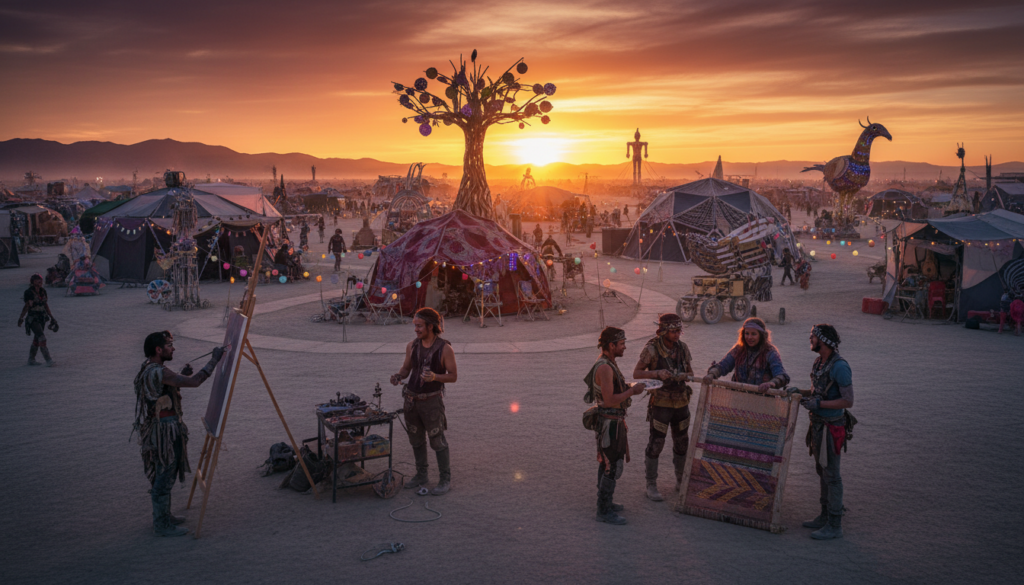
Theme camps are organized groups that create interactive offerings—workshops, shared meals, art builds, or daily meetups. They act as neighborhood hubs that power the temporary city and give structure to the informal streets.
Through camps, attendees gain clear, immediate ways to pitch in. Instead of watching, you join a shift, help set shade, or run a small gifting table. That change turns casual visitors into active participants fast.
Easy ways to contribute on day one
- Ask a nearby camp, “How can I help?” and follow a simple task.
- Offer to set up shade, move gear, or tidy a camp kitchen.
- Volunteer for a short shift at a camp service or gate crew.
- Host a tiny gifting moment—share water, snacks, or a quick workshop.
Expect variety: some camps are quiet and meditative; others run high-energy programming. Participation is about genuine giving, not status. Introduce yourself, bring a can-do mindset, and follow local norms.
| Camp role | Day‑one task | Why it matters |
|---|---|---|
| Service camp | Help set tables or hand out water | Supports comfort and safety |
| Art camp | Carry tools, sweep work area | Keeps builds moving and safe |
| Workshop camp | Greet attendees, prep materials | Creates welcoming, active learning |
| Quiet camp | Respectful assistance, low‑noise tasks | Preserves the camp’s intent |
Simple truth: the more you join in, the more the city feels like home. Camps make the event a shared community experience—step up, ask, and enjoy being a participant.
Art on the playa: installations, the Temple, and interactive experiences</h2>
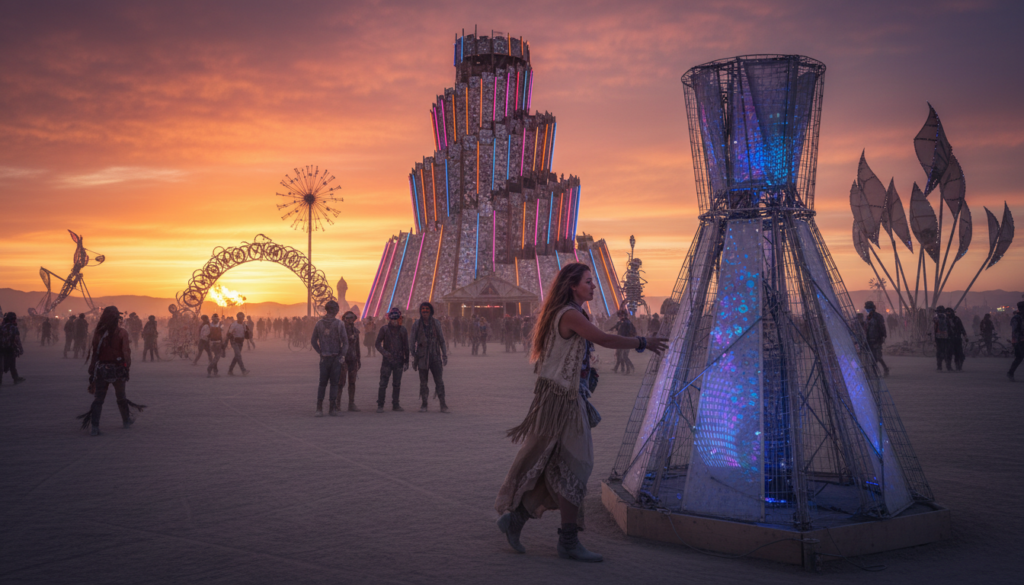
Across the temporary city, artists build works that invite touch, play, and shared creation. Large-scale installations, experimental sculptures, performance pieces, and art cars appear on the grid and the open playa. The variety makes walking the streets a discovery each day.
Interactivity changes everything: many pieces ask you to climb, ring, step inside, or contribute. That hands-on approach creates an active experience rather than a passive show.
The Temple offers a quieter contrast. Designed for remembrance and reflection, the Temple acts as a place to leave notes, memorials, or private offerings. People treat it with care and slow movement.
Burning Man Arts supports creation through grants. Global Art Grants fund participatory projects around the world. Black Rock City Honoraria help bring works to the playa. A dedicated Temple grant pathway ensures the Temple is planned and built with intention each season.
Art on site is community-built and fragile. Respect signage and safety guidance. Follow artists’ requests, observe barriers, and help preserve the pieces for others to enjoy.
“The playa is a living gallery — touch thoughtfully and leave no trace.”
- Large-scale installations and interactive sculptures dot the landscape.
- Performances and art cars add movement and surprise.
- Grants and honoraria fund many projects, including the Temple.
Mutant vehicles, art cars, and the policy on cars in Black Rock City</h2>
Not every vehicle may cruise the grid — most motor traffic is limited to protect walkers and cyclists. You can use cars and trucks to arrive and depart, but normal driving during the event is largely prohibited for practical safety and walkability.
Why normal driving is restricted
Speed limits inside the city are low (5 mph) and enforcement is active. Reduced motor traffic keeps streets safer for foot traffic and bikes, and it preserves the human scale of the temporary city.
What counts as a mutant vehicle
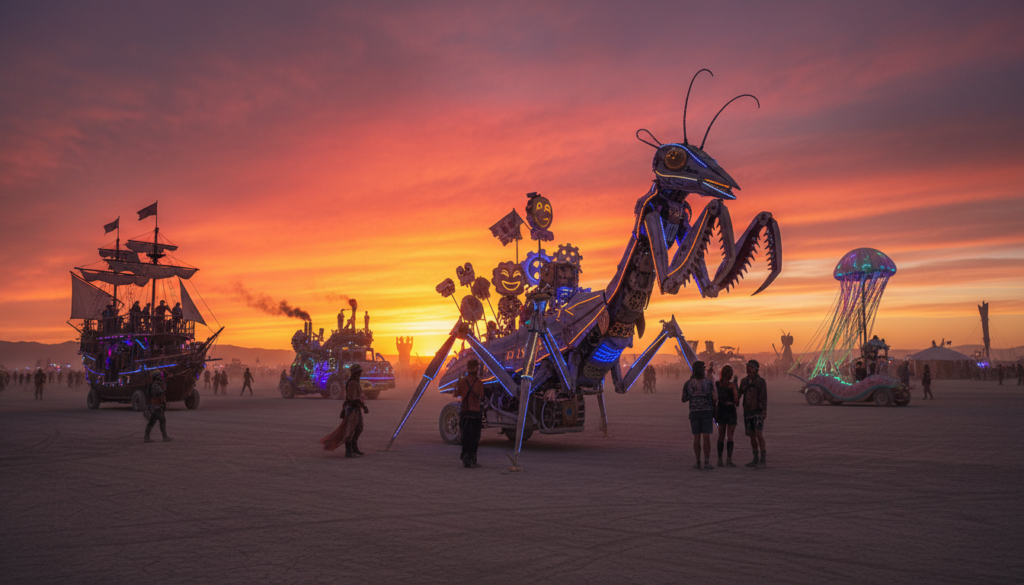
Mutant vehicles are specially licensed, heavily modified art cars that move slowly and often carry sound, lights, or interactive elements. They must pass inspection and follow route rules to operate after gates open.
Safety risks and how rules evolved
Over the years, rules tightened after vehicle-related injuries and fatalities prompted change. The policy favors pedestrians and bicycles to lower risk and to protect the community.
- Watch for vehicle lighting at night and respect barricades.
- Expect enforcement for unauthorized driving.
- Fewer cars mean more spontaneous connection and easier exploration.
“Mobile art adds wonder, but rules keep people safe.”
Tickets and real-world costs to expect</h2>
Tickets cover entry, but planning your full trip prevents last-minute stress and extra expense. Use the ticket purchase as the anchor for travel bookings, camp commitments, and time off work.
Pricing context and budgeting basics
Reported regular ticket prices have been near $575 in past reporting, though tiers and fees change. Media estimates that include travel, food, costumes, and gear put the total experience at about $1,500 for many people.
What to budget beyond the entry fee
Think vehicle costs, fuel, supply runs in Reno, food, water, shade, dust protection, lighting, and bike maintenance. Time costs matter too: build days, arrival and exit travel, and recovery after exodus add unpaid hours.
| Item | Example cost | Why it matters |
|---|---|---|
| Ticket | $575 (example) | Entry only; tiers change |
| Travel & fuel | $150–$400 | Long drives, gate traffic, extra trips |
| Camp gear & supplies | $200–$600 | Shade, water, food, dust gear |
| Total estimate | ~$1,500 | Common all‑in media figure |
- Save money: share transport, cook communally, borrow gear.
- Plan time: allow build days, travel buffers, and rest after the event.
Weather and the desert environment: dust, wind, and wet-playa realities</h2>
Desert weather can flip from clear to chaotic in a few hours, and that unpredictability shapes every plan for the playa. Expect strong sun, sharp temperature swings, frequent wind, and dust that reduces visibility fast.
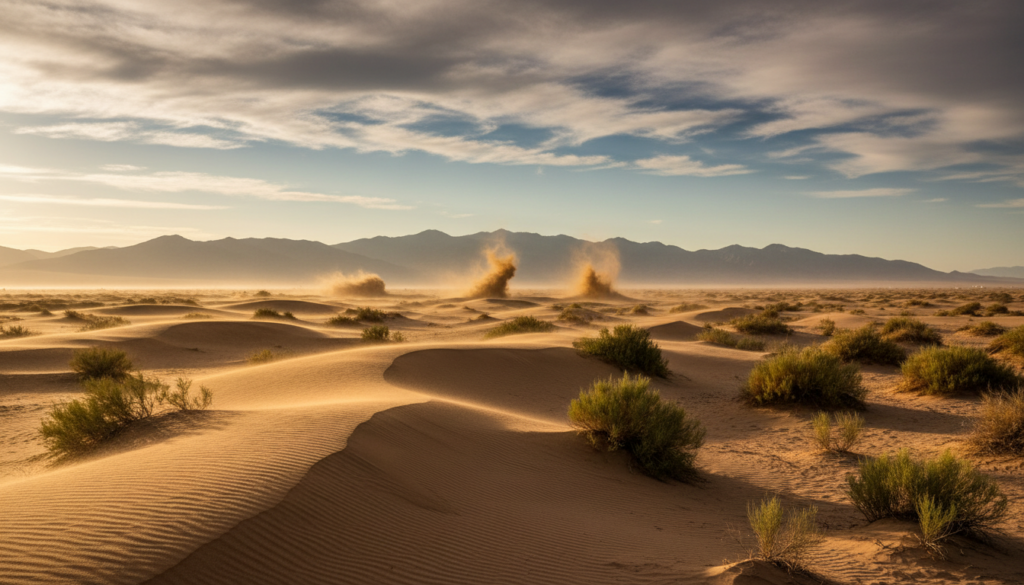
Dust storms and visibility: what to plan for
Dust can arrive as light haze or full dust storms. Pack goggles, N95 or P100 respirators, and sealed bins for electronics.
Lighting helps when visibility drops—headlamps and bike lights make movement safe at low sight distances.
Rain and flooding: how wet playa can shut movement
Rain can turn the hard playa to sticky mud that traps vehicles. When that happens, organizers may restrict driving until the surface dries.
In 2023 heavy rain and flooding forced a lockdown; tens of thousands were stranded, and key burns shifted by a day. That example shows how quickly schedules and exits can change.
Why conditions change the burn schedule and exodus timing
Safety comes first. Strong wind or saturated ground can delay burns, close roads, and lengthen exit time for thousands of attendees.
- Pack extra food and water for delays.
- Bring warm layers and rainproof gear.
- Plan extra time on both arrival and departure days.
“Preparation turns unpredictable weather into a manageable part of the overall experience.”
Stay flexible, monitor official updates, and consider options like nearby beach glamping style planning for pre‑ or post‑event rest. Small contingency steps make a big difference in comfort and safety.
Safety and preparedness essentials for the Black Rock Desert</h2>
Good preparation keeps your trip safe and fun. The playa demands basic planning: bring reliable supplies, set up sturdy shelter, and have backup plans for navigation and contact. During wet conditions, organizers have urged participants to conserve water, food, and fuel and to shelter in a warm, safe space.
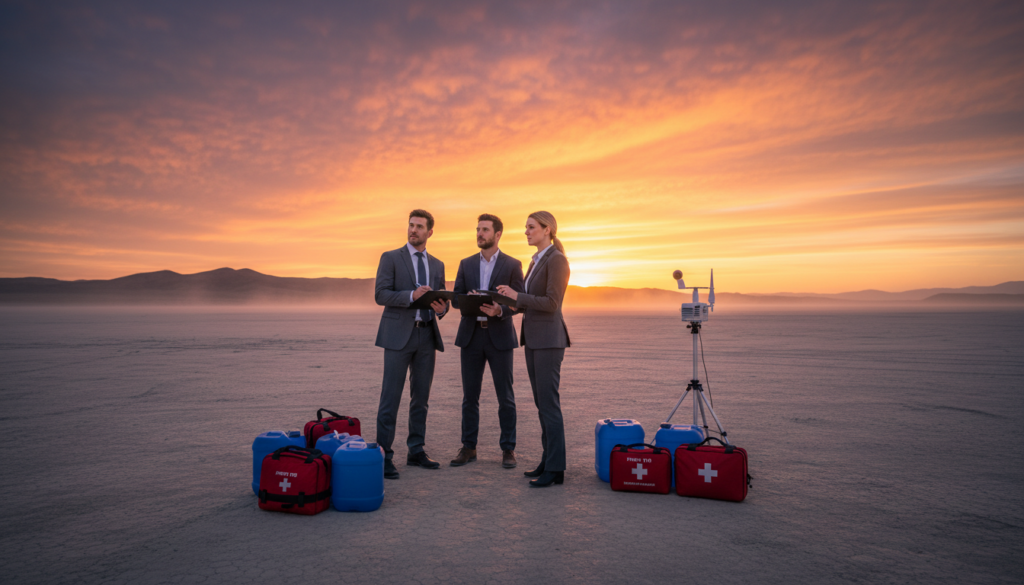
Water, food, and shelter basics for a week in the desert
Plan for a full week and add a safety buffer. Aim for a baseline of at least one gallon of water per person per day plus extra for cooking and hot weather. Pack nonperishable food that needs little prep.
Shelter strategy: bring reliable shade, heavy-duty stakes, and wind anchors. Dust-proof sleeping setups (sealed bags, inner liners) help protect health and gear during storms.
Navigation and communications: what to rely on when signals are limited
City streets exist on-site, but phone maps can fail. Carry printed maps, note camp sector coordinates, and pick simple landmarks to find your way back. Share a daily meetup plan with campmates.
Cell service can be spotty. Have offline tools and know official information channels — in some years organizers use BMIR 94.5 FM and GARS 95.1 — for event updates and safety data.
Community safety matters. Check on neighbors, know where medical and support services sit, and prepare for heat by day and cold at night. Solid preparation protects you and reduces strain on others.
For related packing ideas that balance comfort and practical planning, see glamping packing tips.
Leave No Trace in practice: protecting the desert and the community</h2>
Leaving no trace means practical habits on the playa, not just good intentions. The desert is fragile, and the event’s future depends on how thoroughly participants clean up.
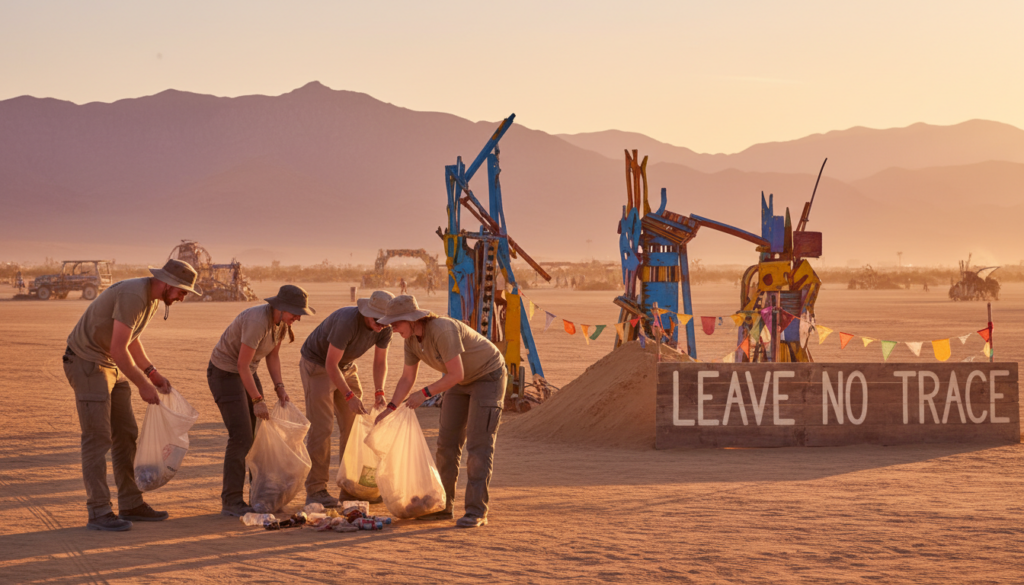
Trash fence and perimeter basics
A temporary plastic perimeter fence runs roughly 9.2 miles to catch wind-blown debris and mark boundaries. The fence helps protect the broader desert by trapping light MOOP before it leaves the site.
Common mistakes that create MOOP and how to avoid them
MOOP stands for “matter out of place.” Common culprits include zip ties, sequins, cigarette butts, food scraps, and broken shade materials.
- Secure fabrics and shade with heavy-duty anchors to prevent shredding.
- Use sealed MOOP bags for small trash and glitter-like items.
- Carry a handheld picker or gloves for quick daily sweeps around your camp.
End-of-week cleanup mindset: leaving the playa better than you found it
Cleanup is part of the event and part of being in a caring community. When thousands do small tasks consistently, the combined impact preserves habitat and reputation.
“Take the extra five minutes to sweep, bag, and secure—future participants and the land will thank you.”
A quick history of Burning Man locations: from San Francisco to Nevada</h2>
Burning Man began as a small ritual on a San Francisco beach and grew into the large desert gathering many recognize today. The story explains how an intimate community experiment became a planned temporary city in the high desert.
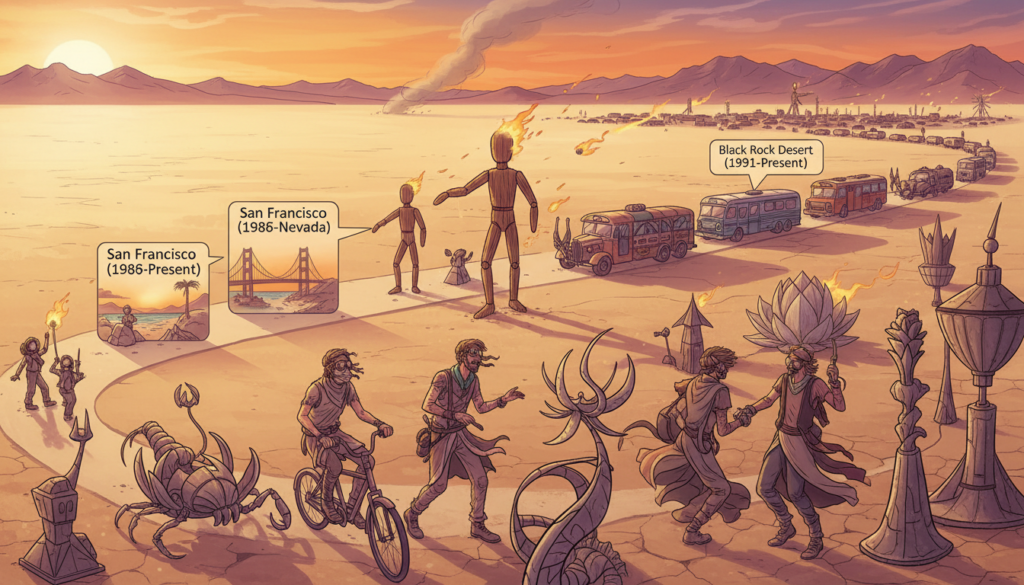
Baker Beach origins in San Francisco
The first public burn took place June 22, 1986 at Baker Beach in San Francisco. Larry Harvey and Jerry James led a handful of friends who built and burned a wooden effigy on the sand.
Early years featured informal gatherings, playful performance, and a DIY spirit that drew locals to repeat the ritual each summer.
Move to the Black Rock Desert and the rise of Black Rock City
As attendance grew, organizers sought more space. The transition to Nevada unfolded through the Zone Trip era, culminating in the first Black Rock Desert burn in 1990 (Zone Trip No. 4).
That move allowed expansive art, larger camps, and experiments that a cramped beach could not support. Over several years the open gathering became more structured and permitted.
Why the event has remained in the Black Rock Desert since 1990
Black Rock City became the practical answer to scaling: a grid, permits, safety plans, and infrastructure allowed thousands to cohabit the playa responsibly.
The wide flat playa provides space for massive installations and safe circulation. The landscape itself shaped the culture, making the wooden effigy—the Man—the central ritual that lent the festival its name.
Rules, city planning, and safety measures evolved from lessons learned in earlier years. Those changes made the festival manageable and helped preserve the desert for future gatherings.
- Origins: small San Francisco burn, 1986.
- Shift: Nevada move, first playa burn 1990.
- Why it stayed: scale, space, and identity tied to the playa.
For related camping-style options and planning ideas, consider a short pre- or post-event rest at friendly glamping spots.
Conclusion</h2>
Wrap your logistics early so you can show up ready to join camps, art builds, and community rituals. Black Rock City sits on the playa in the Black Rock Desert and the event centers on the Labor Day window with the Man burn on the penultimate Saturday night.
Terms like Black Rock, Rock City, and playa all point to the same remote Nevada site. Treat them as synonyms when you plan travel and supplies.
Practical next steps: confirm tickets, sketch a budget, coordinate camp plans, and prepare for driving limits and desert weather. Pack water, shade, dust protection, and MOOP bags for Leave No Trace.
Plan logistics and bring intention. When attendees combine good prep with active participation, the festival experience improves for every participant. For calm pre‑ or post‑event rest consider water glamping options.