
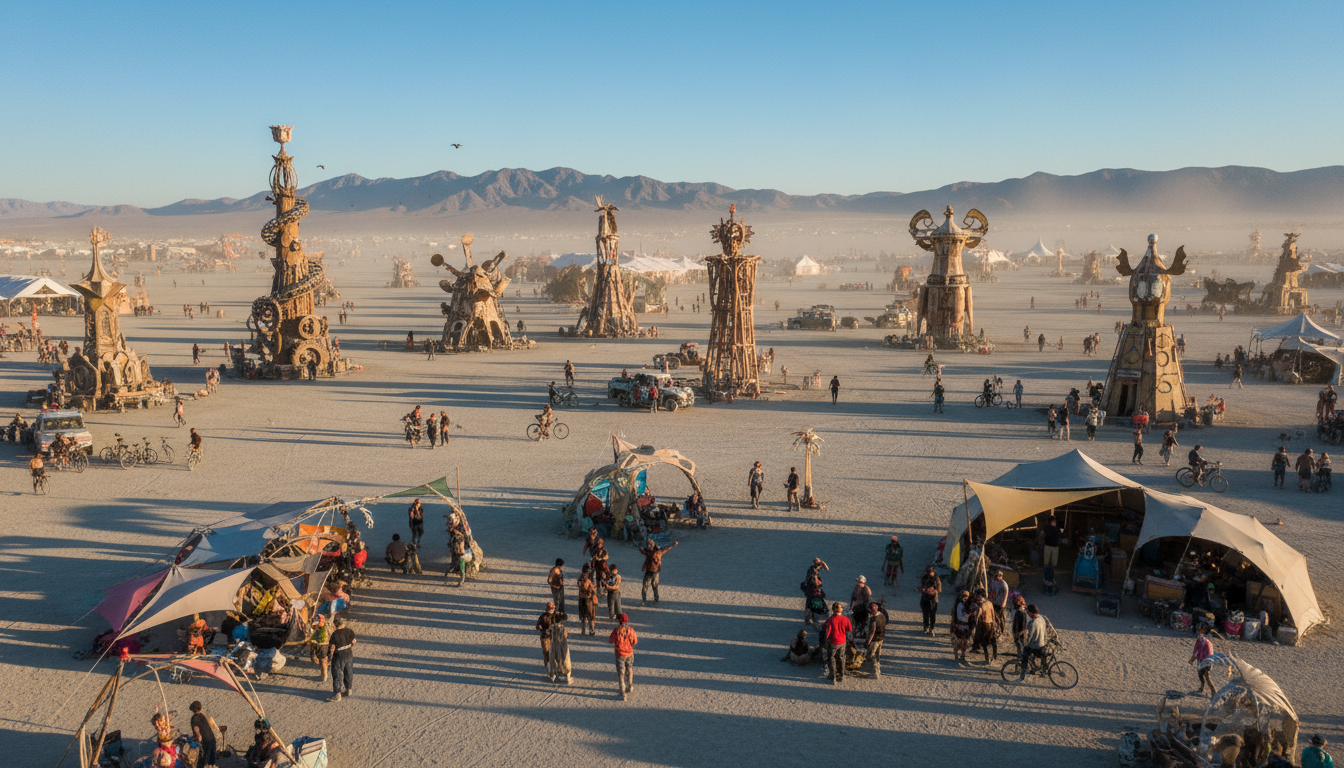
Where is Burning Man takes place on the flat salt plain known as the playa in the nevada desert. Each year, participants build Black Rock City, a temporary town set up for this community-driven festival.
Black Rock City sits on public land managed by federal agencies and is reached by long drives from Reno. Expect remote roads, sparse services, and strict Leave No Trace rules. Packing and planning matter.
In this short guide you will learn map coordinates, county and BLM details, typical travel distances, and how timing around Labor Day shapes the schedule. We also clarify common words you will see online like playa, Burn, and Black Rock so the rest of the article reads smoothly.
Practical note: the event runs because participants create art, theme camps, and spontaneous experiences rather than watching scheduled headliners. For a simple primer on related outdoor stays, see glamping basics.
Key Takeaways
- Black Rock City is the temporary place built on the playa in the nevada desert.
- The event returns to the same site most years, with rare exceptions.
- Expect remote conditions, limited services, and strict Leave No Trace rules.
- Learn basic terms like playa and Burn to follow the rest of the guide.
- Community participation drives art and camps more than scheduled headliners.
Where Burning Man Is Held Right Now
Every year since 1990, a temporary city appears on the open salt plain of northwestern Nevada.
Black Rock City stands on the playa of the Black Rock Desert in Pershing County. This city is built for the event and then removed afterward, so it does not show as a permanent town on maps.
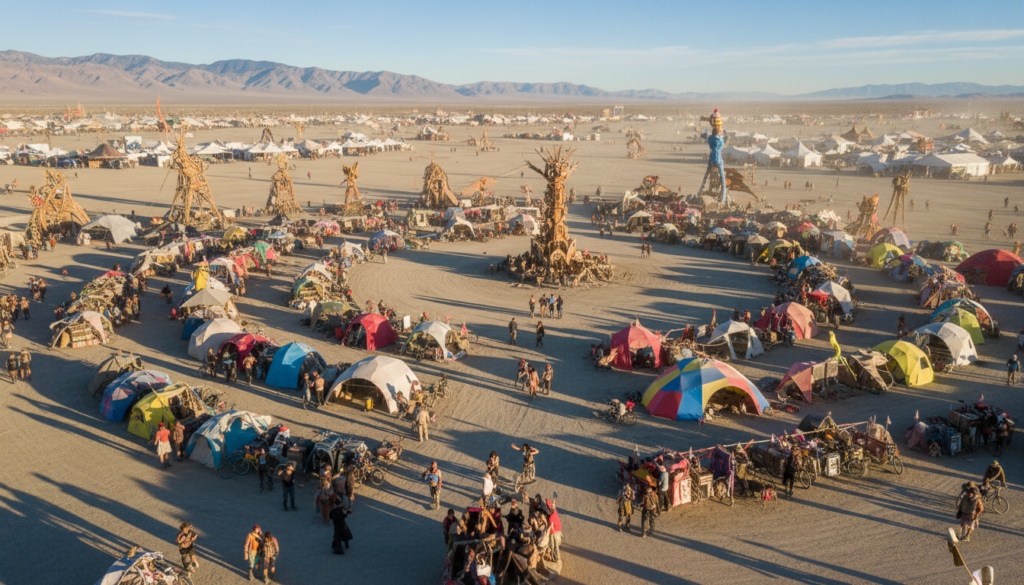
The site sits on Bureau of Land Management public land. That jurisdiction shapes access routes, permitted boundaries, and on-playa rules like speed limits, vehicle restrictions, and strict Leave No Trace enforcement.
Picture a broad, flat lakebed with distant mountain horizons and almost no nearby infrastructure. Expect long drives, sparse services, and a wide open horizon.
- Location: Black Rock City on the playa
- County: Pershing County
- Land manager: Bureau of Land Management
| Feature | Detail | Notes |
|---|---|---|
| Site name | Black Rock City | Temporary event city |
| Desert | Black Rock Desert | Flat playa lakebed |
| Jurisdiction | Pershing County / BLM | Permits and enforcement apply |
Next: exact coordinates and map tips help with navigation. For a primer on related outdoor stays, see beach glamping primer.
Where is burning man on the Map
Start navigation with the official GPS point that marks the heart of Black Rock City. That central point helps you orient across the wide flat playa before you follow event directions and local roads.
Official coordinates
Copy-paste friendly: 40°47′13″N 119°12′15″W
Decimal format (GPS apps): 40.7869, -119.2042
Why the playa matters for planning
Playa means the dry lakebed surface where Black Rock City sits. It looks flat, but landmarks can feel miles away.
- Use the coordinates to add a waypoint in your GPS or offline maps.
- Coordinates provide useful data, but follow official event routing for final access.
- Visibility drops during dust; the known center point keeps orientation steady.
- Confirm offline maps and battery backups—cell service can fail past highways.
| Term | Meaning | Quick note |
|---|---|---|
| Black Rock | Short name for the region | Often used casually in search text |
| Black Rock Desert | Large playa and surrounding landscape | Geographic area, not the event city |
| Black Rock City | Temporary event city set on the playa | Has streets, addresses, and central reference |
Quick planning tip: store the coordinates and a map tile offline. That small step saves time and reduces stress when route width or road conditions change. For site policies, see our privacy details.
Black Rock City Explained as a Temporary City
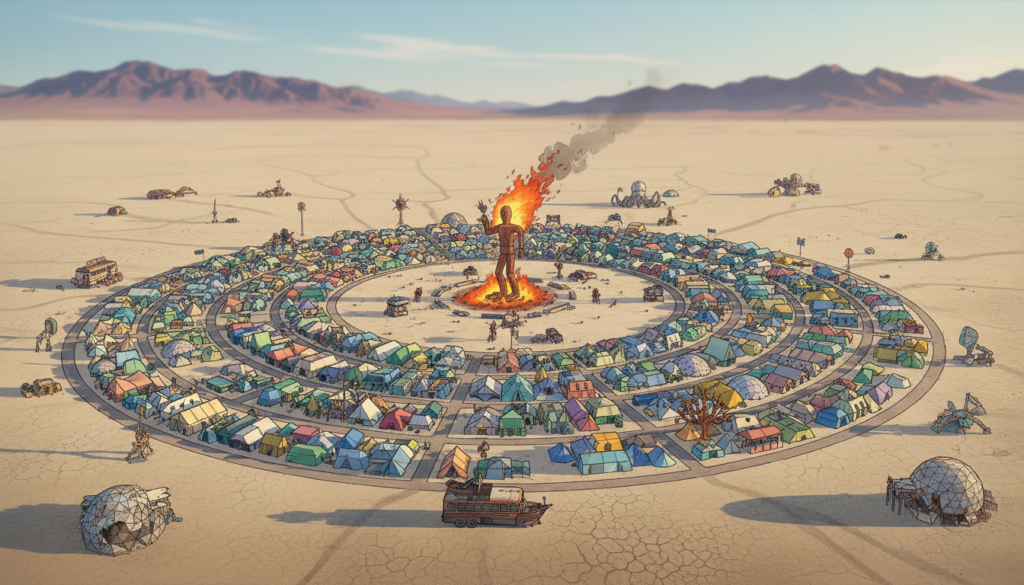
A temporary urban plan appears on the salt flat, complete with streets, services, and a civic rhythm that lasts only days.
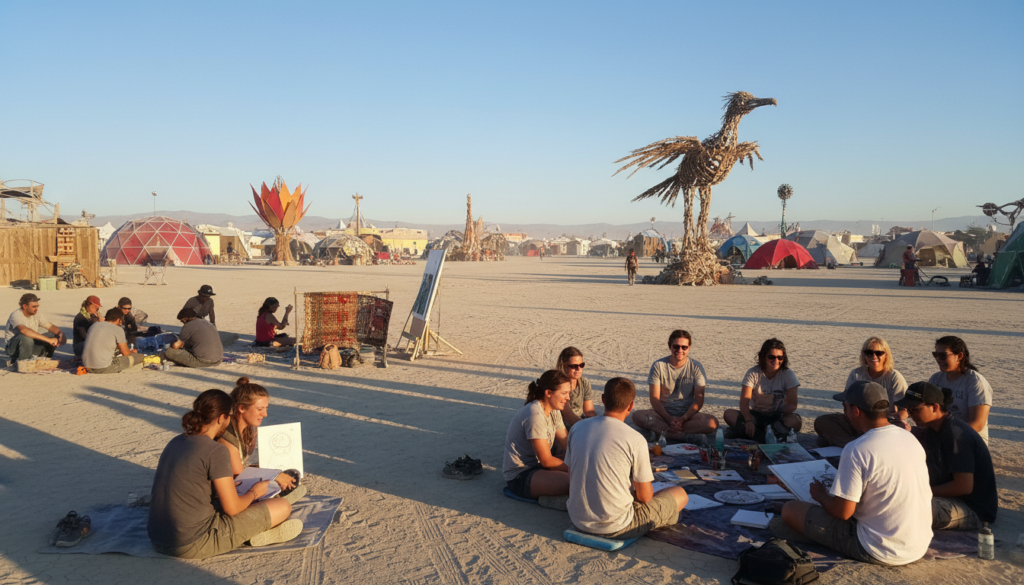
Built for the event, then removed after
Black Rock City is a purpose-built community that appears for the festival and is dismantled afterward.
Crews and volunteers build infrastructure so the desert returns to baseline. Camps pack out every trace when the event ends.
How the grid supports safety and “addresses”
The city uses a numbered grid so emergency crews and services can use clear “addresses” instead of vague landmarks.
This layout helps attendees find camps, meet friends, and move safely on foot or bike, even during dust and low visibility.
What the perimeter “trash fence” is and why it exists
The perimeter fence runs roughly 9.2 miles and stands about four feet high. It catches wind-blown debris and protects the surrounding desert.
It also marks permitted boundaries, guiding people where access is allowed and supporting safety plans required by land managers.
- Temporary community: built for an event, removed after.
- Grid benefits: faster emergency response and easier meetups for attendees.
- Trash fence: debris catcher, boundary marker, and permit tool.
- Logistics: building a short-term city takes long hours and civic responsibility from people and teams.
The Black Rock Desert and the Nevada Desert Landscape
Late-summer on the playa brings raw light, wide horizons, and weather that demands respect.
What playa conditions are like in late summer
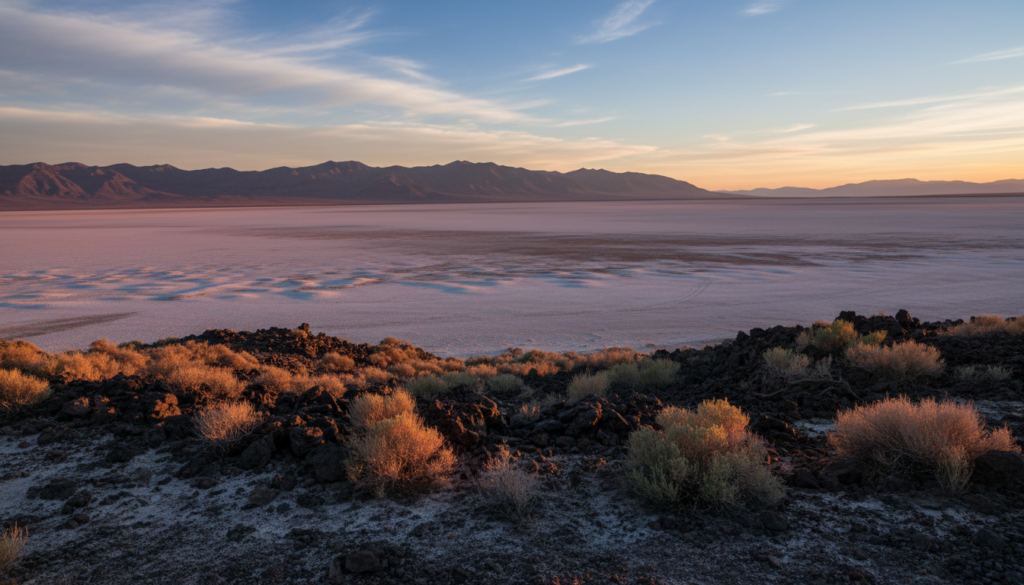
The playa can be brutally hot by day and cold at night. Intense sun, strong wind, and alkaline dust are normal during late summer.
Surface textures change quickly. One area may be hard-packed and smooth. Nearby patches can be rutted or, after rare storms, turn into sticky mud that stops vehicles.
How remote the Black Rock area really is
Once you leave small Northern Nevada towns, services thin out fast. Mistakes like forgetting water or spare parts become hard to fix away from town.
Self-reliance matters: bring realistic supplies for water, food, shade, and first aid. Running to a store rarely works on short notice.
| Condition | Typical effects | Practical action |
|---|---|---|
| Heat & sun | Dehydration, UV exposure | Carry extra water, wear sun protection |
| Alkaline dust | Equipment wear, breathing irritation | Protect gear, use dust masks |
| Temperature swings | Hot days, cold nights | Layered clothing, insulated sleep gear |
| Remoteness | Few services nearby | Plan resupply in Reno or Gerlach before arrival |
The wide, open landscape supports large-scale art and creates a sense of stepping into another world for a short time. Next, plan travel distances from Reno and the gateway town of Gerlach.
How Far Is Burning Man From Reno and Other Nearby Places
Driving from Reno toward Black Rock City can mean anything from a short scenic trip to an all-day run, depending on route and crowds.
Reno distance estimates and travel time
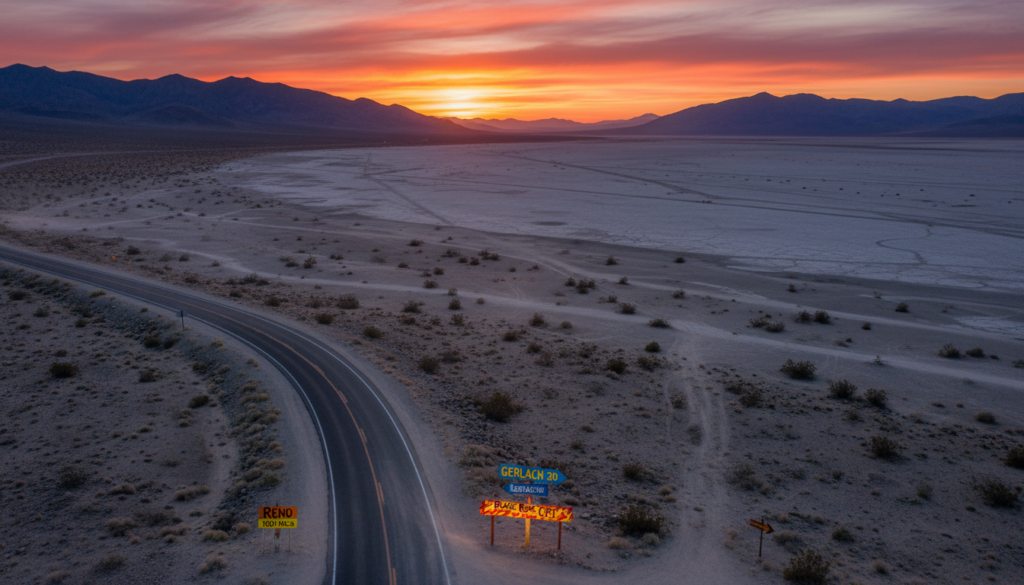
Most sources list the distance as roughly 100 miles (160 km) north-northeast, though some routes and start points show about 141 miles (227 km).
Maps give distance, but expect variable travel time. Heavy Gate lines, dust, and weekend traffic can turn a normally quick drive into several long hours.
Gerlach as the nearest gateway town
Gerlach serves as the final stop for fuel, ice, and basic supplies. Many people pass through this small town just before reaching the playa.
Gateway town means limited services—stock up in Reno or Sparks if you need big-box items.
Connections to Northern Nevada stops and tips
- Plan fuel: top off before leaving Reno or Sparks.
- Pack extra time: delays around peak arrival and Exodus days are common thanks to thousands people traveling together.
- Restroom and breaks: schedule stops—arriving rested makes setup easier.
- Supply logic: use Reno for big shopping; rely on Gerlach for last-minute needs.
“Plan for extra time and treat the drive as part of the trip.”
For gear tips that help with comfort on arrival, see our guide on packing for comfort.
When Burning Man Happens Each Year
Each late-summer festival draws tens of thousands to a short-lived city that centers around Labor Day weekend. That holiday frames travel demand, planning, and the rhythm of on-playa life.
Typical annual timing
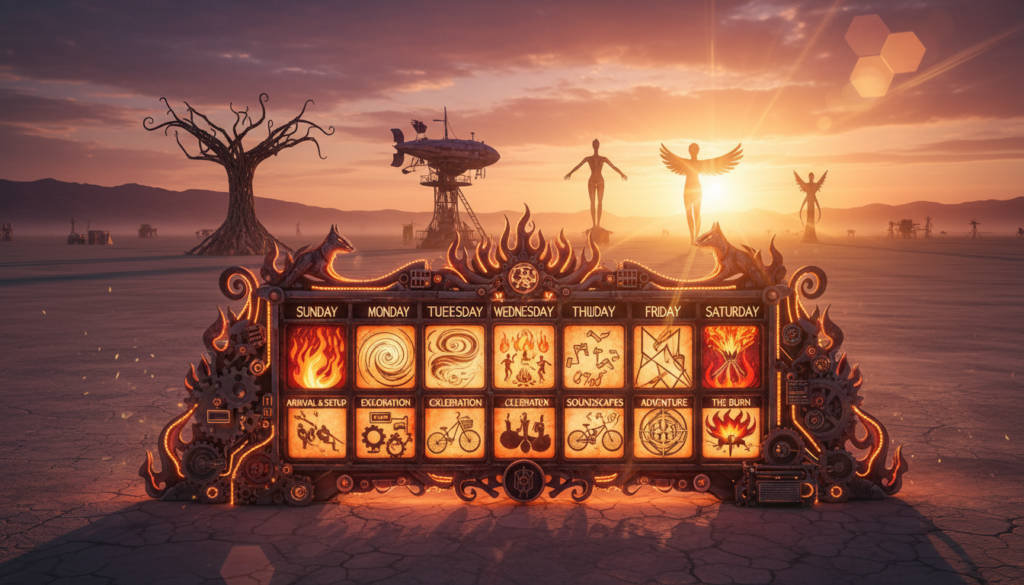
Traditionally scheduled around Labor Day: the event spans the days leading up to and including the holiday. That timing shapes work time-off requests, vehicle reservations, and hotel availability in nearby towns.
Example calendar
For example, the 2026 dates run August 30, 2026 to September 7, 2026. Those dates show how arrival, main week, and Exodus fall across two weekends and the holiday on a single calendar.
How the timeline affects life on site
Camps often arrive early for build periods. The main week hosts key events and burns. The final days become a massive departure push, which can create long lines and slow roads.
- Plan early: flights, vehicle rentals, and Reno rooms fill fast.
- Weather caveat: severe weather can alter access and timing for major events.
- Next steps: see later sections on tickets and budget to pair dates with realistic costs.
A Quick History of Where the Event Started vs. Where It Moved
A small ritual on a San Francisco shore grew into an expansive desert gathering over a few short years.
Origins at Baker Beach: On June 22, 1986 a modest burn took place at Baker Beach in San Francisco. Founders Larry Harvey and Jerry James led that first ceremony. It stayed local at first, attracting curious artists and friends.
Growth shaped the culture: As interest rose, the gatherings expanded in scale and complexity. The early community kept the same spirit of participation and creative risk that still defines the event today.
Move to the Black Rock Desert
By 1990 organizers relocated to the Black Rock Desert and set up what became Black Rock City. The move offered vast open space for larger art, more participants, and safer logistics.
- More room allowed bigger installations and large-scale art.
- New rules and planning increased safety and civic coordination.
- The desert setting emphasized self-reliance and Leave No Trace practices.
| Period | Location | Impact |
|---|---|---|
| 1986–late 1980s | Baker Beach, San Francisco | Small burns, intimate community, founders active |
| 1990 onward | Black Rock Desert / Black Rock City | Large-scale art, stricter logistics, participant-built city |
In short: the site change over the years explains why the festival stresses self-sufficiency and desert preparedness while keeping the core idea that participants co-create the experience.
What to Expect When You Arrive at the Event Site
The moment you cross the Gate you leave ordinary routines and enter a community built for creativity and care.
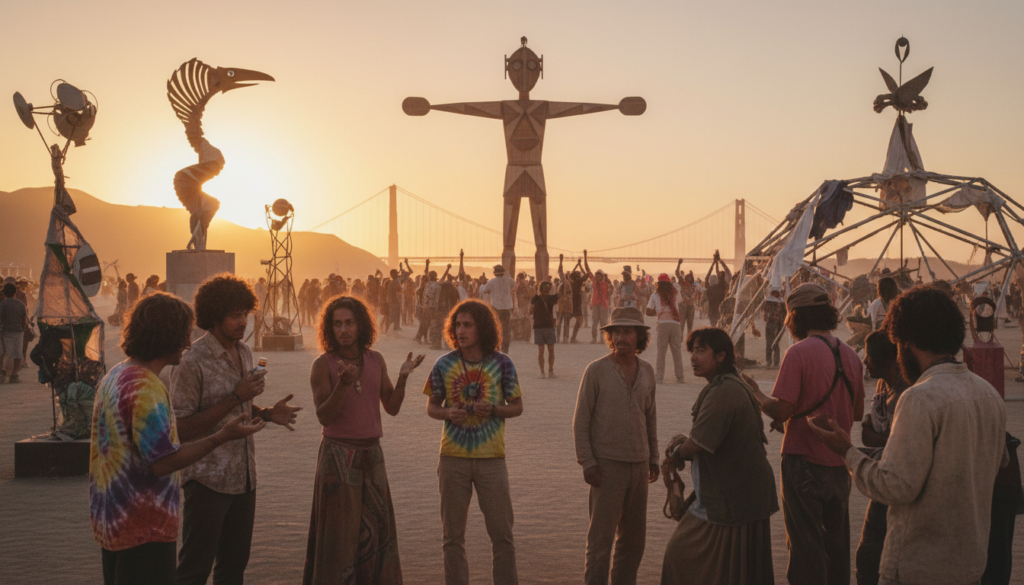
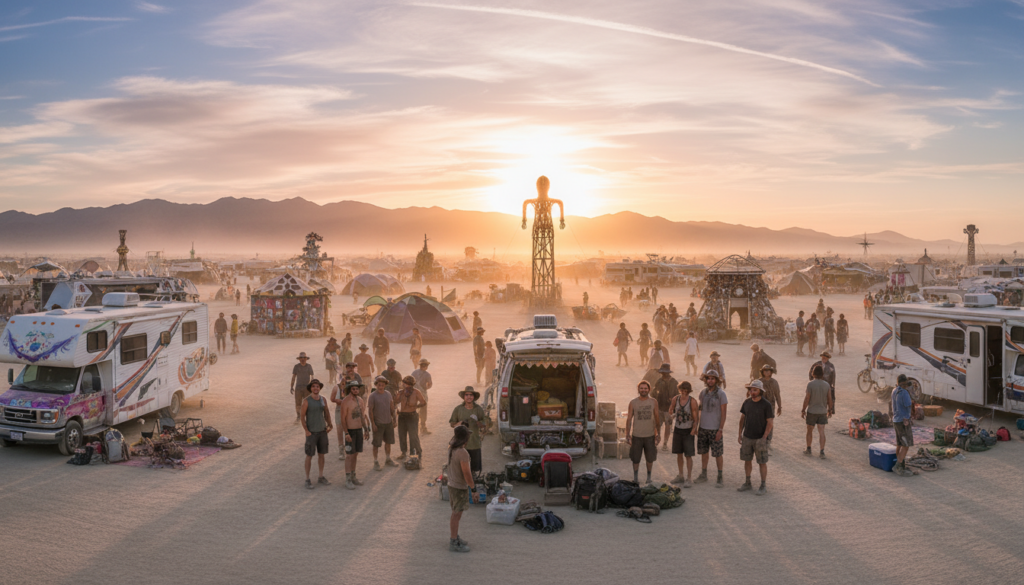
Gate and arrival: entry staff check tickets, give basic routing, and note vehicle rules. Treat the Gate as a transition point into a temporary civic space with shared responsibilities and simple codes of conduct.
Daily life in Black Rock City centers on practical routines. Shade structures, hydration stations, and food planning happen fast. Streets are numbered, so orient to blocks and meet neighbors at nearby camps.
Participants create the majority of offerings. That means workshops, performances, and interactive pieces appear because people bring them. Expect surprise encounters and scheduled events run by volunteers.
Art scale and variety
- Large sculpture pieces anchor the open playa.
- Roaming art cars and small participatory projects fill streets.
- Camps host quieter gatherings and shared meals.
Key moments on the playa
The culminating ceremony for the event centers on the burning of the Man. It draws big crowds and feels symbolic and communal.
The Temple offers a quieter contrast. Many treat that space with solemn respect for reflection and remembrance.
Theme Camps, Community, and the Gift Economy
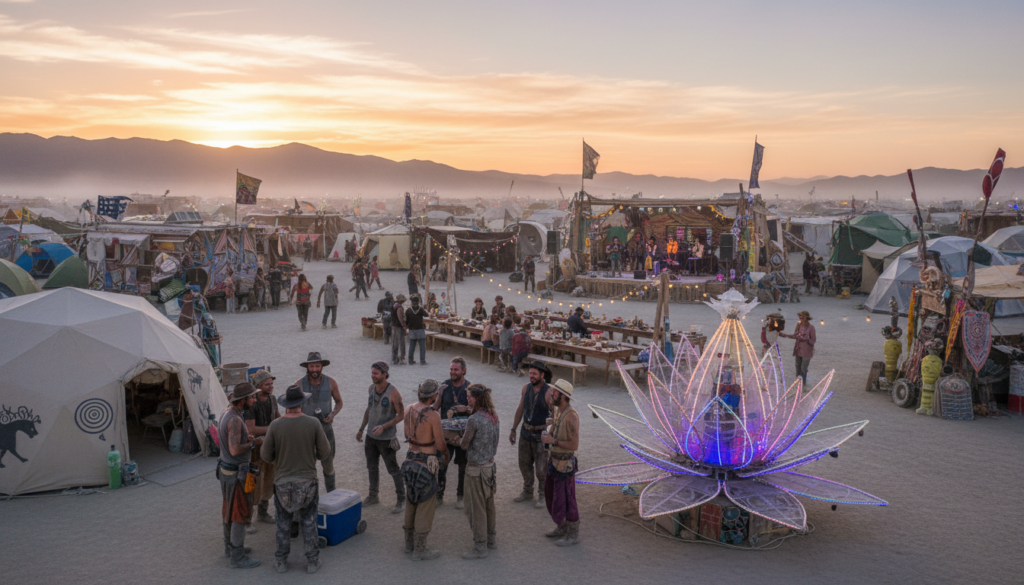
Theme camps turn empty playa blocks into lively neighborhood hubs where strangers trade care and experiences.
How gifting works in practice
Gifting means offering something without expecting payment. You might hand out morning coffee, run a short workshop, or mend a bike for a stranger.
Think contribution, not commerce. Gifts often take the form of time, skills, or small comforts.
Why thousands build the city together
Thousands of participants arrive in groups and set up camps to share labor. Setup, shade, food prep, and cleanup all rely on collective effort.
That shared work keeps the temporary city functioning and safe.
What makes camps central
Camps act like neighborhoods. They host services, performances, and quiet spaces. Many people find their best memories through a camp invitation rather than a poster.
“Gifting isn’t about spending money; it’s about time, creativity, and showing up for others.”
| Role | Example gift | Impact |
|---|---|---|
| Coffee station | Free espresso in morning | Warmth, meetups, routine |
| Repair tent | Bike fixes and pumps | Mobility, safety |
| Experience camp | Guided meditation or costume photos | Memorable moments, new connections |
The Ten Principles That Shape the Experience
The Ten Principles act like a shared compass that guides activity and etiquette on the playa. Written by Larry Harvey in 2004, these principles frame culture rather than serve as a strict rulebook.

- Radical Inclusion
- Gifting
- Decommodification
- Radical Self-Reliance
- Radical Self-Expression
- Communal Effort
- Civic Responsibility
- Leaving No Trace
- Participation
- Immediacy
Radical Inclusion, Gifting, and Decommodification
Radical Inclusion means anyone may join the circle. You’ll see fewer logos, fewer transactions, and more spontaneous sharing.
Gifting shows up as free coffee, repair tents, and offered experiences. Decommodification keeps the playa free from commercial advertising and cash exchanges.
Radical Self-Reliance and Leaving No Trace in the desert
Radical Self-Reliance asks participants to plan water, shelter, and basic medical needs. The desert demands preparation—don’t expect rescue to replace your planning.
Leaving No Trace works as ethics and logistics: every single item you bring must be packed out, including micro-debris.
Participation and Immediacy as the “no spectators” mindset
Participation and Immediacy nudge people to contribute art, help a camp, or just show up with presence. The community and the overall experience improve when participants practice these ideas consistently.
For related outdoor stay ideas and comfort planning, see a short guide to beachfront glamping.
Getting Around in Black Rock City
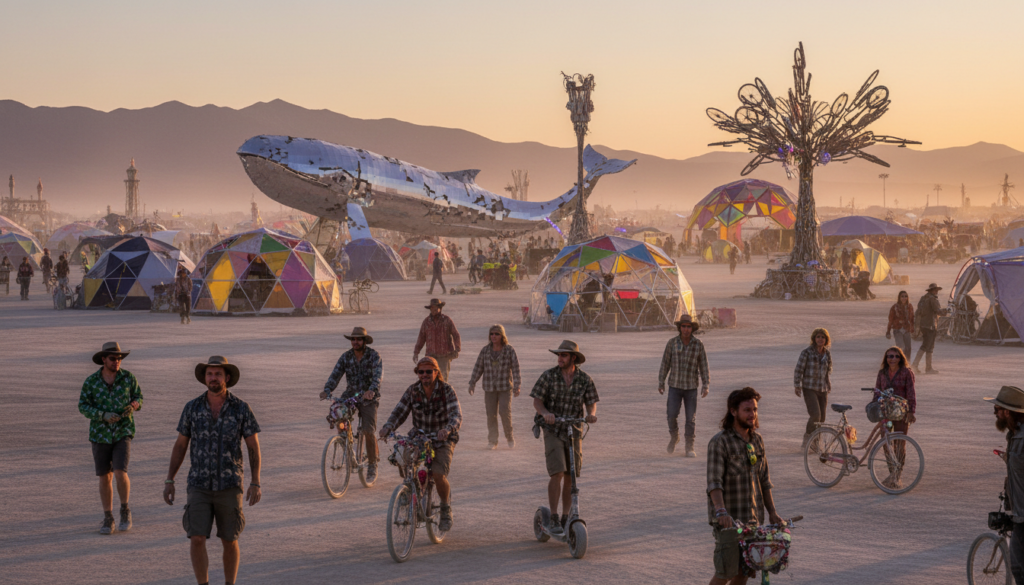
Most people get around the temporary city on foot or by bike, which keeps the pace relaxed and social. The design encourages slow movement so neighbors meet and art is easy to find.
Pedestrians and bikes first
Walking and cycling dominate daily life. Streets feel calmer, and that shapes the overall experience.
Bring strong lights for night, dust masks, and a basic repair kit. Bikes take a beating on alkaline dust and rough surfaces.
Mutant vehicles and service vehicles
Mutant vehicles (art cars) can operate only with approval and safety checks. They need special permits and responsible drivers.
Service vehicles run critical jobs: emergency response, sanitation, and logistics for the temporary community.
Why limits protect people
Strict vehicle rules and a common 5 mph speed limit reduce injuries and preserve the event’s communal vibe. Once you park on arrival, plan to leave your car in place during the main days.
- Pedestrian- and bike-first layout = safer, slower streets.
- Bike tips: bright lights, dust covers, spare tube.
- Art cars need approval; service vehicles serve public safety.
- Vehicle limits cut risks and protect the shared experience.
| Type | Role | Notes |
|---|---|---|
| Pedestrian/Bike | Main transit | Low speed, social |
| Mutant vehicle | Art transport | Permit required |
| Service vehicle | Public safety | Essential access only |
“With so many walkers and cyclists, slow traffic keeps everyone safer.”
Weather Reality Check: Dust Storms, Heat, and the “Wet Playa”
Weather on the desert plain can force quick changes to plans and travel timelines.
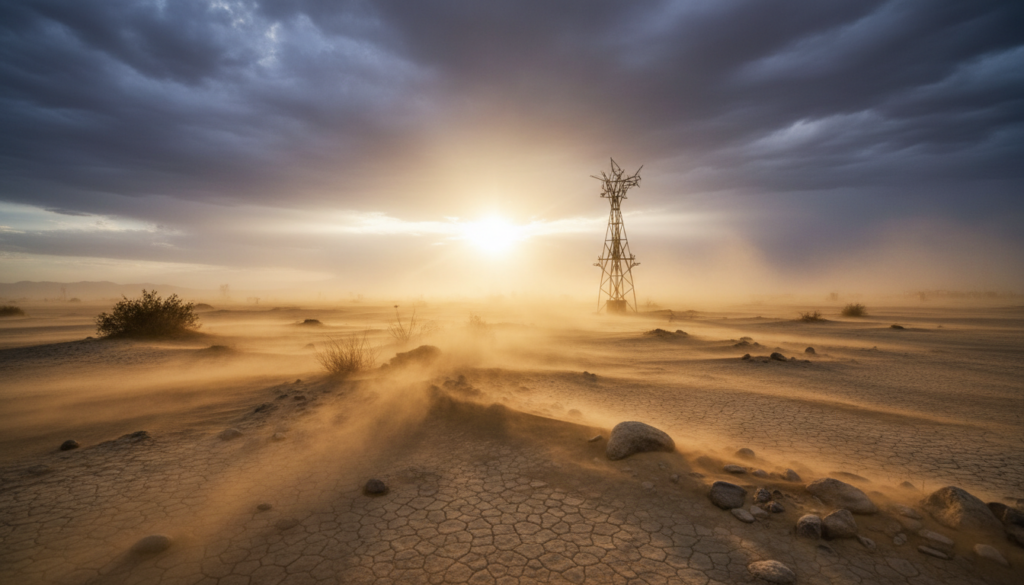
Dust storms and wind are the most common challenge on the salt flat. Wind-driven dust can cut visibility to near zero, dry out skin and eyes, and coat gear in alkaline grit.
Dust whiteouts and how to react
Stop if you hit a whiteout. Protect breathing with a mask and cover your eyes with goggles. Stay with your vehicle if safe, or shelter in place and use the city grid to find known landmarks once the wind eases.
Heat and daily risk
High sun and heat raise dehydration risk fast. Plan daily shade, drink more water than you think you need, and rest during the hottest hours.
Rain, mud, and “wet playa” impacts
When rain falls, the hard playa can turn into sticky mud that clings to boots, bikes, and vehicles. Mud makes walking exhausting and can strand cars.
Flooding lessons: In years with heavy rain, roads were closed and burns delayed until safety returned. Movement rules for vehicles can change quickly to protect the environment and people.
Plan flexibly: add extra food and water for a few days. Expect that weather will add time to arrival and exit, and that official notices may alter schedules.
| Condition | Effect | Practical action |
|---|---|---|
| Wind-driven dust | Low visibility, dry eyes, gear abrasion | Goggles, masks, stop during whiteouts |
| Extreme heat | Dehydration, heat stress | Daily shade, extra water, rest mid-day |
| Wet playa / flooding | Mud, road closures, delayed events | Pack extra days, avoid driving on soft playa |
| Rapid rule changes | Restricted vehicle movement, postponed burns | Follow official channels and stay flexible |
“Prepare for sudden weather shifts and treat flexibility as part of your trip plan.”
Note: while this guide covers conditions in the black rock desert and black rock region, remember that each burning man season can bring surprises. Check official updates and pack for variable weather.
On-Site Services, Safety, and Staying Informed
When incidents occur, fast, reliable communication makes the temporary city work better for everyone.
Emergency access and civic responsibility
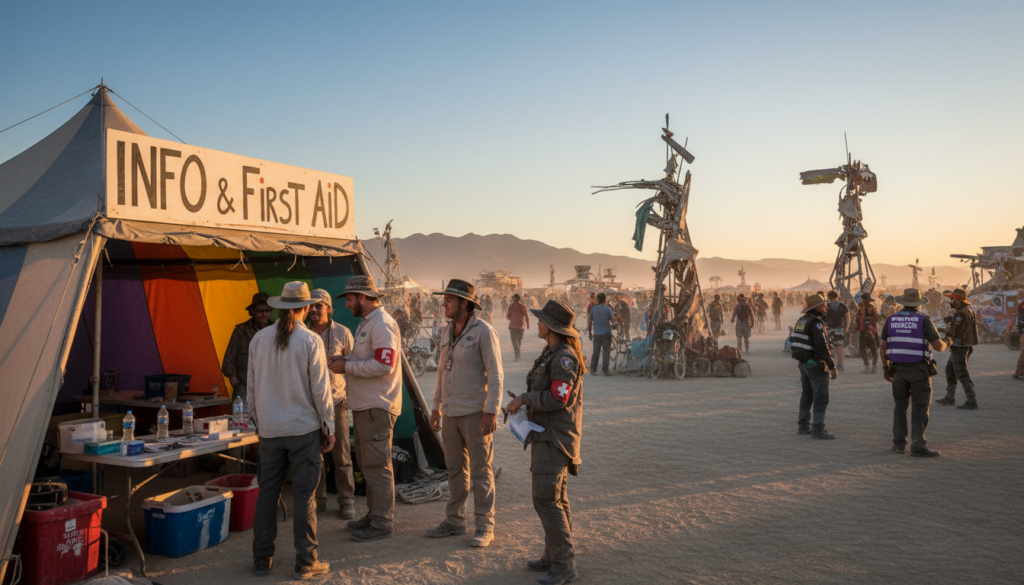
Services at the event mean emergency response access, limited civic infrastructure, and neighbor-to-neighbor help. This is not a full-service festival; plan to rely on yourself and the community.
Keep lanes clear for ambulances and utility vehicles. Respect marked routes and avoid blocking streets with gear.
Simple actions help: tidy your camp, secure loose items in wind, and check on nearby neighbors when a weather alert arrives.
Radio updates and official communications
Use official channels for critical updates. Burning Man Information Radio (BMIR) 94.5 FM broadcasts playa info and alerts.
Gate and road status come through GARS 95.1. Tune in for routing, traffic, and safety notices during arrivals and Exodus.
- Rely on BMIR 94.5 for on-playa updates and health notices.
- Use GARS 95.1 for Gate and traffic info.
- Remember: music and camp announcements are festive, but official channels guide safety during incidents.
“Preparedness plus clear communication reduces confusion in a temporary city environment.”
Planning Your Trip: Tickets, Timing, and Budget Basics
Buying a ticket starts the plan, but the full trip often adds travel, camp gear, and daily needs.
Ticketing overview and why costs add up beyond admission
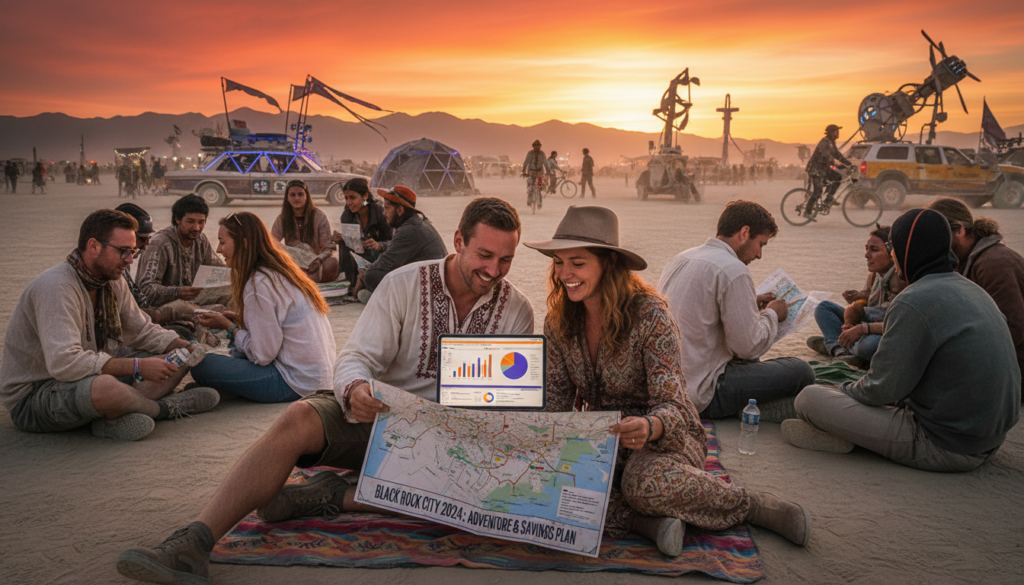
A standard ticket has been reported at about $575, yet total costs commonly rise to roughly $1,500 when you include travel, food, lodging, and gear. Think of the ticket as one line item in a larger budget.
Choosing when to arrive and how long to stay
Arriving earlier gives more setup time and fewer traffic peaks, but it adds extra days of supplies and weather exposure. Aim for a balance that fits your energy, crew plans, and supply strategy.
What to bring for self-reliance in the desert
Pack a clear water plan, shade, dust protection, strong lighting, and first-aid. Keep food safe from heat and plan for spare parts and backup supplies.
- Ticket: entry only; plan the rest.
- Reno: last major stop for shopping and rentals.
- Costs: vary by style—camped groups cut per-person outlay.
| Item | Example | Notes |
|---|---|---|
| Admission | $575 | Reported typical ticket price |
| Trip total | ~$1,500 | Travel, gear, food, lodging estimate |
| Staging | Reno | Final shopping and rentals |
“Good planning protects your experience and reduces strain on neighbors and on-site services.”
For money-saving tips that help manage your overall trip budget basics, plan early and share gear where possible.
Respecting the Site: Leave No Trace in the Black Rock Desert
Protecting the playa starts with small daily choices that stop trash before it travels on the wind.
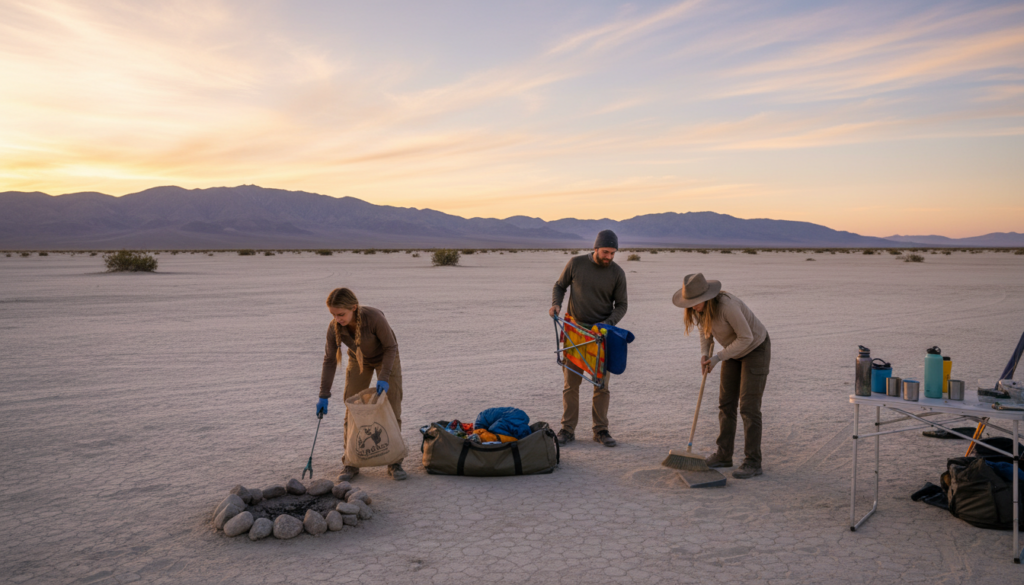
Leaving no trace works as a daily habit, not a single post-event chore. Wind and dust move tiny items fast, so check camp edges and secure loose gear every day.
Preventing trash and keeping debris inside camp
Use closed containers for trash and lightweight items. Anchor tarps, lids, and signage so gusts can’t lift them.
Do short, daily MOOP (Matter Out Of Place) sweeps around your camp. Small actions—zip ties, sealed bins, and cuffed cords—stop tiny debris from becoming a long-term problem.
Why the desert remains protected long after the event ends
The perimeter trash fence helps catch wind-blown debris, but it does not replace personal responsibility. The best outcome is debris that never leaves your camp.
Careful packing, frequent checks, and respectful cleanup protect the black rock desert and the wider black rock region. Restoration teams inspect the site for days after Exodus to ensure the desert looks unchanged.
“Treat the playa like a shared home that must look untouched when Black Rock City is gone.”
Acting with care keeps permission to use public land in future years. For broader context on public-land stewardship, see America’s most stunning national parks.
Conclusion
Title, the final note: the Black Rock Desert playa hosts Black Rock City each late summer, a temporary community that returns around Labor Day.
For action: add the official coordinates to your map, remember Pershing County and BLM rules, and plan for long drives from Reno or Gerlach. Remote conditions mean simple prep saves trouble.
The event stands out because participants build the city, run camps, and offer gifts rather than sell tickets to branded stages. That participatory design shapes the whole experience.
Before you go, confirm dates for the year you plan to attend, map your route, and finalize a packing and budget plan. Responsible participation, self-reliance, and Leave No Trace protect the playa and keep this rock city tradition alive.