
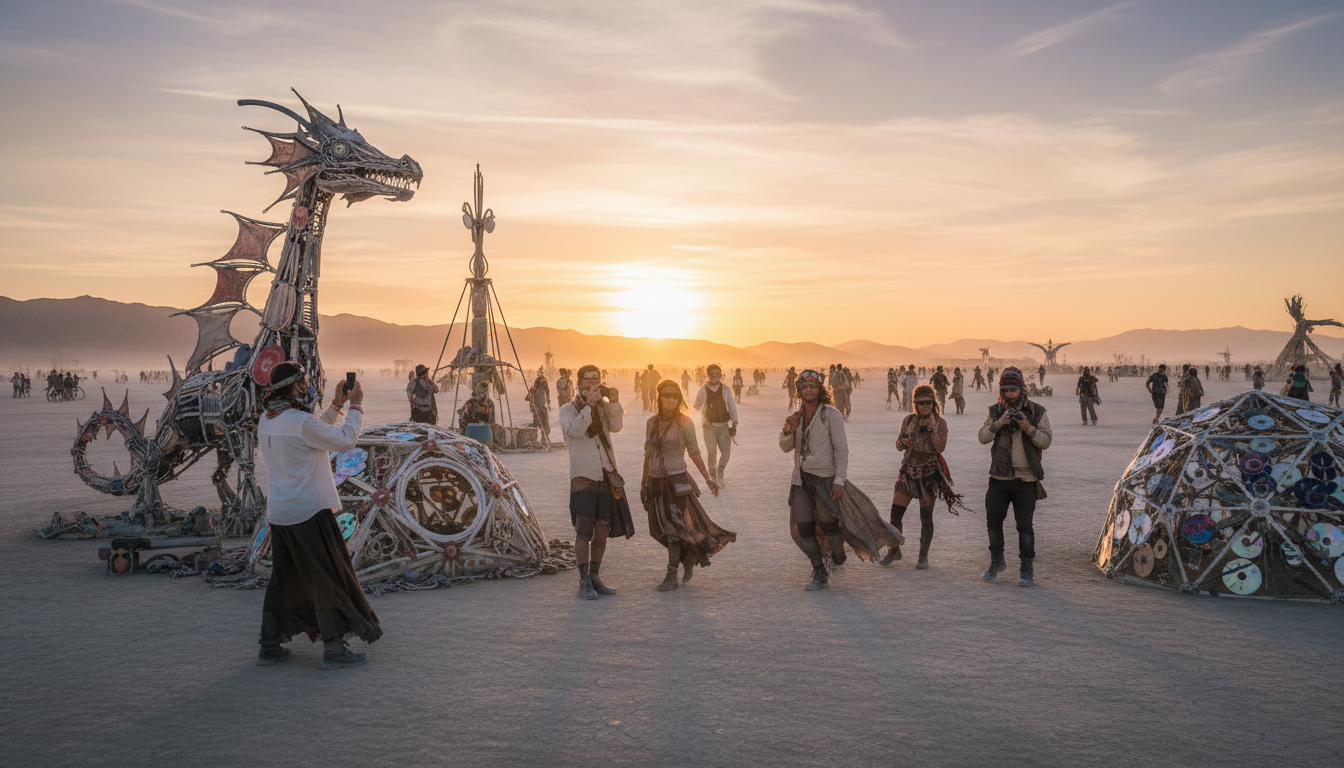
Quick answer: The annual Burning Man festival takes place in Black Rock City, a temporary city on the Black Rock Desert in northwestern Nevada.
Black Rock City appears each year for the event and vanishes after cleanup. This guide focuses on the location, what “the playa” means, and practical travel notes for arriving from Reno.
Expect details on exact coordinates, county and state facts, Gate entry procedures, and Exodus traffic tips later in the article. You’ll also get notes on remoteness and planning needs.
Desert conditions change fast — dust, strong wind, and occasional rain can affect arrival and departure. Plan for delays and bring proper gear for the playa.
For a quick contrast with other outdoor stays, see this short piece on glamping for context: glamping vs. camping.
Key Takeaways
- Burning Man takes place at Black Rock City in the Black Rock Desert, Nevada.
- The event is a temporary city that forms on the playa each year.
- Reno is the nearest major gateway; plan for remote travel and delays.
- Expect dust, wind, and sudden weather shifts that affect logistics.
- Later sections include coordinates, county details, Gate and Exodus notes.
Where is burning man held?
Every late summer, a temporary city rises on a flat playa in northwestern Nevada. That pop-up settlement is called Black Rock City, and it hosts the annual burning man event on the wide, hard-packed playa.
Black Rock City in the Black Rock Desert, northwestern Nevada
Since 1990, Black Rock City has occupied the Black Rock Desert in Pershing County, Nevada, United States. Streets, addresses, and camps appear for the event and then vanish, leaving the open desert as it was before.
Pershing County, Nevada, United States
Pershing County handles jurisdictional needs for the temporary settlement. Visitors should plan travel and emergency contacts with that county in mind rather than expecting local hotels or stores near the site.
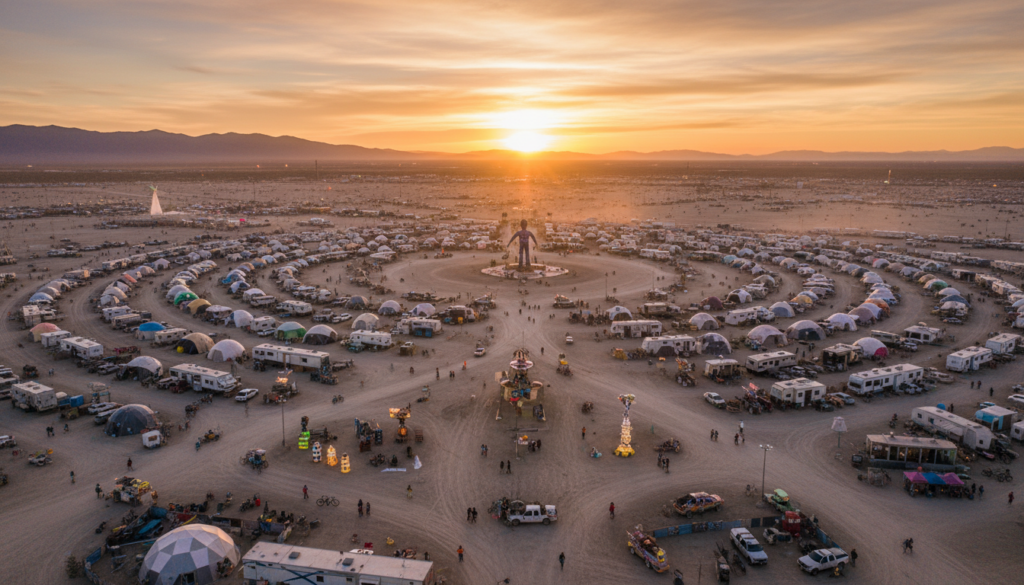
A short-lived city built each year
The point: Black Rock City is intentionally remote and participant-built. That setup makes the location central to the experience — large art, theme camps, and community rely on a blank playa and a grid laid out just for the year.
“Participants create the city together, and then they leave no trace.”
- Temporary streets and services appear only for the event.
- The Black Rock Desert covers the region; Black Rock City is the festival layout.
Black Rock City explained: the pop-up city on the playa
A temporary grid of streets and camps transforms open desert into an organized festival city.
Black Rock City is the pop-up settlement that exists only during the burning man event. It has named streets, a planned layout, and shared public spaces. The design makes a huge, flat area feel navigable and familiar.
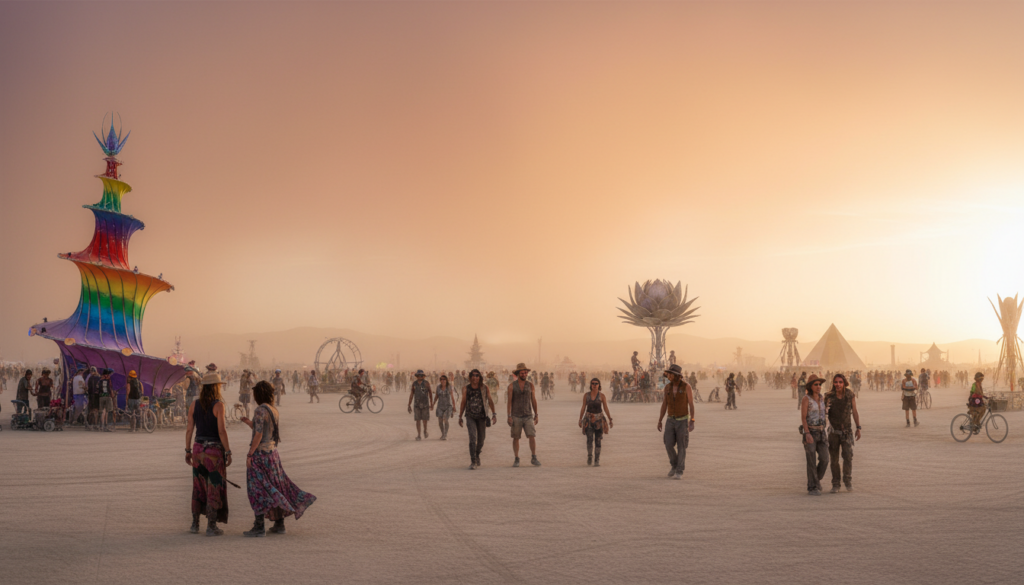
What the city means for attendees
The layout guides daily life. Residents and visitors use the street grid and address-like system to find camps, meeting points, and amenities.
How design supports safety and response
The grid and clear addressing help emergency teams reach people fast. With so many attendees and temporary structures, predictable routes matter for medical and fire access.
- Planned streets: named avenues and radial streets create landmarks.
- Address system: functions like city data to direct services.
- Community-built: participants shape neighborhoods and shared culture.
“Participants create and maintain a functioning city during the event.”
City planning is a civic task. Predictable routes and coordination reduce risk and help everyone enjoy the community. For a quick contrast with other outdoor stays, see useful glamping tips.
Next: exact coordinates and map-level details in the following section.
The exact Burning Man location coordinates
Coordinates (DMS): 40°47′13″N 119°12′15″W.
Coordinates (decimal): 40.7869°N, -119.2042°W.
What these numbers mean: the marker points to the central area of Black Rock City on the Black Rock Desert playa. Plug either format into a GPS or mapping app to see the general festival footprint.
Keep in mind that the event perimeter and vehicle entry routes change from year to year. Use these coordinates as a general reference, not a final turn-by-turn guide.
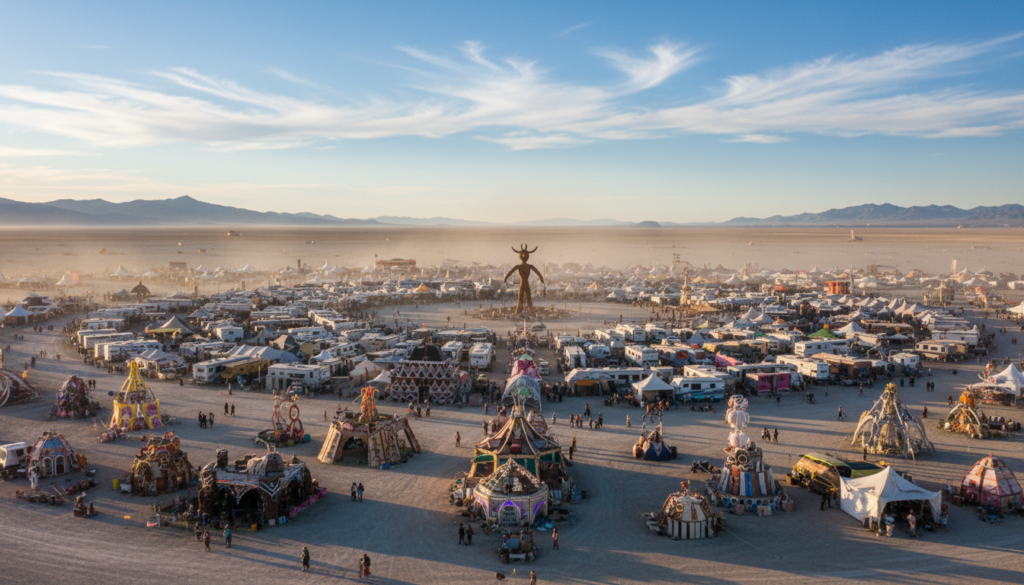
Practical tip: rely on official festival maps and posted directions for the final approach. A GPS can lead you onto unmarked desert roads that are closed or unsafe.
“Use coordinates as a map reference, and follow event guidance for access and safety.”
The Nevada desert setting affects supplies, vehicle rules, and weather risk. Treat the coordinates as the start of navigation planning, tying map data back to on-the-ground realities for Black Rock City in the black rock desert.
Black Rock Desert geography and what “the playa” really is
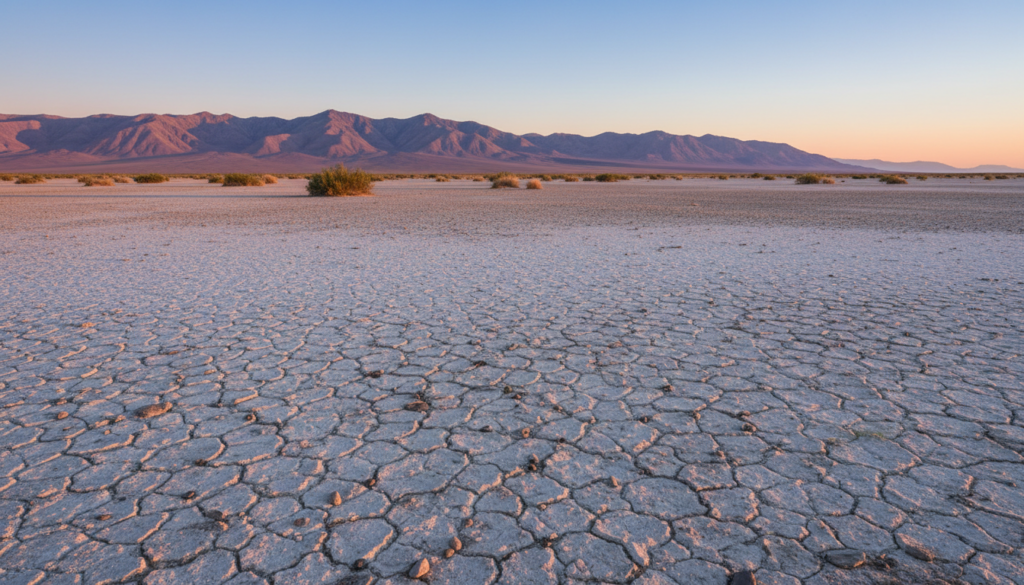
The playa is a wide, flat dry lakebed in the Black Rock Desert that becomes the festival’s blank canvas. Participants call this plain the playa, and camps, streets, and large artwork get built right on that surface.
Why the surface works for large art and camps
The hard-packed salt and clay give enormous, uninterrupted space. That room allows artists to design pieces at human and monumental scale.
Wide sightlines mean installations read from far away. Camps spread out with clear paths for exploration, making the whole experience feel open and communal.
How weather turns dust into “wet playa”
The same flatness has downsides. Fine playa dust blows in gusts and coats gear, reducing visibility and changing how people move.
Rain flips the script: soaked clay becomes sticky mud known as “wet playa.” Driving bans often follow, and residents may have to shelter in place until surfaces dry.
“From dust to wet playa, the ground shapes logistics, art, and the social rhythm of the event.”
- Playa = broad dry lakebed used as the event canvas.
- Surface supports large-scale art and sprawling camps due to space and visibility.
- Weather can switch conditions quickly, affecting travel and safety.
How far is Burning Man from Reno and other nearby points?
Driving from Reno to the festival site typically covers roughly 100 miles on open Nevada roads. That distance is a common reference for most travelers and gives a quick planning baseline.
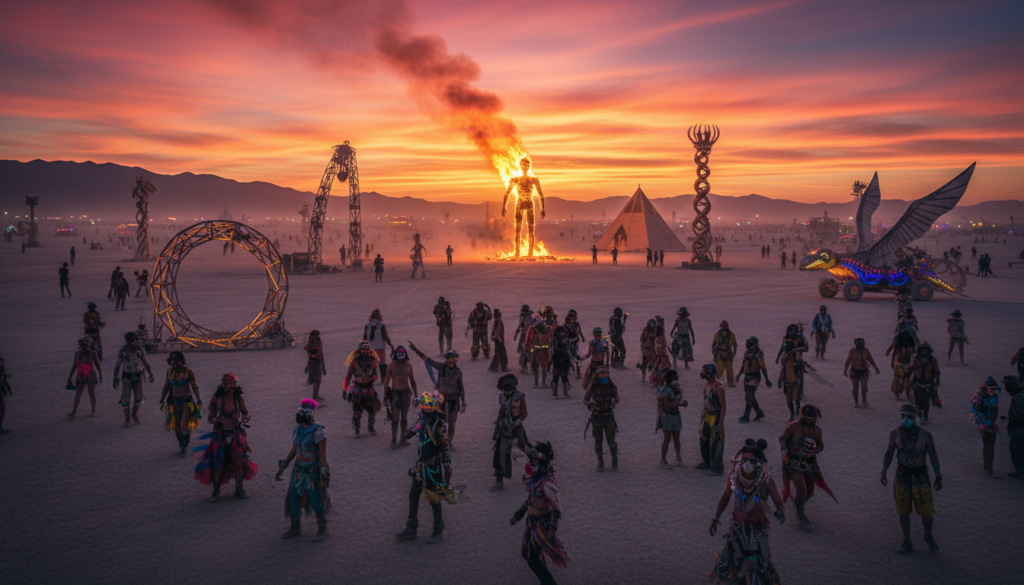
About 100 miles north-northeast of Reno (commonly cited)
The usual figure is about 100 miles (160 km) north-northeast of Reno. That estimate fits most directions from the city center and helps you plan fuel and travel time.
Why reported distances sometimes differ
Some sources list about 141 miles (227 km) depending on the start point, the chosen route, or whether the measurement goes to the Gate road or to the festival center.
Why remoteness matters: once you pass the last towns, services disappear. You must be self-reliant for the whole stay.
- Fuel strategy: top off before leaving Reno or north reno neighborhoods.
- Water and food: bring ample supplies—stores won’t be nearby for the duration.
- Travel time: expect delays on peak days; a short drive can take much longer.
The most common staging hub is Reno for last-minute groceries, parts, and gear runs.
Note: later sections cover Gate entry, Exodus delays, and why the timing of your drive matters as much as total mileage.
Burning Man’s origins in San Francisco and the move to Nevada
A modest beach bonfire in San Francisco sparked a tradition that needed more room to grow.
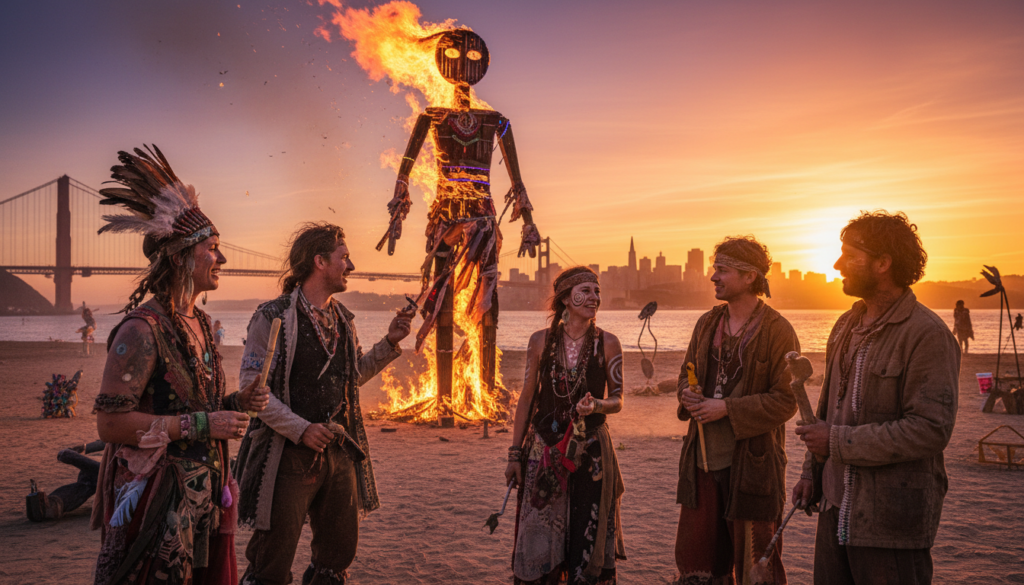
On June 22, 1986, founders Larry Harvey and Jerry James staged a small ritual at Baker Beach in San Francisco.
The first event was a one-day, public celebration with friends and neighbors. It caught local attention and inspired repeat gatherings the next few years.
Baker Beach as the 1986 starting point
Baker Beach served as a visible, civic spot that let the idea take root. The beach format could not support larger art or growing crowds for long.
The first Black Rock Desert burn and the foundation of today’s event
In 1990, the event moved inland for Zone Trip No. 4. That year marked the first large burn on the Black Rock Desert, and it set the basic template for scale and safety.
Why Black Rock City became the long-term home starting in 1990
The Black Rock site offered vast flat space, remoteness, and freedom to build. It allowed theme camps, art, and a temporary city to grow naturally.
“The move to the playa turned a brief ritual into a full, participant-built city.”
| Year | Location | Note |
|---|---|---|
| 1986 | Baker Beach, San Francisco | Founding beach burn by Larry Harvey and Jerry James |
| 1990 | Black Rock Desert, Nevada | Zone Trip No. 4 — first desert burn and template for Black Rock City |
| 1990–present | Black Rock City | Permanent festival home enabling large-scale builds and community |
Today the event still evolves each year, but Black Rock City remains the anchor that answers the core question of location and scale.
When Burning Man happens and how Labor Day shapes the schedule
Each late-summer festival follows a predictable nine-day rhythm that climaxes around the Labor Day weekend. That nine-day stretch runs up to and includes Labor Day, and it frames planning for travel, supplies, and camp life.
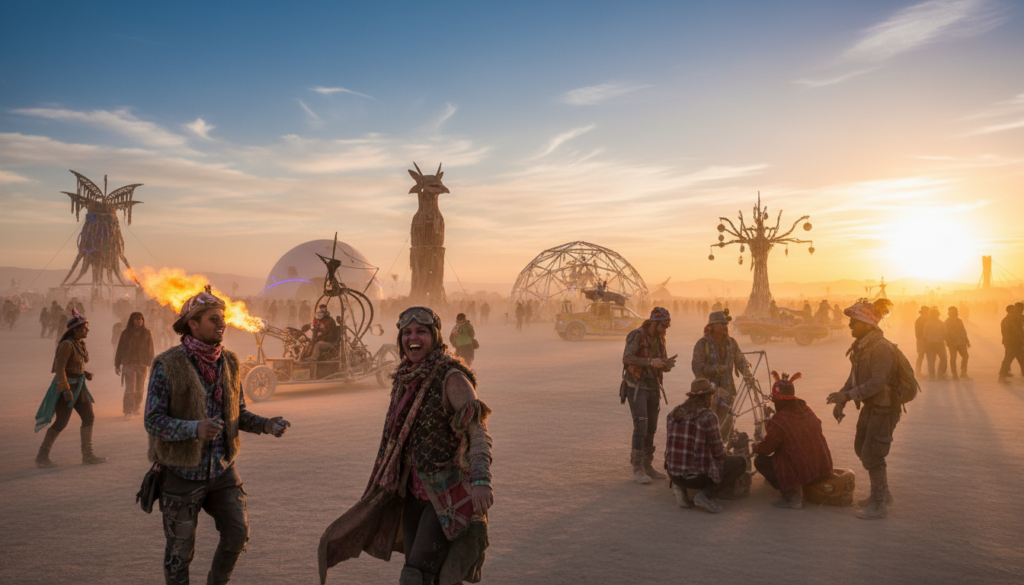
The nine days leading up to and including Labor Day
The event spans nine days every year. Most people arrive during the early build week or anytime before the main weekend.
Why the Man burns the Saturday before Labor Day
The burn typically happens on the Saturday night before Labor Day. That night is the emotional and logistical peak, drawing the largest crowds and triggering intense demand for food, water, and fuel.
- Trip planning: expect heavier traffic and fuller camps around the main burn weekend.
- Arrival timing: early entry gives quieter setup time; late arrivals join peak energy but face longer lines.
- Location impact: the remote desert setting makes timing crucial for supplies and rest—top off before you drive in.
“Plan arrival and departure around the main burn night to avoid longer waits and supply shortages.”
Later sections cover Gate entry, road access, and why leaving right after the major burns often means long Exodus delays.
Why Burning Man stays in northwestern Nevada year after year
Few places in the U.S. offer the empty sky and wide ground needed for massive art builds and creative transport. That scale matters. Large installations and mobile works need open space to be safe and seen.
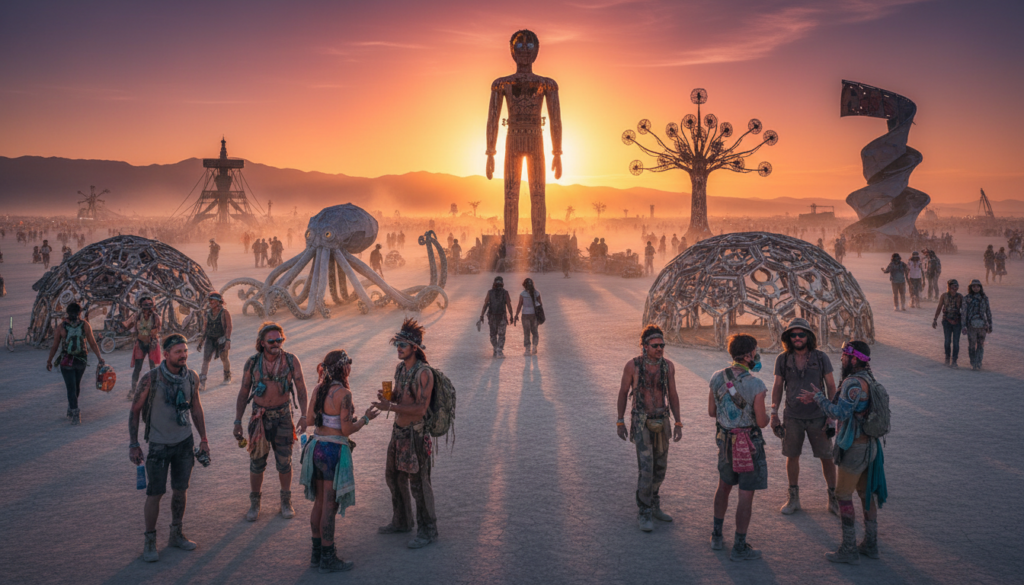
Space for large installations, mutant vehicles, and theme camps
The wide playa supports towering sculptures and complex mechanical art. These pieces demand room to arrive, assemble, and operate without crowding.
Mutant vehicles—the decorated art cars that roam the city—need clear routes and buffer zones. The flat surface helps crews move and park these rolling artworks safely.
How the site supports participatory culture
The location lets people build more than they visit. Camps set up like neighborhoods, each offering gifts, performances, and services to neighbors.
The result: attendees become co-creators. That communal approach depends on a place big enough for many projects and spontaneous collaboration.
“The desert isn’t just a backdrop; it makes the event possible by giving artists and communities room to create.”
| Feature | Why it needs space | Effect on community |
|---|---|---|
| Large art | Requires staging, cranes, and clear sightlines | Creates landmarks and shared gathering spots |
| Mutant vehicles | Need driving lanes and safety buffers | Add mobility, surprise, and interactive performance |
| Theme camps | Need area for structures and public activities | Form neighborhoods and keep discovery alive |
In short, northwestern nevada’s open basin shapes the event’s identity. The place and the people build the experience together. For a different outdoor stay idea, see useful beach glamping tips.
Getting to Black Rock City: what to know before you drive in
Plan your drive carefully: desert roads, changing weather, and long lines shape arrival more than distance alone.
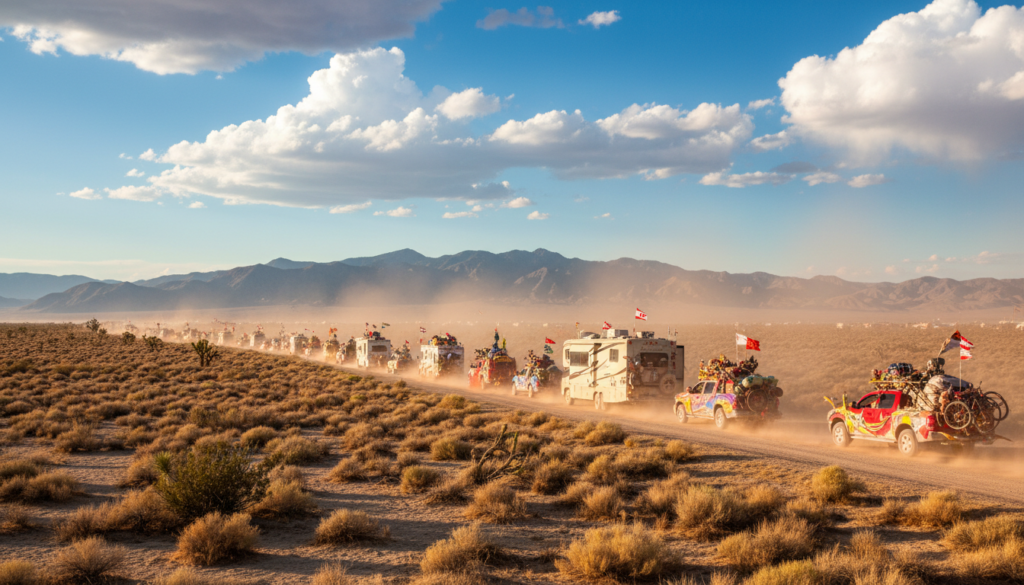
Typical approach routes from Reno and northern Nevada
Most attendees drive north from Reno on Highway 447 and then follow signed access roads to the Gate. Services end well before the playa, so top off fuel and supplies in Reno.
Arrival, “Gate,” and what to expect
Gate is the controlled entry point where staff check tickets and vehicle passes. Expect vehicle searches and a clear transition from public roads into the temporary community.
Have your ticket and ID ready to reduce wait time. Pack water, snacks, and sun protection within easy reach for the final leg.
Exodus: leaving the playa and why delays happen
Exodus is the organized departure flow after the event. High volume and single-route exits can mean waits that last hours.
Wet playa or road closures pause vehicle movement entirely. Organizers run phased exit operations when conditions improve, so patience and extra supplies help.
- Tip: prepare tickets, vehicle paperwork, and essentials before Gate to ease bottlenecks.
- Expect longer arrival or exit time during peak windows and bad weather.
- Carry extra fuel, water, and food in case delays stretch into the night.
“A calm, prepared approach makes the trip safer and arrival smoother for everyone.”
Cars, bikes, and mutant vehicles: how transportation works inside the event
After you drive in and park at camp, the city changes its pace. Regular driving is mostly paused so people can move safely by foot and bicycle. This rule has been in place since 1997 to cut accidents and keep streets pedestrian-friendly.
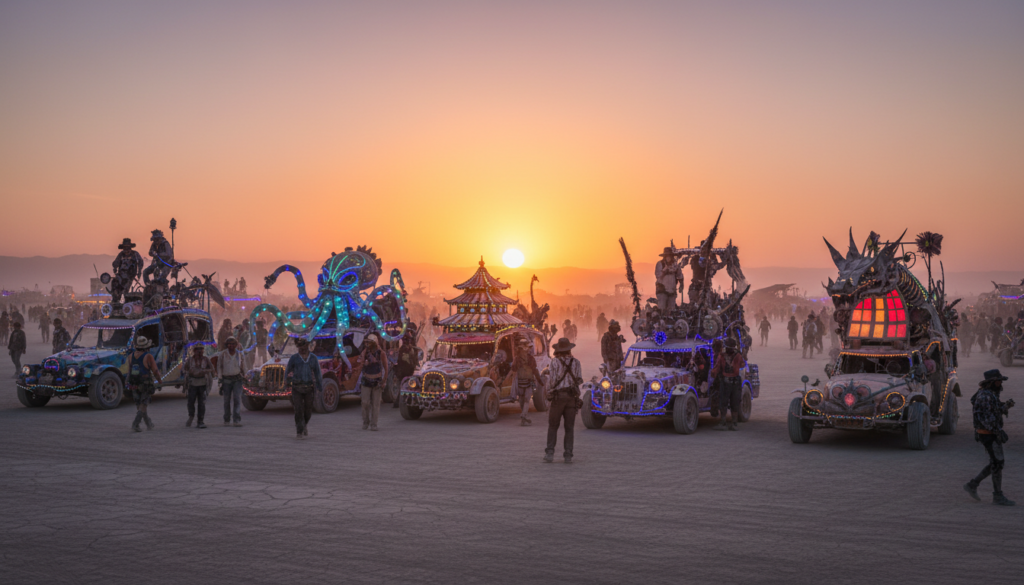
Why regular driving is limited once you’re parked
The basic rule of thumb: you drive into the site, park at your camp, and then you avoid using cars during the event. Only approved service vehicles get routine access. This reduces vehicle-pedestrian conflicts on crowded streets and in low-visibility dust.
Mutant vehicles and art cars as a central draw
Mutant vehicles—also called art cars—are rolling artworks that add surprise and movement to the city. They must pass safety inspections and receive permits before they roam. These vehicles are a curated part of the event, not a substitute for everyday cars.
Safety and why the policy exists
Limiting cars lowers injury risk in a packed, dusty environment. Reduced traffic, slower speeds, and clear pedestrian zones make the community safer for everyone. Organizers enforce rules to protect artists, crews, and visitors.
- Bring a bicycle: it’s the default way to get around.
- Pack essentials: lights, locks, tubes, and a pump.
- Plan mobility: map key camps and art pieces before nightfall.
“Mobility here becomes part of the experience—exploration by pedal or on foot connects people to art and neighbors.”
What the Black Rock Desert environment is like in the present day
The Black Rock Desert can flip from calm to chaotic in a single afternoon, and your plan should too. Hot days, cold nights, and biting wind shape every experience on the playa.
Dust storms, wind, and visibility challenges
Gusts can lift fine dust that stings eyes, irritates lungs, and coats electronics. Visibility can drop to a few feet during a sudden storm.
Practical effect: navigation becomes hard, communications suffer, and camps must secure loose gear fast.
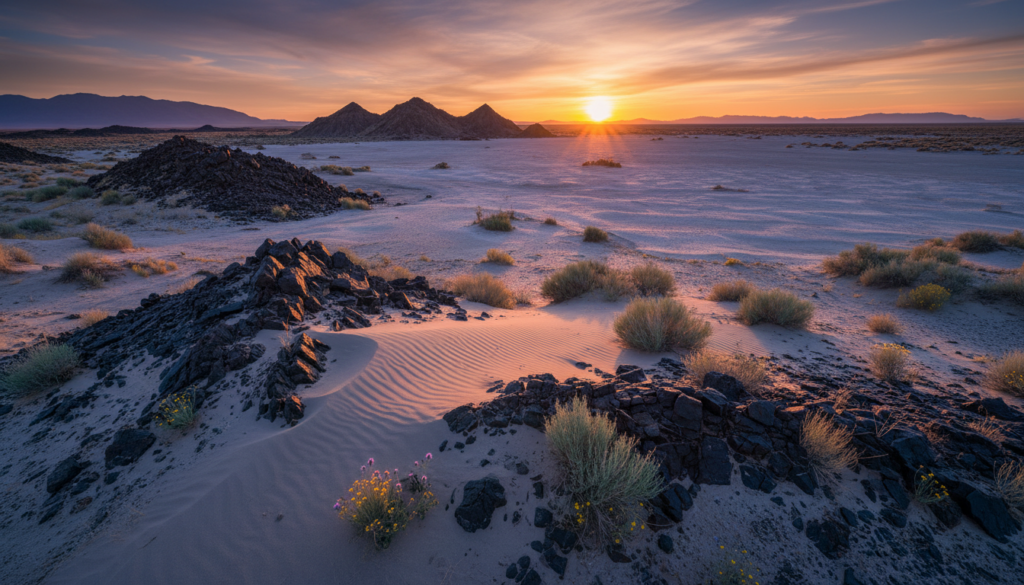
Rain and mud impacts, including major flooding disruptions
When rain hits the playa it turns to heavy, sticky mud that traps vehicles and halts exits. Past events saw large numbers of attendees delayed by driving bans and mud-locked roads.
Why you must be prepared for changing conditions
Participants and attendees should bring extra water, food buffers, and sturdy shelter to ride out delays. A mindset of self-reliance makes the event safer for the whole community.
“Assume conditions can change; preparation keeps you and your neighbors safe.”
- Pack dust protection for eyes, lungs, and gear.
- Plan for shelter and supplies if roads close for a day or more.
- Stay flexible: bad weather can alter schedules and emergency response times.
For a contrasting outdoor stay idea, see glamping near the beach to compare planning needs.
How big the event is: attendees, community, and temporary infrastructure
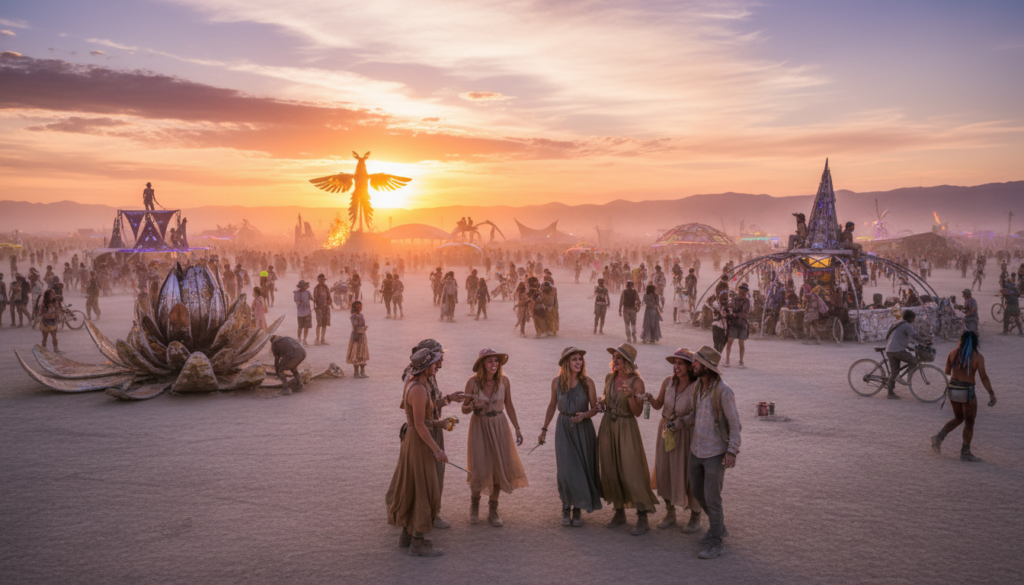
Attendance numbers show how a short-lived settlement feels surprisingly like a real city. Recent examples give scale: official 2019 attendance reached about 78,850. In 2021, conditions produced an unofficial crowd near 20,000, and other years see media estimates around 70,000.
Those figures mean tens of thousands of participants and attendees share one desert space. The result looks like a functioning city built and run for days by its people.
Temporary infrastructure that acts like city services
Temporary infrastructure includes mapped streets, waste stations, potable water points, medical tents, and portable power setups. These systems operate only for the event and then vanish after cleanup.
| Item | Function | Duration |
|---|---|---|
| Streets & addresses | Navigation, emergency access | Event week |
| Medical & safety tents | First aid, emergency response | Event week |
| Waste & recycling stations | Leave No Trace management | Event week |
Living in a short-lived desert city
Daily life here demands strict water discipline, careful waste handling, and shared norms about noise and safety. Camps act as neighborhoods, and volunteers keep services running.
Culture scales through participation: gifting, volunteering, and shared responsibility replace vendor sales. That barter-free system keeps community values central even with large crowds.
“A large event survives by structure and the willingness of people to pitch in.”
Because tens of thousands share one environment, rules for addresses, safety, and transport keep the place livable. The Ten Principles help explain how such scale stays coherent and community-centered in the next section.
The Ten Principles and how the location supports them
The Ten Principles act as a cultural compass for every choice inside Black Rock City. Written by Larry Harvey in 2004, these principles guide behavior, camp design, and public art.
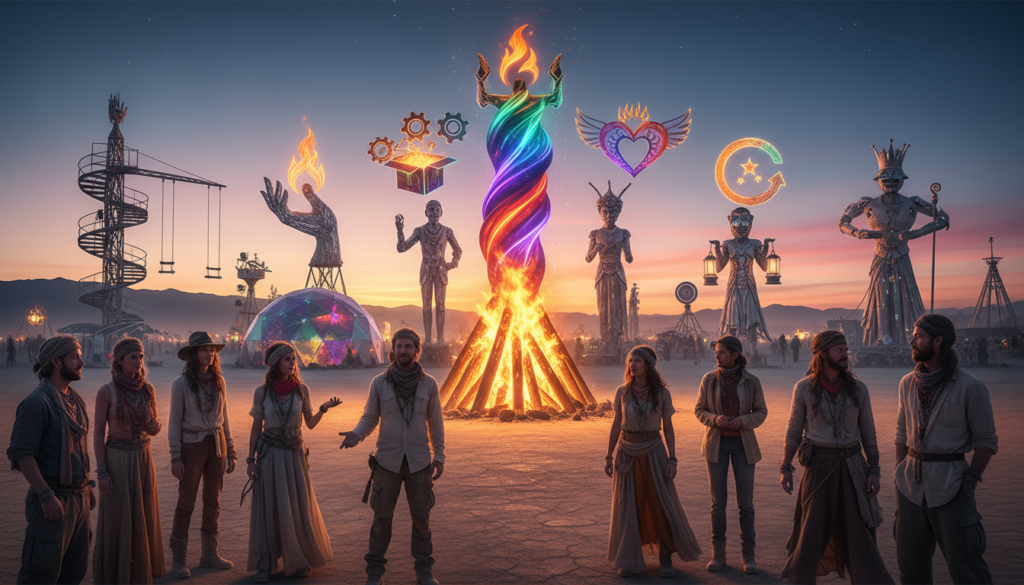
- Radical Inclusion
- Gifting
- Decommodification
- Radical Self-Reliance
- Radical Self-Expression
- Communal Effort
- Civic Responsibility
- Leaving No Trace
- Participation
- Immediacy
Radical self-reliance and radical self-expression in a remote desert
The remote playa enforces self-reliance. If you did not bring water, shade, or repair tools, you must adapt or ask fellow participants for help.
At the same time, the open flat space turns every camp and vehicle into a stage. Large-scale art and costume experiments thrive here because the setting invites bold expression.
Leaving No Trace on the playa
Leaving No Trace matters because the desert must return to its prior state. Waste plans, packing-out gear, and dust-aware build methods are enforced as a practical rule and a shared ethic.
Participation, gifting, and decommodification in daily life
In the community, people offer food, shade, performances, and repairs without payment. That gifting culture and a policy against commerce shape how camps operate and how art is funded.
Understanding these principles explains many rules and helps visitors prepare, behave respectfully, and contribute to a safer, creative city.
“Participants create the city together, and then they leave no trace.”
Art, music, and theme camps: what people create in Black Rock City
Instead of scheduled headliners, the city fills with participant-led performances and giant installations. This approach makes every street an invitation to join, play, or explore.
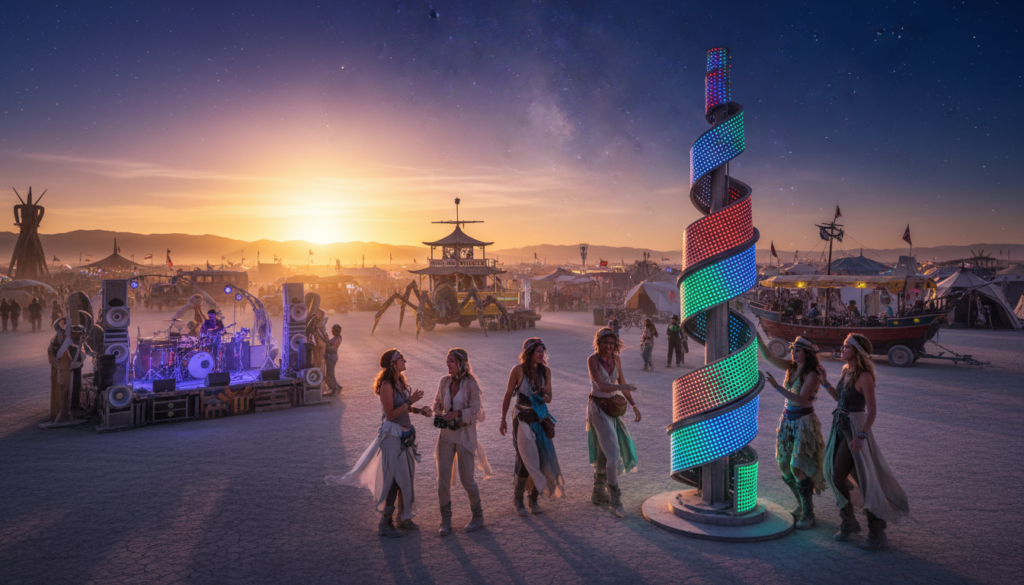
Interactive installations, performances, and large-scale builds
Artists and crews use the open playa to build interactive sculptures, light pieces, and moving art cars. These works invite touch, movement, and collaboration.
Music ranges from quiet sound gardens to all-night dance spaces. There are no headline schedules—participants both perform and listen.
“Participants create the show; you won’t find the usual festival hierarchy here.”
Theme camps and how they shape neighborhoods
Theme camps act like living rooms, bars, clinics, and stages. Each camp offers a distinct vibe and regular activities.
Camps help newcomers find community fast. They map the city into neighborhoods where people gather, trade skills, and host events.
Temple and other major communal structures
The Temple serves as a quiet, reflective space for remembrance and shared ritual. It contrasts high-energy zones and offers a place to process.
Large communal builds often receive backing from grants and volunteer effort, turning the playa into a temporary art world.
- Grants and support: organize ambitious projects and fund engineering needs.
- Art cars: bring surprise and mobility across streets and squares.
- Range of zones: from meditative altars to loud music hubs—participation matters most.
In short: the desert’s size lets creators dream big and hide discoveries around every corner, making the community itself the main act.
Tickets, costs, and realistic trip planning for the Nevada desert
A ticket opens the gate; real costs come from gear, travel, and desert-ready supplies. A standard ticket once listed at about $575 covers entry, but total budgets often reach $1,500 or more depending on travel, costumes, and camp gear.
Why tickets are only the starting point
Tickets pay for admission. They do not pay for transport, fuel, food, or the shade structure that will keep you safe on hot days.
Plan for transportation to and from Reno, vehicle passes, campsite supplies, and incidentals.
Core supplies tied to the location
- Water: at least 1.5–2 gallons per person per day for drinking and cooking.
- Food: calorie-dense, nonperishable meals and snacks for delays.
- Shelter & shade: sturdy canopy, anchors, and warm layers for night.
- Fuel & power: extra gas and charging solutions for lights and medical devices.
- Protection: goggles, masks, and warm clothing for dust and cold.
“Good planning turns price into comfort and lets you focus on the community experience.”
Practical tip: pad supplies for extra time during Exodus or weather delays—self-reliance lowers risk and improves your stay.
Conclusion
Conclusion
Burning Man takes place at Black Rock City, on the Black Rock Desert playa in Pershing County, Nevada (approx. 40.7869°N, -119.2042°W). The temporary city forms each year for a nine-day festival that peaks around Labor Day.
Remember: the site’s remoteness enables huge art, theme camps, and mutant vehicles, but it also demands self-reliance. Plan timing for Gate entry and Exodus, and expect weather swings from dust to wet playa.
Respect the Ten Principles: participation, community, and Leaving No Trace matter more in a distant desert than they do in everyday life. Use these facts to plan responsibly and arrive ready to contribute.
For other outdoor-stay ideas, see glampings.