
Short answer: what do you do at burning man is less a fixed schedule and more a participant-built temporary city full of art, camps, and surprise moments.
Think of the event as a city you join for a week. Days are best for wandering large art pieces and daytime programs. Nights shift to music, lights, and roaming theme camps.
Two big buckets matter: creative activities—installations, mutant vehicles, and the Man and Temple burns—and practical needs like tickets, water, dust protection, bikes, and camp logistics.
This guide targets first-timers in the United States who want clear, real-world planning help. It covers costs per person, ticket tips, vehicle planning, and staging from Reno, Sacramento, and San Francisco.
Plan well: the desert layout and weather shape your whole experience. Embrace a no-FOMO vibe—most people never see everything, and that’s normal.
Key Takeaways
- Burning Man is a participant-built temporary city, not a typical festival.
- Balance creative activities with logistics like water and bikes.
- The week moves from daytime art to nighttime music, ending with major burns.
- This guide helps U.S. first-timers with costs, tickets, and staging options.
- Good prep for desert conditions shapes your entire trip.
Burning Man and Black Rock City: What It Is (and What It Isn’t)
A week-long, participant-run city appears in Nevada, focused on art, service, and hands-on contribution.
Black Rock City is a real, temporary city erected each year on the Nevada playa. It spans long blocks, so walking between large installations can take time. Plan for distance, limited shade, and basic comforts you supply yourself.
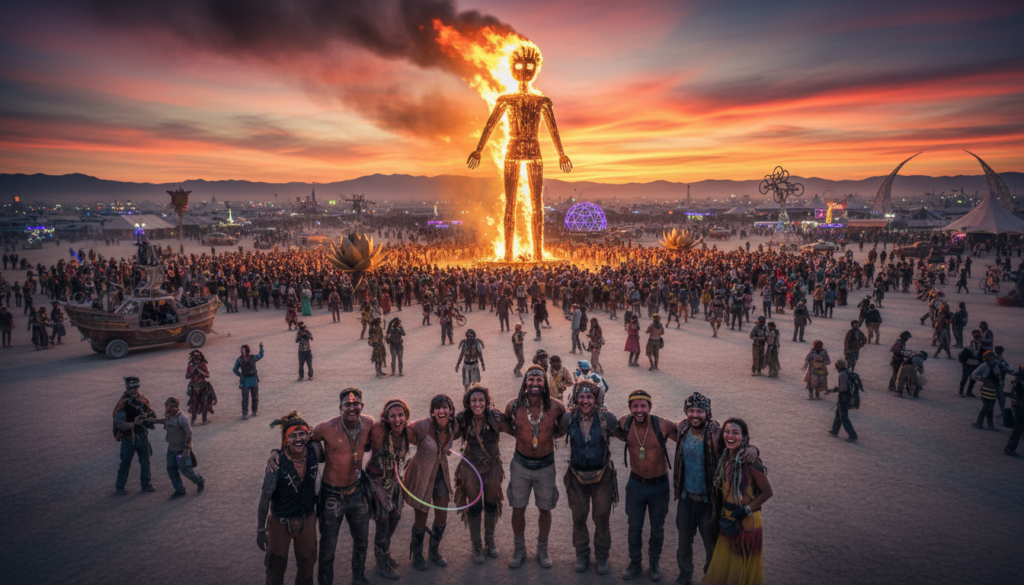
The event is not a typical festival. There are no headliners or fixed sets. Instead, the experience relies on participants who create art, workshops, music, and camps. That means you won’t be a passive spectator—you’ll be part of the exchange.
A participant-created model
People and groups bring projects that range from small workshops to large installations and mobile sound vehicles. If it’s on playa, someone built or hosted it. Expect surprises and pop-ups every day and night.
The Ten Principles in action
- Radical inclusion: welcome anyone.
- Gifting: share without asking for payment.
- Decommodification: no advertising or sales.
- Radical self-reliance: bring water and basic gear.
- Radical self-expression: dress and act freely, respectfully.
- Communal effort: help set up and break down.
- Civic responsibility: follow safety and law.
- Leave No Trace: pack out trash and MOOP.
- Participation: join in, offer skills or time.
- Immediacy: be present and responsive.
First-time reality check
The desert has rapid temperature swings and dust storms. Bikes are essential for getting around. Understanding the principles makes interactions with camps, art cars, and fellow participants smoother and more rewarding.
| Feature | On-playa example | Action for first-timers |
|---|---|---|
| Self-reliance | Bring your own water | Pack extra water for heat and delays |
| Gifting | Free snacks or shade stations | Bring a small gift or offer help |
| Leave No Trace | MOOP sweep at camp | Use sealed containers and collect debris |
| Participation | Volunteer-run performances | Say yes to offers and RSVP to camps when needed |
What Do You Do at Burning Man All Week?
A full week on the playa is a choose-your-own-adventure of art, workshops, and late-night surprises.
Explore large-scale art and interactive installations
Playa art ranges from quiet sound pieces to massive, climbable sculptures. Many works invite touching, listening, or joining a shared action when rules allow.
Some installations are paired with art cars that roam the night. Plan to spend long stretches focused on a single piece; the scale rewards time and attention.
Join theme camps and pop-up workshops
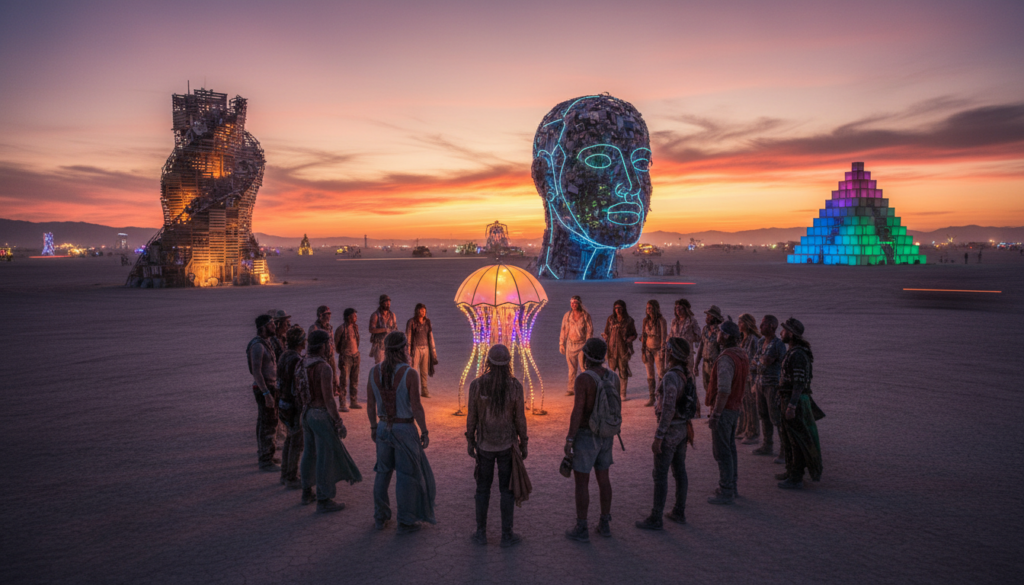
Camps act as community hubs that gift music, food, care stations, or absurd games. Listings live in camp guides and apps, but surprise offerings pop up too.
Workshops often include movement, art-making, meditation, consent education, and practical skill-shares. These sessions range from playful to deeply reflective.
Dance, roam, and watch the burns
Days suit wandering and discovery; evenings turn to lit dance floors and deep-playa surprises. The week culminates in two communal rituals: the Man and Temple burns.
Many participants build, volunteer, or help keep safety perimeters during burns. Often the best moments arrive when plans are dropped and curiosity leads the way.
Plan Your First Time: Dates, Timeline, and What Happens Each Day
A clear timeline helps first-timers match energy with events across the nine-day stretch.
Key 2025 dates: Burning Man runs Sunday, August 24, 2025 to Monday, September 1, 2025. The Man burns on August 30, 2025 and the Temple burns on August 31, 2025. These two nights shape much of the week’s rhythm.
How the nine-day rhythm builds
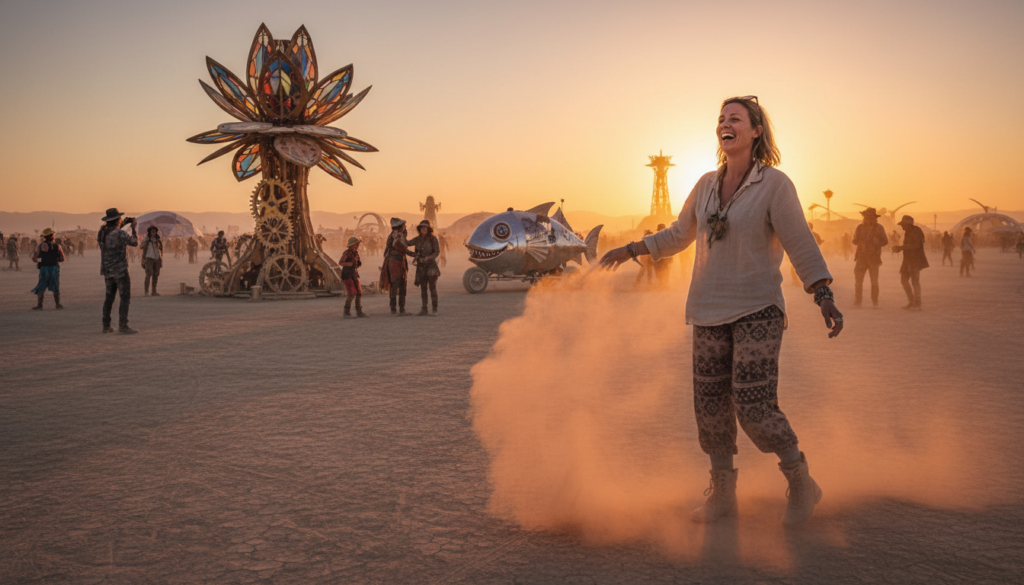
Think of the nine days as stages: arrival and setup, slow early exploration, midweek momentum, then an emotional crescendo toward the burn weekend. Crowd energy grows each day, and camps often become livelier by midweek.
Simple daily pacing
- Mornings: low-energy recovery and camp chores.
- Afternoons: art hunts and workshops — best daylight hours for roaming.
- Sunset: golden hour; plan a relaxed stop for views.
- Nights: music, theme camps, and roaming until late.
Expect broken sleep in short blocks; planning rest in advance helps overall stamina. Energy and crowd density shift by day, so scout far afield early before fatigue sets in.
Quick departure note: many folks leave after the Man burn or after the Temple burn. Exit lines and timing change accordingly, so add buffer hours when planning travel. For low-key daytime activities and glamping options nearby, consider this guide to glamping activities.
Getting Tickets Without Stress (Including Last-Minute Options)
Plan early, breathe, and treat ticketing as a short project you can finish with a checklist. This section maps the main sales, the late windows, and the secure transfer route so first-timers stay calm and informed.

Exact sale timing and a readiness checklist
TOMORROW Sale: April 30, 2025 at 12:00 PM PDT. Pre-registration runs April 21–29, 2025 at 12:00 PM PDT.
- Create and verify your Burner Profile ahead of time.
- Have payment details ready and test your card limits.
- Use fast internet and a second device as backup.
- Accept limits: two tickets and one vehicle pass per purchase; taxes and fees apply.
Ticket tiers, budgeting, and the breakeven idea
Tiers run $550, $650, $750, $950, $1500, and $3000 with limited quantities. The official breakeven is $750—organizers reported ~ $749 per person production cost in 2024.
| Tier | Notes | Budget per person |
|---|---|---|
| $550–$750 | Most common | $550–$750 |
| $950–$3000 | Supports lower tiers | Higher donation tier |
| Fees | Taxes and vehicle pass limits | Factor into final cost |
OMG Sale and STEP exchange
The OMG Sale runs July 30, 2025 at 12:00 PM PDT (registration July 21–29, 2025). Expect about 3,000 tickets at $575 + fees and 1,500 vehicle passes. Inventory is limited; this is a real last main window but not guaranteed.
STEP (Secured Ticket Exchange): available via Burner Profile until August 24, 2025 at 12:00 PM PST. “Secured” means an official transfer track record and payment protection that reduces common scam risks.
“If you don’t have a ticket yet, set clear deadlines, watch official channels, and avoid pressure-buying from strangers.”
Remember: tickets are one line in a larger per person budget. Transportation, water, food, and gear usually add more than folks expect. If budget matters, see tips to save money before checkout.
Vehicle Passes, Arrival, and the Reality of Gate Lines
Your vehicle often becomes the base that holds water, shade, and the heavy stuff for camp.
Vehicle passes cost $150 (taxes and fees may apply). Each ticket order can buy one vehicle pass; a single order may include up to two tickets. That limit affects carpooling and how much gear a camp can bring in one trip.
Plan vehicle logistics as part of radical self-reliance. Your car likely stores water, food, shade structures, and emergency supplies. Coordinate arrival time and a staged unpack order so essentials are accessible first.
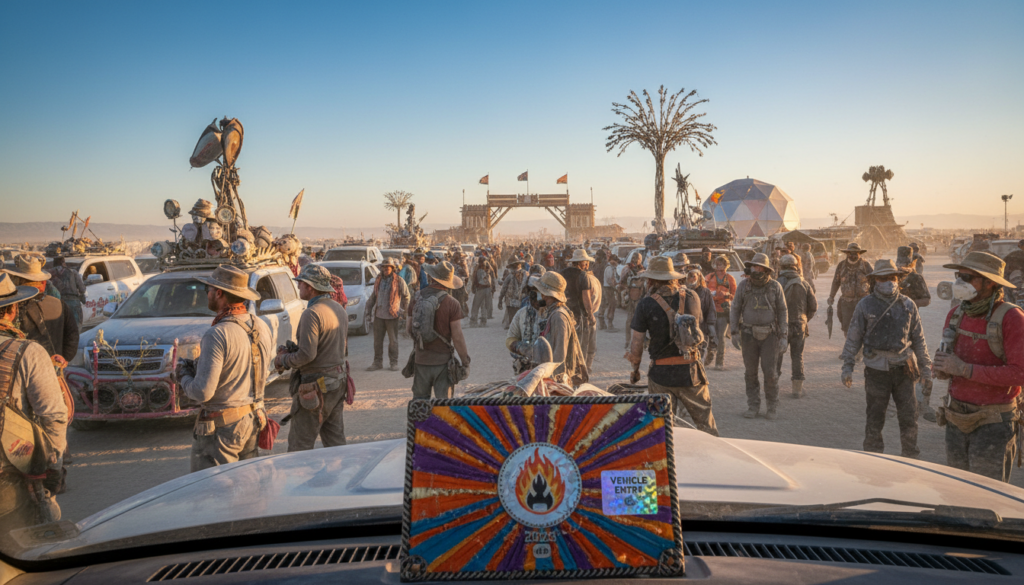
Gate lines and arrival mindset
Gate waits happen—especially after major burns and during peak exodus hours. Bring snacks, extra water, and a simple bathroom plan. Expect delays measured in hours and pack patience.
Set up in this order: secure shade, lay a sleep area, and make water access functional. That way, when wind and dust rise, the camp is livable fast.
- Keep ID, a headlamp, and a small water bottle on your person.
- Share vehicle duties so heavy stuff is offloaded quickly.
- Stagger arrivals within your group to avoid a long lot wait.
| Item | Why it matters | Action |
|---|---|---|
| Vehicle pass | Allows vehicle entry and gear transport | Buy during ticket checkout; limit 1 per order |
| Camp essentials | Water, shade, sleep gear | Unpack in priority order on arrival |
| Gate wait | Can add hours to travel time | Bring food, water, and patience |
| Dust | Strips visibility and clogs gear | Settle camp early and protect electronics |
Quick exodus note: Many people leave after the Man or Temple burns. That creates long exit lines. If leaving on a busy day, build extra time into travel plans and coordinate rides ahead of time.
Where to Stay Before and After Burning Man in the United States
Choosing the right staging city can turn a frantic morning into a calm, organized departure. A night in a hotel before and after the trip buys time for packing, a last clean bed, and one more supply run.
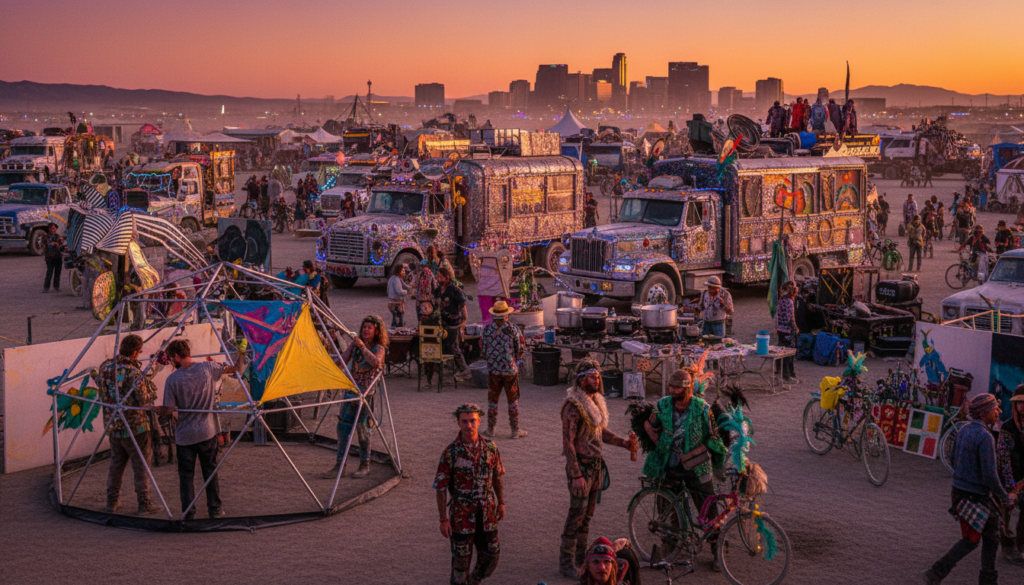
Reno: the most practical hub
Reno often tops the list for a reason: about two hours from the playa without heavy traffic, concentrated stores, and many hotel options. Casino garages and central hotels make it easy to park gear overnight and hit big-box supply stops the next morning.
Sacramento as an alternative
Sacramento is a strong choice for people flying into California. It offers big-box stores and reasonable access, though the drive is longer—plan for about 4.5 hours without traffic.
San Francisco tradeoffs
san francisco is iconic and fun, but it usually means higher lodging costs and longer drive times. If staying there, add extra buffer for rentals, parking, and early departures.
- Book early: reserve hotels well in advance during burn week; availability tight each year.
- Be flexible: choose refundable or changeable rates and make sure your plans can shift.
- Staging tips: unload valuables, keep bins out of sight, and use well-lit lots for gear runs.
After the event, have a quick reset plan: shower, laundry, hydrate, and eat a simple meal before the long drive. That small pause makes the trip home safer and more pleasant for everyone heading back to their place.
Getting to Black Rock City From Reno, Sacramento, and San Francisco
Your last stretch to Black Rock City often feels slower than the map suggests. Plan extra time for gate checks, traffic near the playa, and unplanned stops. Reno and Sacramento offer easier staging options than san francisco for many travelers.
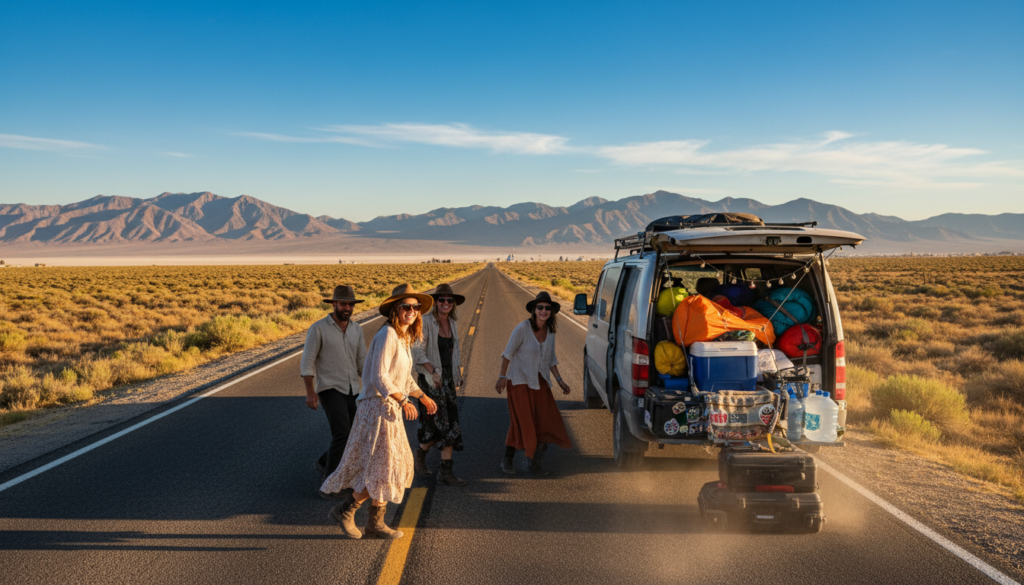
Drive-time expectations and last-minute supply runs
Drive times: Reno ≈ 2 hours; Sacramento ≈ 4.5 hours. Allow extra hours near the playa for congestion and lineups.
For last minute runs, prioritize water, an ice plan, and quick repair items like duct tape and spare fuses. Buy heavy or bulky items before the final leg to protect arrival energy.
Keeping your stuff secure on the road and at hotels
Keep critical stuff accessible: documents, headlamp, snacks, and a small water bottle in the cab. Lock bins and avoid leaving gear visible in a parked car.
- Unload what you can at the hotel and use covered parking when possible.
- Make sure locks are engaged and valuables stay out of sight.
- Stop in well-trafficked areas for breaks to keep cars and passengers safe.
| Item | Why | Action |
|---|---|---|
| Vehicle readiness | Desert roads strain cars | Check tires, coolant, and fuel before departure |
| Hotel staging | Reduces last-minute loading | Unload bins, park in a garage, and hide gear |
| Final approach | Feels slow and tense | Budget extra hours and carry calm patience |
“Rethink your timing: a relaxed arrival makes camp setup easier and safer.”
If you need packing tips for a stress-free departure, consider this short guide on glamping packing to adapt ideas for a desert setup.
Radical Self-Reliance: What You Must Bring (Because You Can’t Buy Much)
Bring a self-sufficient mindset: the playa rewards planning more than purchasing. Radical self-reliance is a simple, practical packing philosophy: you are responsible for basic needs so everyone can enjoy the week.
Money buys almost nothing on playa. The only items regularly sold are ice and coffee. Relying on buying essentials there is a risky plan.
Water planning: think in days, not hours. A good baseline is 1.5 gallons of water per person per day for drinking and basic needs. Add a buffer for heat, delays, and storms. Store water in sealed containers and keep a jug near camp for quick refills.
Food strategy: aim for simple, durable meals. Pack easy protein (tuna pouches, jerky), salty snacks, and ready-to-eat options. Pre-portion meals so late-night hunger doesn’t turn into a mess.
Dust-ready basics: bring sealed goggles, a reliable mask or respirator, closed-toe shoes, and layered clothing for desert swings. These items protect gear and skin from alkaline dust and sudden weather.
Hygiene: wet wipes are essential for quick cleaning, hand care, and foot wipes to reduce “playa feet.” Carry extra wet wipes and a small first-aid kit for blisters and skin care.
- Pack food and water per person with a multi-day buffer.
- Use resealable containers to reduce trash and gray water.
- Pre-portion and label stuff so camp cleanup stays easy.
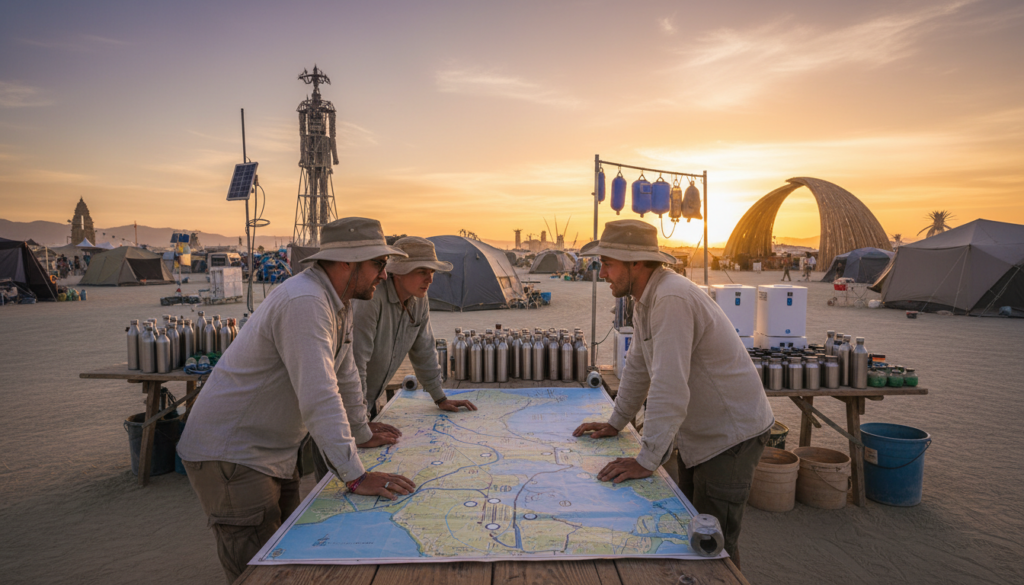
“Radical self-reliance means packing what you need so the place stays safe, clean, and joyful.”
How to Survive the Dust, Heat, and Weather Swings
Desert weather swings fast; prepare for hot afternoons and icy dawns.
Dress for big temperature swings
Simple system: a breathable base layer, a wind shell, and a warm layer for early-morning hours. Add a dust layer (goggles and a snug mask) for windy stretches.
Protect eyes, lungs, and skin
Keep sealed goggles and an N95 or better respirator handy. Use sunscreen, a wide-brim hat, and lip balm for long day exposure. If a dust event starts, move slowly and keep lights on at night so people see you.
Storm lessons and conserving supplies
Recent years showed storms can halt movement. If heavy rain or wind hits, shelter, conserve food and water, and avoid risky travel until conditions improve.
- Plan slack in schedules to avoid panic or unsafe exits.
- Hydration: heat ups water needs; storms can delay ice runs—carry extra.
- Keep camp cozy: close vents during dust and warm layers for dawn hours.
| Issue | Quick action | Why it helps |
|---|---|---|
| Heat (afternoon) | Shade, electrolytes, rest | Prevents heat exhaustion |
| Dust storms | Goggles, mask, stay put | Protects eyes and lungs |
| Cold dawn hours | Warm layers, insulated sleep setup | Maintains core temperature |
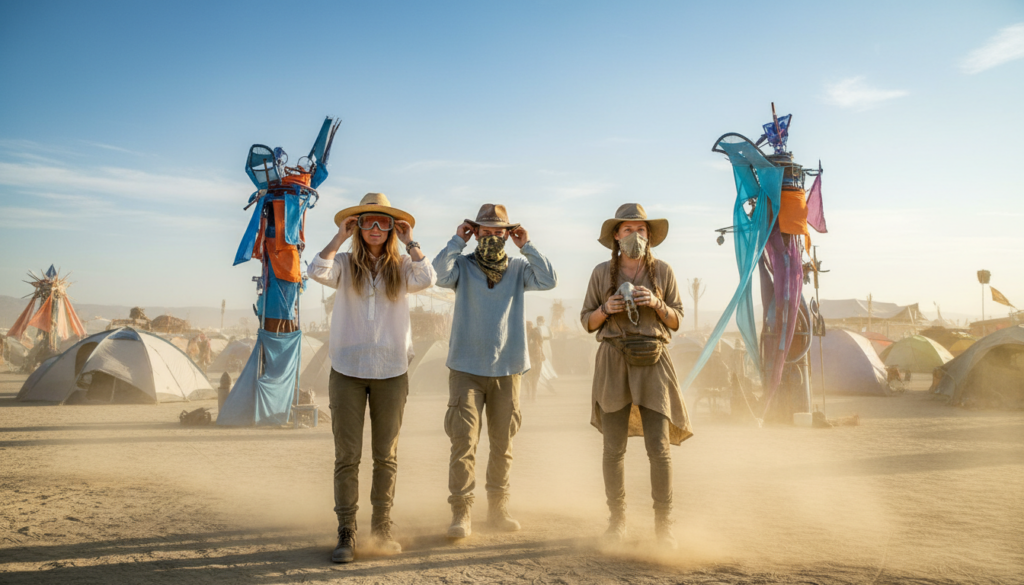
“Preparation for the elements turns a harsh day into a manageable part of the experience.”
For more tips on staging and comfort gear, see essentials for glamping.
Bikes in Black Rock City: Your Main Way to Get Around
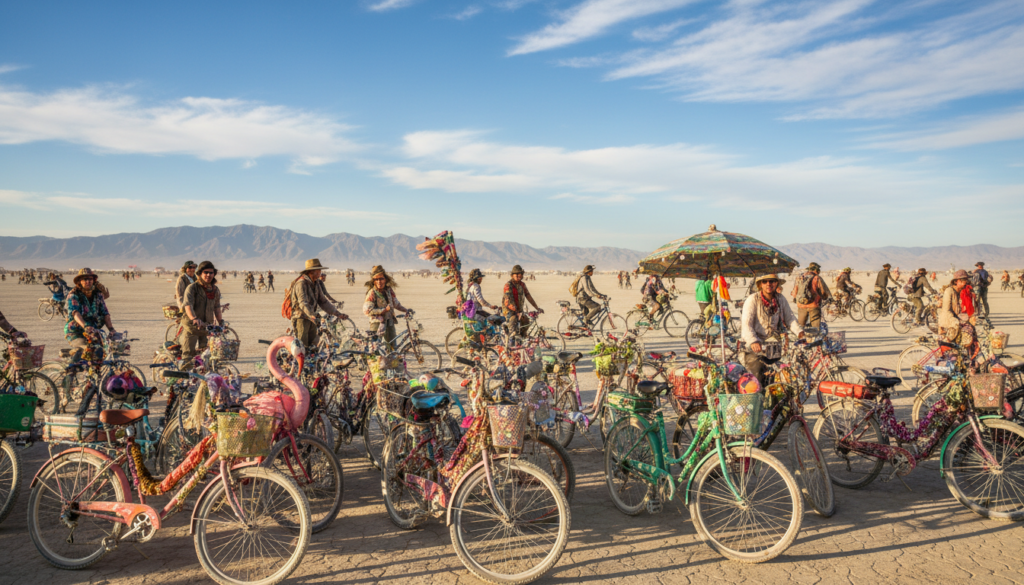
A bicycle becomes your most reliable mode of travel across Black Rock City’s wide streets. Distances are larger than they look, and walking everywhere will drain energy fast. Bikes let you move between art, camps, and shade without wasted time.
Choosing a bike that lasts: pick a sturdy cruiser or hybrid with wider tires to handle playa dust. Add a soft seat, ergonomic grips, and a simple rack or basket for water and supplies. Learn basic maintenance—tire pressure, chain cleaning, and a quick brake check—to avoid afternoon failures.
Keep your bike from getting lost
Many bikes look similar in a lot of racks. Make yours distinct with a bright wrap, a tall flag, or reflective tape. Park intentionally—face the same direction, lock to a recognizable landmark, and note nearby camp markers.
Visibility and safety at night
Black Rock City is very dark at night. Use wheel and frame lights, plus body illumination. Carry spare batteries and a backup headlamp. Make sure your lighting plan keeps you visible from all angles, not just the front.
- Collision etiquette: slow near crowds, announce passing, and expect sudden stops by art or sound camps.
- Dust care: wipe chains and derailleurs each day; a quick scrub keeps moving parts working for the week.
“A well-equipped bike with clear lighting and a visual ID turns a lot of confusion into calm, safe travel.”
Art Cars and Mutant Vehicles: How to Ride, Respect, and Enjoy
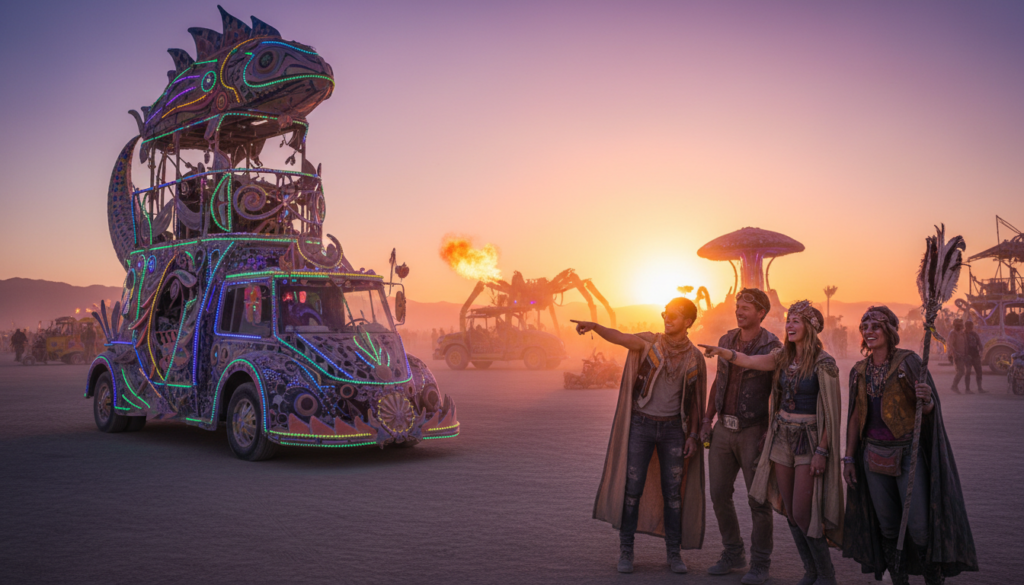
Mutant vehicles act as moving sculptures that reshape how people explore after dark. These art cars blend sound, light, and design into rolling stages. They are a core way to reach deep playa art when walking or biking would take too long.
Why they matter: cars become mobile dance floors, community hubs, and surprise performance spaces. A single art car can connect distant installations and create a whole night of shared moments.
Approaching and boarding politely
Make eye contact with the crew and ask before stepping on. If the answer is no, accept it and move on. Follow crew rules about where to stand, hold, and ride.
Getting back to camp
Never assume a return ride. Keep your bike location in mind and mark routes to your camp. Plan a backup way home and check times so you don’t get stranded late.
Safety and courtesy
- Stay aware of moving vehicles and lights.
- Avoid climbing on unstable parts; secure loose gear.
- Thank drivers and crews — they’re participants offering a ride.
- Note pacing: an epic ride can fill a whole night, and that’s fine.
| Role | What it offers | Quick tip |
|---|---|---|
| Art car | Mobile stage, music, lights | Ask crew permission before boarding |
| Drivers/crew | Operate and manage safety | Follow instructions and show gratitude |
| Riders | Explore deep playa, socialize | Keep bike marked and plan return |
“Treat every car and its crew with respect—gratitude keeps the night moving safely.”
For ideas on staging and alternatives near the event, check local glamping guides like glamping ideas to plan comfortable pre- or post-event time.
Theme Camps, Community, and Participation (Don’t Just Spectate)
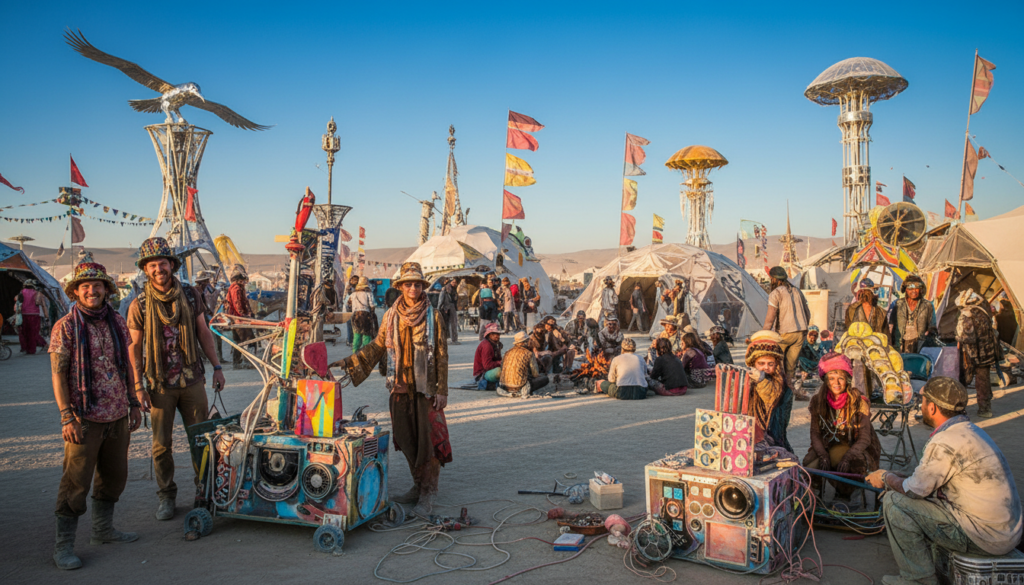
Theme camps act like tiny neighborhoods with distinct personalities. They offer gifts that range from simple practical help to delightfully strange moments. That mix is the backbone of the larger community.
How camps gift experiences
Many camps give coffee, shade, or care stations. Others host music sets, movement classes, talks, or playful games.
These gifts are free and meant to be shared. They make the event feel like a living, shifting village.
Joining communal effort
If you’re new, show up and ask how to help. A short volunteer shift or a clean-up sweep goes far.
Pitching in builds trust. It also turns strangers into friends and makes the whole camp run smoother.
Saying yes to immediacy
Immediacy is permission to try the thing in front of you. Say yes to a spontaneous class or a late-night music set.
Set gentle boundaries: contribute only what fits your energy and skills. Small, repeated acts often create the deepest experience.
“The best stories come from small moments with people, not from checking off famous attractions.”
- Quick tips: arrive curious, ask before joining, offer one concrete skill, and help with teardown.
- Respect limits: participation is optional—balance giving with rest.
Gifting, Decommodification, and Money: How the Playa Economy Works
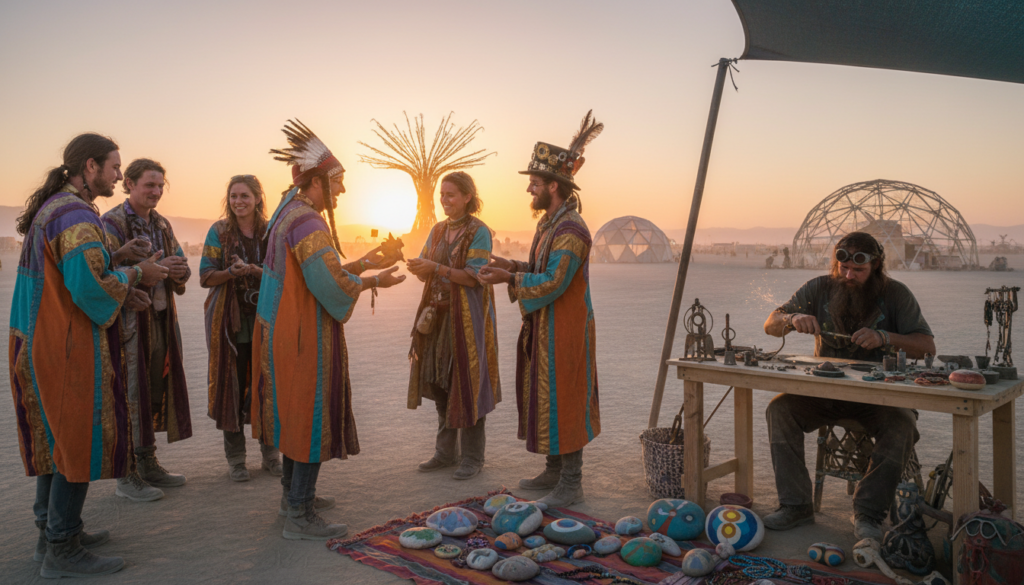
Gifting shapes the social fabric on the playa more than any menu or market. It’s a culture of shared care where small acts create real connections between people.
Gifting ideas that actually help
Think usefulness, not novelty. Small repair items, extra water, a sincere compliment, or a short helping hand go far and keep MOOP low.
Make sure the present won’t break, blow away, or end up as trash. Simple, durable gifts respect the space and others’ gear.
Why selling and swapping are discouraged
Decommodification means fewer brands, fewer transactions, and more human-to-human exchange. Money buys almost nothing here; belonging comes from participation.
If someone offers a sale or trade, try a polite script: “No need to trade—this is a gift,” or offer practical help instead.
| Gift type | Why it helps | MOOP risk |
|---|---|---|
| Repair kit (zip ties, tape) | Fixes gear fast | Low |
| Water or electrolyte sachets | Supports heat safety | Low |
| Disposable trinkets | Novel, often unwanted | High |
| Help (time or skills) | Builds trust and bonds | None |
Bottom line: the playa’s way favors giving that helps, not things that clutter. Money is useful for logistics off-playa, but here participation and respect are the truest currency and part of the shared experience.
First-Time Etiquette: Don’t Be a Sparkle Pony
Showing up equipped makes it easy to be generous, not a burden, to nearby camps.
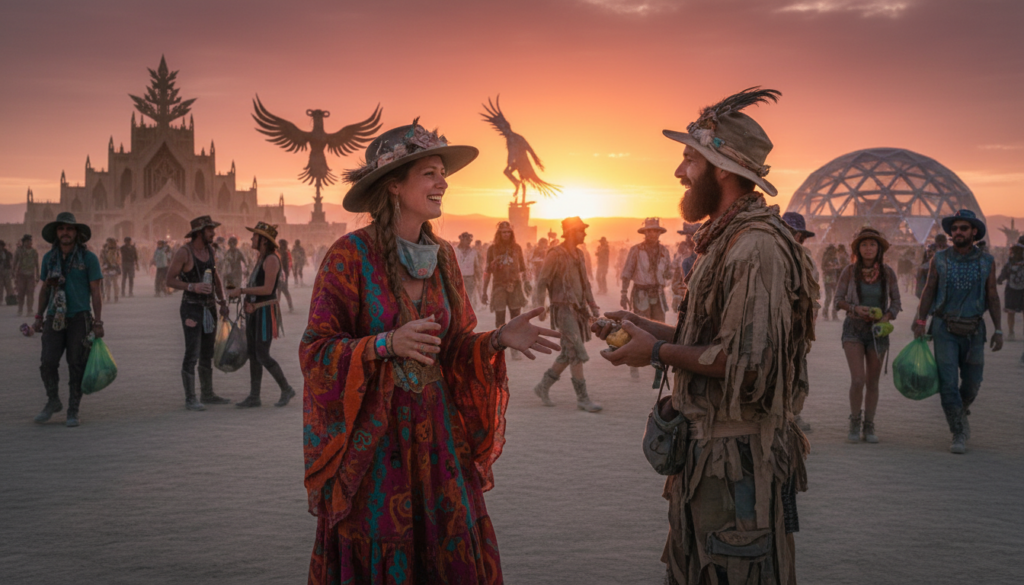
“Sparkle pony” describes someone who arrives unprepared and leans on others for basics. Say it kindly: the behavior, not the person, needs a fix. For a smooth first time, plan ahead and carry essentials.
Anti-sparkle checklist
- Bring enough water and a personal bottle.
- Pack food you will actually eat and simple snacks.
- Carry a cup, basic tools, and spare batteries.
Consent, courtesy, and photos
Consent is non-negotiable. Ask before touching, entering an intimate area, or photographing someone. At night, ask first; flashes can startle and people are more vulnerable.
Respect camp signs and limits. If a camp is busy, offer help rather than demanding service. That small effort keeps gifting sustainable for all people.
“Preparation plus respect makes the best first time—bring what you need and join in with a humble, helpful attitude.”
Make sure your prep covers basics so you can be part of the experience, not a drain. And make sure to ask before taking photos.
Sleep, Sunrise, and Sunset: How to Pace Yourself Without FOMO
Long days and electric nights form a rhythm you can tune to, not a list to finish. Accepting that the city is too full to complete frees you to pick a few priorities and enjoy the rest as surprise. FOMO is normal—treat it like part of the ride.
Why you can’t do it all—and why that’s the point
The playa offers endless things every day and night. Trying to see everything burns energy fast. Instead, choose two main goals for each 24-hour block and let other moments arrive unplanned.
Sleep strategies for a week in the desert
Split sleep into shorter blocks: many people rest 4–6 hours in total, often in two naps plus a longer night stretch. Keep water and a headlamp near your bed. Use earplugs and an eye mask to protect rest from noise and bright dawns.
Build shade that stays cool in morning hours. A layered sleep setup helps for cold dawns and warm afternoons.
Don’t miss golden hour: sunrise rides and sunset views on the playa
Sunrise and sunset act like anchors that reset mood and energy. A simple ritual works well: mount your bike, bring a warm layer, and ride into open playa for 15–30 minutes. Stay visible with a light if you linger.
- Balance day and night: pick daytime art hunts or an evening music camp—both are valid ways to spend hours well.
- Listen to your body: dehydration and exhaustion compound fast in the desert; rest is practical participation.
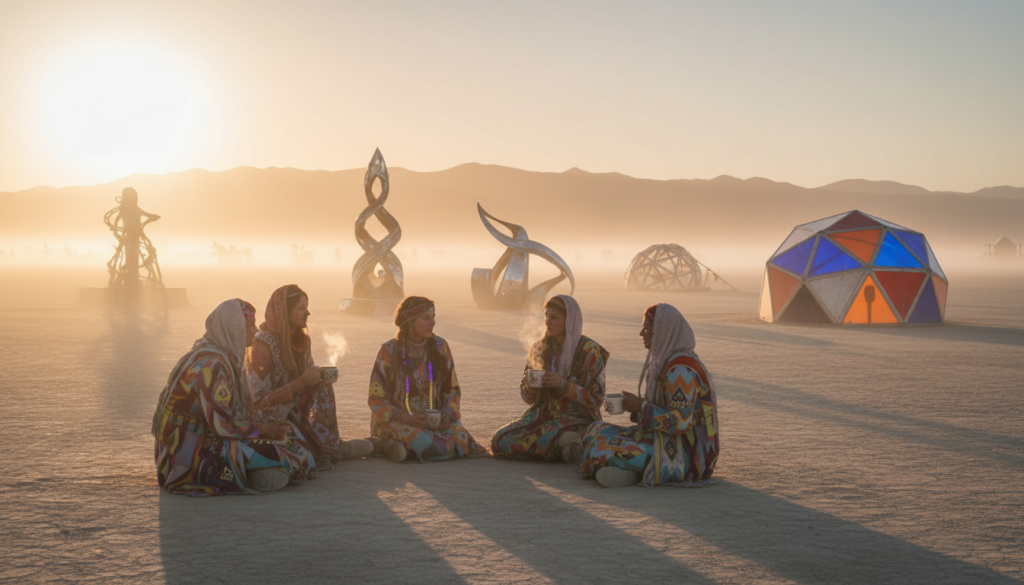
“Rest is part of participation—show up with energy and the week gives back more.”
For gentle staging ideas before or after the event, consider a short stay near the playa like a nearby glamping option at beach glamping to recharge cleanly and arrive ready for the week.
Leave No Trace: MOOP, Trash Fence Culture, and Cleaning Up Your Camp
MOOP—Matter Out Of Place—turns tiny bits into big problems if ignored.
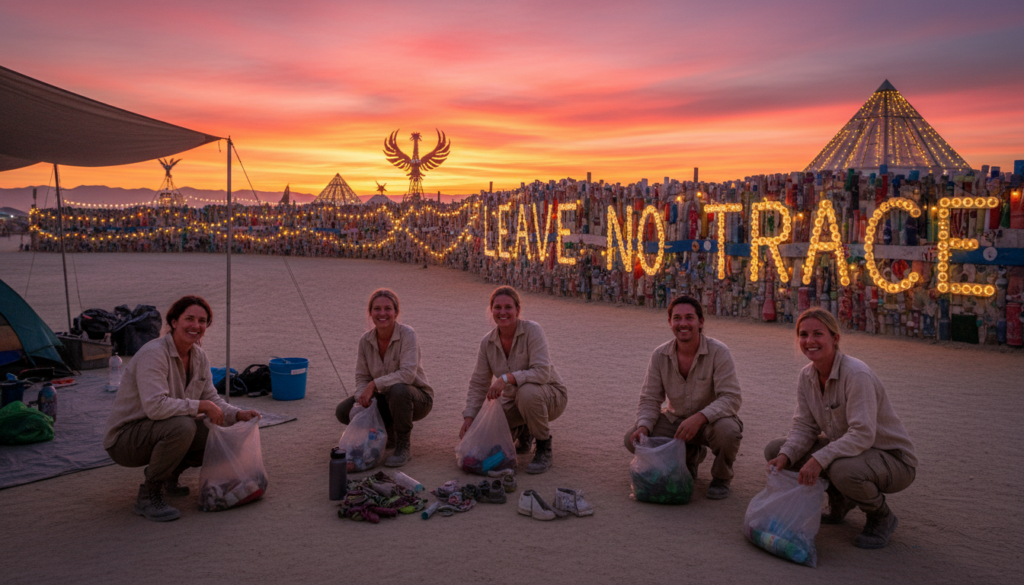
What counts as MOOP? Sequins, zip ties, feathers, broken shade bits, packaging corners, cigarette ash, and micro-trash hidden in dust all qualify. Small items scatter in wind and cling to gear.
How MOOP sneaks in. Setup rush, tired people, and loose materials let things escape. A single flap or torn plastic will shed all week unless secured.
Practical systems that reduce shedding
- Keep moop bags at entrances and near shade so waste goes in, not out.
- Do a nightly sweep of your camp and bike area to catch small stuff.
- Use sealed lids and choose materials that won’t shred or blow away.
Trash fence culture and shared cleanup
Trash fences catch wind-blown debris and signal a camp cares. Neighbors help sweep the perimeter because cleanup is a shared responsibility, not an optional chore.
Breaking down: slow and thorough
When tearing down, slow down. Scan the ground, shake tarps, and inspect corners so you leave the site cleaner than you found it. Make sure every bin is sealed before loading.
“Leaving no trace protects the desert and helps ensure this place can host the event next year.”
Cleanup is part of the art. Treat teardown as a creative finish—your careful work is what makes the city vanish with dignity. For ideas to tidy and transform your campsite, see transform your campsite.
Conclusion
The heart of the week is participant-led: build, gift, roam, and witness shared rituals together.
This short guide answers how to shape your time in Black Rock City and the kinds of art, camps, and communal moments that matter. Plan tickets and a ticket window, secure vehicle passes, and load enough water, food, and shelter to stay safe and self-reliant.
The two emotional peaks are clear: the Man burn’s loud release and the Temple burn’s quiet reflection. Honor both and give yourself rest between them.
Keep practical safety in focus: bright bike lighting, paced sleep, clear consent, and flexibility for storms. Follow the Ten Principles—especially participation and Leave No Trace—and the week will reward you.
Next steps: confirm dates, set ticket reminders, draft a packing list, and touch base with your camp early. You’ll miss some things, face hard moments, and still have an unforgettable experience at Burning Man and Black Rock City.