
Looking for a smarter place to park your cash in 2026? The national average savings account yield sits at 0.39% as of March 16, 2026, per FDIC data. That makes it clear why many Americans seek better options to grow funds faster.
Online deposit products often offer a more competitive annual percentage yield than a traditional savings account. Choosing the right option can boost long-term growth while keeping money safe.
All eligible balances at FDIC-member institutions are insured up to $250,000 per depositor. That protection, paired with low or zero minimum balance requirements, helps many savers avoid monthly charges and keep flexibility.
Our guide compares the best high-yield savings options so you can spot strong interest rates, clear terms, and easy digital tools. Read on to find simple steps that match your goals and protect your cash.
Key Takeaways
- National average return is 0.39% (FDIC, Mar 16, 2026).
- FDIC insurance covers up to $250,000 per depositor at member banks.
- Compare annual percentage yield and account terms before choosing.
- Look for low minimum balance rules to avoid monthly maintenance.
- This guide highlights the best high-yield savings options for 2026.
Understanding High-Yield Savings Accounts with No Fees
Better interest rates at digital banks let your idle cash work harder over time.
What is a high-yield savings account?
A high-yield savings account is a specialized savings account designed to pay a much higher interest rate than a traditional savings account. These products typically come from online banks or fintechs that pass savings from lower overhead to customers.
Why no fees matter for your growth
Avoiding monthly fees preserves the annual percentage yield you earn. Even small charges can erode returns and slow how fast a savings account balance grows.
When comparing options, focus on percentage yield, compounding cadence, and minimum rules. Choosing a fee-free product helps your money compound more effectively and fights inflation better than basic banking options.
- Higher interest beats a traditional savings account for reserve balances.
- Fee-free structure prevents erosion of the annual percentage return.
- Look at compounding and access features to match your goals.

Why You Should Prioritize Fee-Free Banking
Choosing a fee-free banking option ensures your savings grow without small charges chipping away at returns. A fee-free savings account means more of your interest stays in your balance. That matters over months and years.
Many modern high-yield savings accounts now offer zero monthly service. This lets interest compound and keeps your emergency fund intact.
Transparency matters. Pick a provider that clearly states fees, minimums, and withdrawal limits so you are never surprised.
When comparing deposit products, look for low barriers to entry. Accounts that remove monthly maintenance or large minimums make it easier to start and stay consistent.
- Keep more interest: Avoiding charges preserves your return.
- Stay flexible: Lower minimums let you move money as needs change.
- Compare terms: Seek clear fee schedules and easy access features.

Current Trends in Savings Account Rates
Recent market movement has widened the gap between basic bank returns and top online offers. As of March 16, 2026, the FDIC reports a national average savings account yield of 0.39%.

Impact of inflation on your purchasing power
Inflation erodes what your cash can buy. If your savings account return lags behind price growth, buying power drops over time.
Many digital-first providers now post an annual percentage yield that beats the national average. Comparing account rates helps you find a competitive rate that helps your balance keep pace with costs.
- Check the annual percentage and compounding frequency.
- Move funds if current savings rates fall short of your goals.
- Monitor offers in march 2026 to lock in better returns.
| Metric | National Average (Mar 16, 2026) | Top-tier Online Rate |
|---|---|---|
| Savings account yield | 0.39% | 4.50% |
| Typical annual percentage yield | 0.39% | 3.75% |
| Common interest rate features | Low, often variable | Higher, competitive rates and easy access |
Want to learn more about why keeping cash working is essential? See why saving matters for practical tips.
Top Picks for Digital-First Banking
If you want better returns and easy online management, several digital banks stand out this March 2026.

Openbank features for modern savers
Openbank tops many lists in March 2026. It posts a 4.09% annual percentage yield and waives monthly maintenance.
Be aware that opening requires a $500 minimum balance to activate the rate. That deposit rule helps set expectations before you open account.
Vio Bank advantages for balance growth
Vio Bank offers a 4.03% annual percentage yield and does not require a minimum balance. This makes it easy to start and grow a savings account.
LendingClub rewards and checking integration
LendingClub pays 4.00% APY and stands out for its checking integration and rewards features. That mix helps simplify money management between checking accounts and a dedicated savings account.
- Compare annual percentage and minimum balance rules before you open account.
- Choose an online bank that fits your liquidity and app needs.
| Provider | APY | Key perk |
|---|---|---|
| Openbank | 4.09% | $500 min, no monthly maintenance |
| Vio Bank | 4.03% | No minimum balance |
| LendingClub | 4.00% | Rewards checking link |
Benefits of Choosing Credit Unions
Credit unions often deliver competitive returns while keeping member service front and center. These member-owned institutions focus on benefits rather than profits. That can mean better terms for your savings account and more personal support.
Alliant Credit Union illustrates the point: it posts a 3.10% APY and requires just a $5 deposit to open. Low entry needs make it easy to join and start earning above-average returns.
When you compare banks credit unions, you’ll see that many credit unions prioritize lower fees and clearer terms. That helps your money grow without surprise charges.
- Member focus: Decisions aim to help members, not outside shareholders.
- Accessible balances: Many options require small minimum deposits.
- Community support: Joining often helps local lending and services.
Evaluating Minimum Balance Requirements
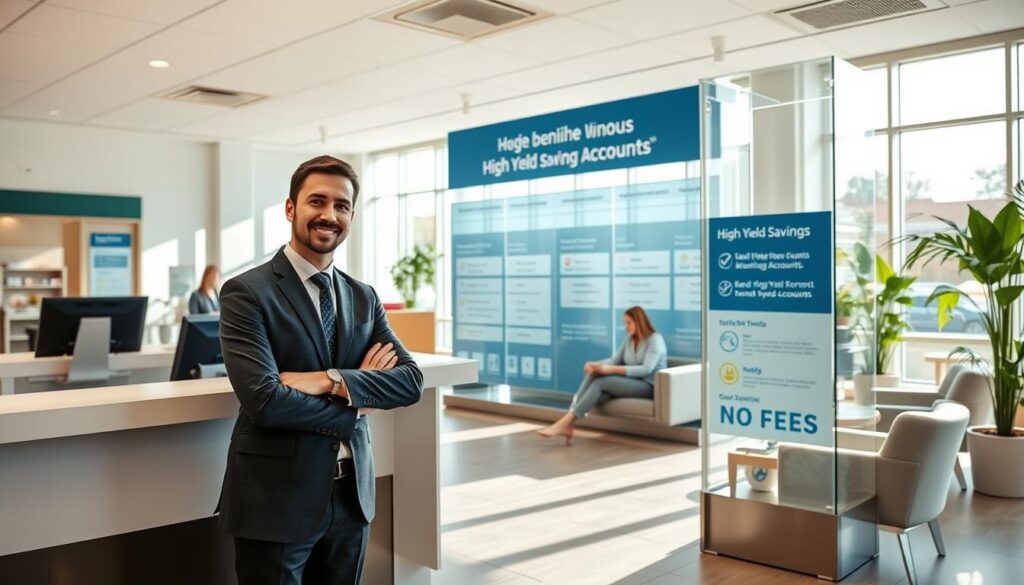
Before you open a new account, check how minimum balance rules affect the rate you actually earn.
Minimums matter: A required minimum balance can determine whether your advertised annual percentage yield applies. If your balance dips below that level, the account may pay a lower rate or trigger monthly maintenance.
Some providers use tiered interest structures. That means the top percentage applies only after you hit a specific balance each statement cycle.
Understanding tiered interest structures
- Know the breakpoints: Different tiers pay different rates. Match your target balance to the tier that pays best for you.
- Watch the statement period: Some banks check the daily balance; others look at a minimum balance for the month.
- Start small or scale up: A high-yield savings account with a low minimum balance helps new savers build an emergency fund without losing rate.

Tip: Read the fine print. Managing your minimum balance is one of the easiest ways to protect your percentage yield and avoid surprise charges.
How to Open Your New Account
Opening a new savings plan is easier than you think—most steps are online and take only minutes.
What you’ll need: a government ID, your Social Security number, and a linked checking account to fund transfers. Providers often verify identity in seconds, so have documents ready.
Most applications let you open account entirely by phone or browser. Before you hit submit, confirm any minimum balance or initial deposit required to activate the advertised rate.

- Link an existing bank for quick transfers.
- Set up automatic transfers to build your balance consistently.
- Download the mobile app to monitor your minimum balance and activity.
- After you open account, read the terms so you know how interest is calculated.
“Start with a small automatic transfer — consistency matters more than size.”
Ready to begin? If you want tips on saving habits before you start, see this guide on how to save more money. A well-chosen high-yield savings account can make your cash work smarter for future goals.
Security and FDIC Insurance Explained
Protecting your deposits is essential — federal insurance and modern security tools work together to keep your money safe.
FDIC protection limits for your deposits
The FDIC insures eligible deposits at member banks up to $250,000 per depositor. That protection applies to most deposit products, including a high-yield savings account at a member institution.
Verify membership before you open an account. If you hold funds at multiple banks, insurance applies per depositor per institution.
Digital security measures for mobile banking
Most providers use strong encryption, multi-factor authentication, and real-time alerts to keep your savings account secure.
Use a unique, strong password and enable push or text alerts for every transaction. That makes it easier to spot suspicious activity early.
- Check FDIC status: Confirm the bank is insured before depositing funds.
- Enable MFA: Turn on multi-factor authentication in the app.
- Monitor activity: Set alerts and review statements weekly.

“Understanding FDIC insurance is a fundamental part of managing your savings account and ensuring your financial future remains secure.”
Maximizing Your Annual Percentage Yield
Your actual return depends as much on compounding and minimum balance rules as on the advertised percentage. Focus on mechanics that increase what you keep, not just the headline rate.
Watch compounding frequency. A high-yield savings account that compounds daily will usually beat one that compounds monthly. Small differences add up over a year.
Keep your balance above any stated minimum balance to preserve the best annual percentage. Falling under a breakpoint can cut your percentage yield fast.
Monitor interest rates regularly. If your savings account posts a lower annual percentage yield than competitors, consider moving funds or opening a new product that pays a competitive rate.
- Prefer daily compounding: it boosts effective returns.
- Guard minimum balance: meet tier rules to earn top rates.
- Compare annual percentage: use APY to judge real return.

“Consistent deposits and simple monitoring can turn a savings account into a steady growth engine.”
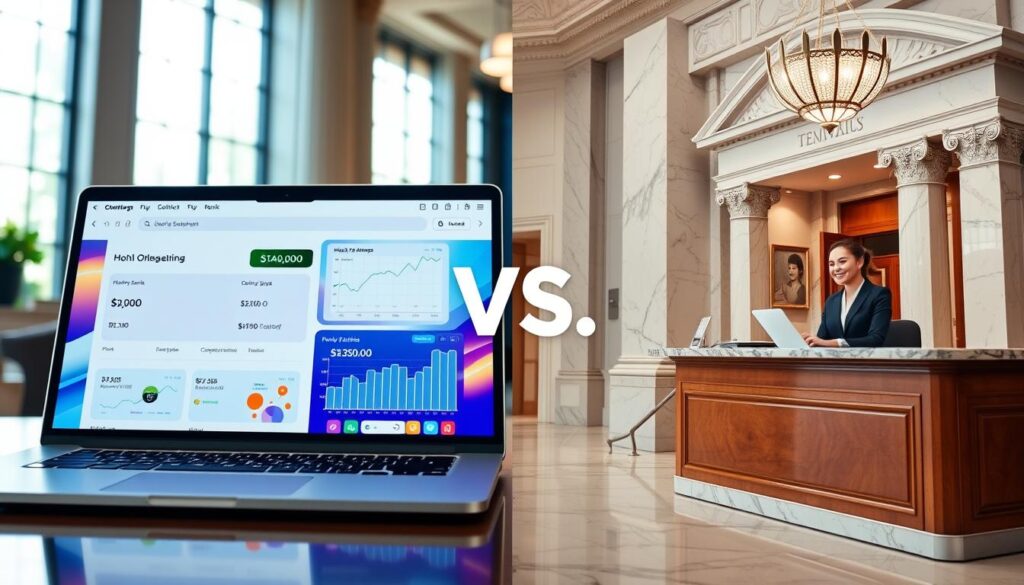
Comparing Online Banks Versus Traditional Institutions
Choosing between digital-only banks and legacy brick-and-mortar institutions affects your interest and access.
Online banks often deliver a better annual percentage on a high-yield savings account and on many online savings products. Their lower overhead lets them pass savings to customers.
Traditional banks and credit unions offer in-person service and local support. That can matter if you value branch help or teller access.
Many people link a checking accounts for easy transfers. Online banks usually offer stronger mobile tools that make moving money and tracking percentage yield simple.
- Higher advertised rates at online banks versus traditional savings options.
- Credit unions blend member focus and competitive returns.
- Pick a traditional savings account if branch access matters more than rate.
| Feature | Online banks | Traditional banks / credit unions |
|---|---|---|
| Typical annual percentage | Higher (competitive) | Lower (but service-focused) |
| Branch access | Limited or none | Wide branch network |
| Mobile tools | Robust apps, instant transfers | Good apps, in-person service |
“The right choice comes down to whether you value a better rate or being able to walk into a branch.”
Want practical tips before you switch? Learn how to save money and prepare for a smooth move.
Strategies for Building an Emergency Fund
Start your emergency fund by placing cash where it stays accessible but still earns meaningful interest.
Why separation matters: Keep your rainy-day money apart from daily bank activity so it is less likely to be spent. Using a high-yield savings account helps that separation and improves the annual percentage you earn.
Automating your contributions for consistency
Set it and forget it. Arrange automatic transfers from checking accounts on each payday. Small, regular transfers add up faster than rare large deposits.
Online savings platforms make moves simple. They keep funds liquid while offering a better percentage yield than a traditional savings account. That helps your emergency fund battle inflation over time.
- Start small: weekly or monthly transfers are fine.
- Track progress: name the account so you see growth at a glance.
- Keep access: ensure withdrawals are quick during real emergencies.
“Automating deposits makes saving automatic and removes decision friction.”
Managing Multiple Savings Goals
Divide goals into labeled buckets inside a single savings account so each purpose grows on its own. This makes progress visible and reduces the chance you’ll dip into an emergency fund for short-term plans.
Use sub-accounts or tags to separate a vacation fund, a car down payment, and an emergency stash. That keeps your minimum balance across buckets steady and helps preserve the advertised annual percentage.
Many online savings platforms let you link checking accounts for quick transfers. Linking makes it simple to move money between buckets and keep a target minimum balance where needed.
Pick flexible account offers that show a combined percentage yield across your goals. Good digital tools display progress and let you automate transfers to meet deadlines.
- Label each goal so tracking is painless.
- Watch minimum balance rules to avoid surprises.
- Compare savings account offers if you need better returns.
“A tidy system of sub-accounts turns scattered savings into steady progress.”

The Role of Federal Reserve Policy on Your Savings
Federal Reserve decisions set the backdrop for how banks price deposits and adjust interest on everyday savings. When the federal reserve raises or cuts rates, consumer interest rates often move the same direction.
The national average savings account rates stood at 0.39% on March 16, 2026, per FDIC data. That national average reflects the broader interest rate climate driven by the federal reserve.
What this means for your money:
- Federal reserve policy influences the account rates banks offer and your annual percentage return.
- When the Fed hikes, banks tend to raise savings account rates, improving your percentage yield.
- Watch Fed announcements to time moves or to shift funds into better account rates when appropriate.
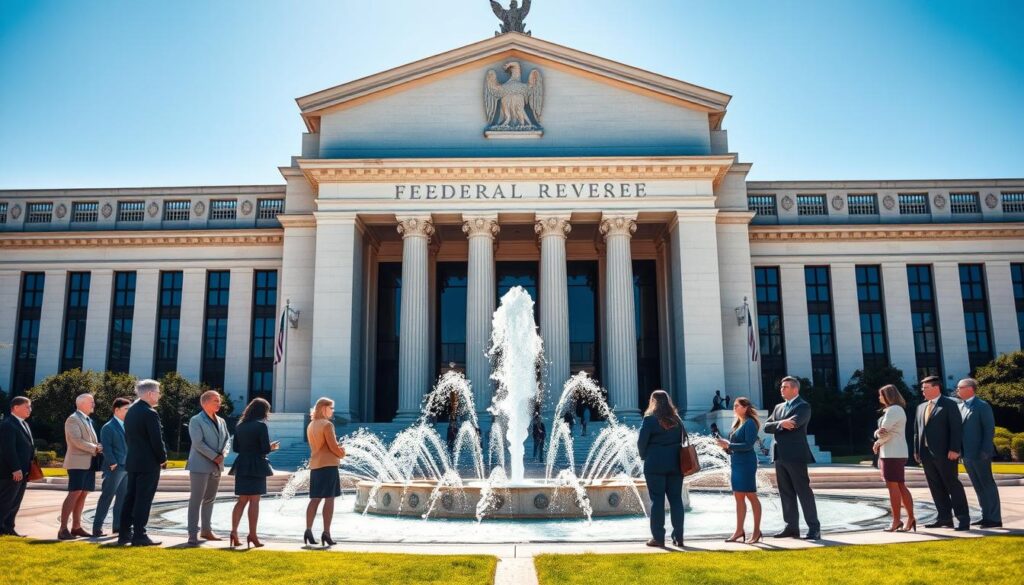
“Following Federal Reserve signals helps you predict when interest rate changes will affect where you keep cash.”
Need a simple plan before you react? Learn how to set a monthly target at how much to save each month and align deposits to likely Fed moves.
Common Pitfalls When Selecting a Bank
Many people focus on rate figures and overlook everyday costs that shrink their actual returns. That mistake can turn a promising offer into a poor choice.
Watch monthly maintenance and minimum balance rules closely. Fees and tiered minimums often negate advertised gains on a savings account. Read terms so you know when charges apply.
Compare banks credit unions, and don’t pick convenience over value. Some traditional savings providers offer better service but lower returns. Online banks may pay more, but check access and support.
Look beyond introductory rates to find best high-yield savings over time. Also consider credit unions; they often combine competitive rates and member-friendly rules.
- Read fee schedules and compounding rules.
- Confirm how minimum balance is measured and enforced.
- Test customer service before you move large bank savings.

| Pitfall | What to check | Result if ignored |
|---|---|---|
| Monthly maintenance | Fee schedule and waivers | Reduced net return |
| Minimum balance | Tier rules and measurement period | Lower posted rate or penalties |
| Promotional APY | Length and post-promo rate | Surprise rate drop |
| Poor access or service | App reviews and branch options | Frustration when you need funds |
“Take time to compare offers and read the fine print before you commit.”
Future Outlook for Interest Rates
Interest-rate trends in early 2026 suggest savers should watch offers and be ready to act.
Expect gradual adjustments. As markets respond to economic data, your annual percentage yield can rise or fall. That means monitoring savings account rates matters more than ever.
While the national average remains low in March 2026, many online options still offer a competitive rate. Keeping funds in an adaptable product helps you earn competitive returns as account rates shift.
Predicting long-term interest rates is hard. Still, a flexible saving strategy gives you room to move funds when better annual percentage opportunities appear.

- Check your annual percentage yield at least quarterly.
- Compare your account rates to the national average and top offers.
- Be ready to move cash to earn competitive rates as they emerge.
“Staying proactive helps you lock in better returns when market moves occur.”
Want practical options on where to place cash? See where to save money for guidance on choosing responsive products that match evolving interest rates.
Conclusion
Conclusion
Finding the right deposit option today means your cash can work smarter. Compare savings account offers carefully, check interest rates, and decide which product matches your goals in march 2026.
To find best high-yield savings, look at APY, compounding, and minimum rules. Open account only after you confirm transparent terms and easy access. That simple step helps you lock in a good option for steady growth.
Review account offers regularly as interest rates change. Choose best provider that prioritizes your needs and gives lasting value. We hope this guide helps you find best high-yield savings and a good option for the rest of 2026.