
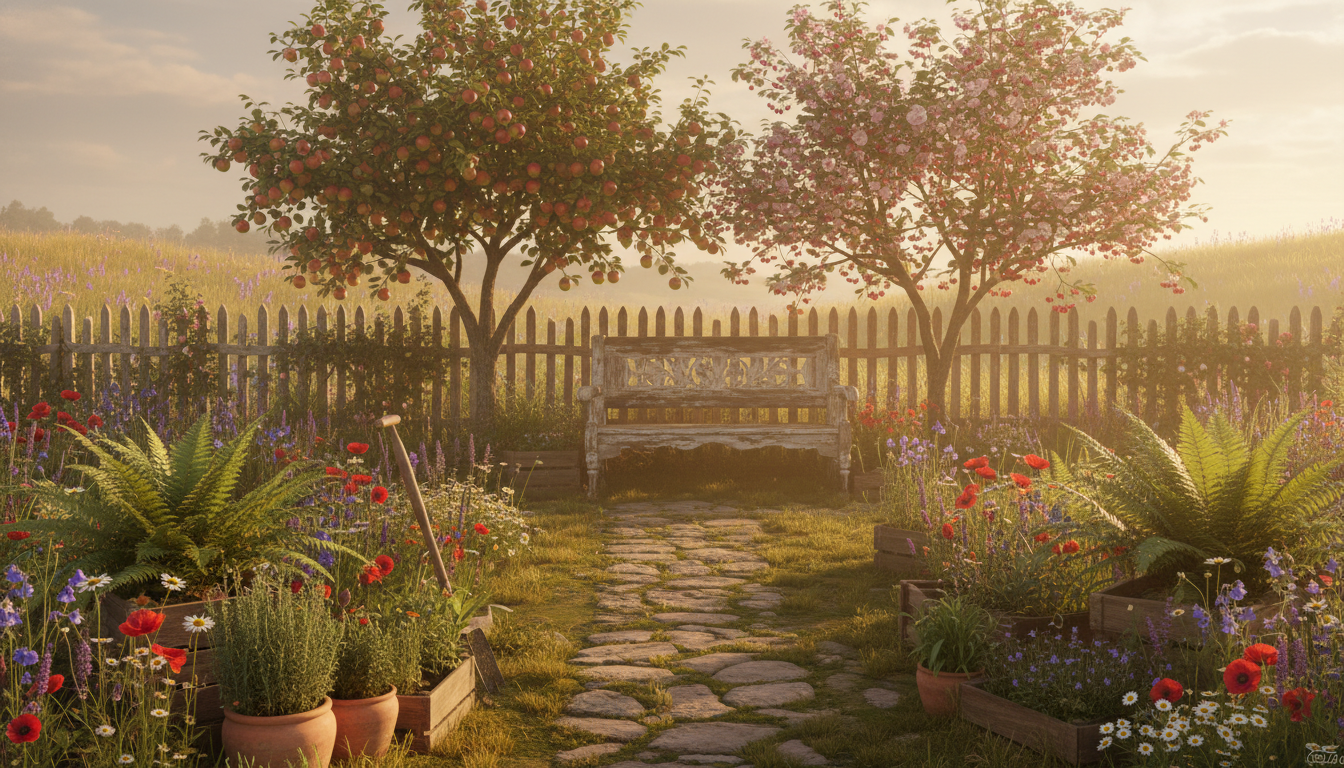
Create a backyard that feels like a cozy retreat. Transforming your yard into a cottage garden offers simple ways to add charm and natural beauty. This intro shows how small changes can make a big impact.
Use our free online tool to re-design your yard in 60 seconds or less and see layout ideas fast. The tool helps you plan plant placement, paths, and seating so your space looks authentic and lived-in.
Whether you want a relaxed backyard vignette or a full cottage garden plan, blending existing features with new elements boosts visual appeal. These ideas suit both beginners and experienced gardeners who value ease and beauty.
Key Takeaways
- Quickly visualize a new yard layout with a free planning tool.
- Small design moves add lasting charm and natural beauty.
- Plans work for any backyard, from tight spaces to large yards.
- Blend old features with fresh plant groupings for an authentic look.
- Explore practical layout ideas at garden design ideas.
Defining the Rustic Garden Aesthetic
A true rustic garden aesthetic feels informal, as if the yard grew up around the home over many seasons. This look leans on weathered textures and simple plantings that invite slow discovery.
When you plan garden design, think about how farmhouse and cottage themes overlap. Combine faded wood, old metal, and a few vintage accents to add character without fuss.
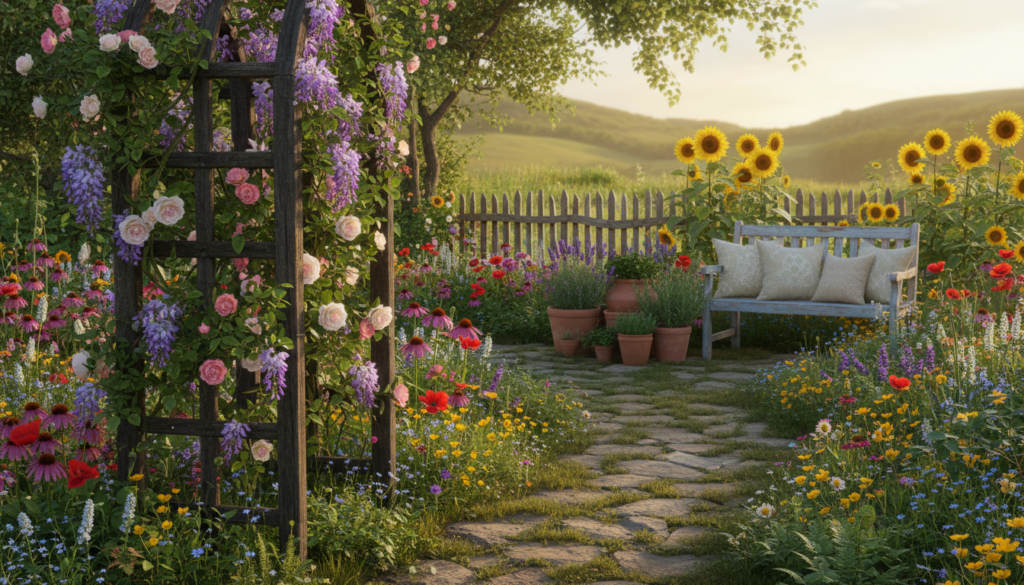
Balance is key. Arrange varied beds, winding paths, and small seating nooks so each space feels intentional but not overworked. Let plants spread a little; the resulting variety creates charm over time.
Practical considerations for the gardener include choosing hardy species that thrive with low intervention and using reclaimed materials that show age gracefully. This approach yields authentic, lived‑in designs that mature beautifully.
Essential Materials for Rustic Gardens
Choose materials that give your yard structure and character. Start with durable elements and then soften edges with plants and seating. This approach keeps maintenance low and the look cohesive.
Natural Stone and Gravel
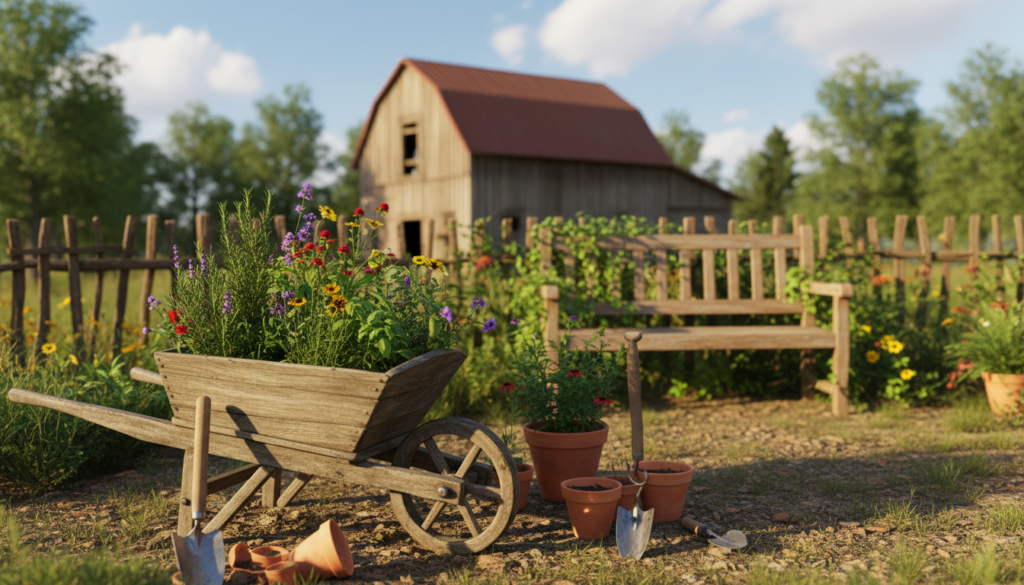
Natural stone and gravel pathways create a sturdy framework for garden design. They mimic woodland paths and help with drainage near beds. Use flagstone for stepping areas and crushed gravel for wider walkways.
Repurposed Wood and Metal
Repurposed wood—logs, reclaimed planks, or tree limbs—works well to edge beds and build low fences. It’s affordable and fits a cottage look.
- Metal accents: oxidized copper or galvanized steel add warmth; designers use these at shows like RHS Chelsea.
- Vintage planters: old buckets and watering cans make quick, charming containers.
- Practical tip: combine stone paths with wooden edges to define areas without strict formality.
“These simple materials give endless inspiration for homeowners aiming for an intentionally relaxed outdoor space.”
Selecting Plants for Your Landscape
Pick plants that cope with heat and low water to keep your yard vibrant year after year. Start by choosing species that match San Antonio’s USDA Zone 9a climate.
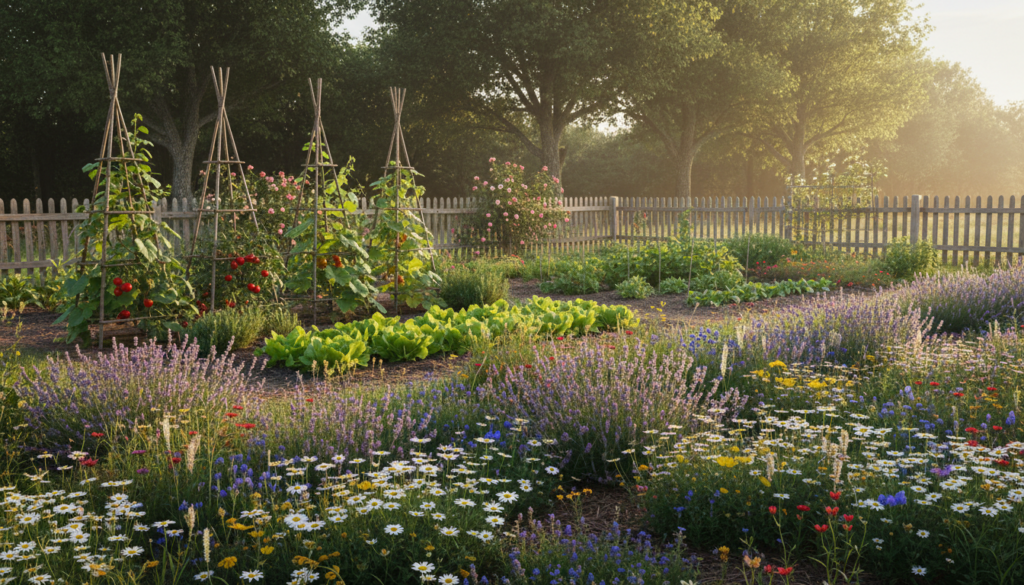
Practical choices include drought-tolerant perennials and ornamental grasses that reduce maintenance while adding texture and seasonal colors.
Choosing Native and Drought-Tolerant Varieties
Black-Eyed Susan (Rudbeckia hirta) is a hardy perennial that brings bright yellow flowers and steady pollinator visits to your beds during summer.
- Watering: Use drip irrigation to deliver water efficiently and keep plants healthy in hot months.
- Mulch: Apply a thick layer around trees and shrubs to retain moisture and moderate soil temperature.
- Plant mix: Combine perennials, annuals, and grasses like Muhly Grass for variety and year-round interest.
The right mix creates an inviting cottage garden or rustic garden look that balances beauty with low-water gardening considerations.
For layout ideas and plant pairings that suit this approach, explore our garden design ideas.
Incorporating Functional Garden Features
Functional additions turn a pretty yard into a living space you use every day. Focus on features that invite use and keep the look cohesive. Simple choices make the space feel intentional without extra upkeep.
Creating Cozy Seating Areas
Place seating where views, flowers, and shade meet. Use vintage metal furniture for a lived-in look that fits a farmhouse vibe.
Tip: Add cushions and throw blankets for evenings around a fire pit or outdoor fireplace. These areas extend time outdoors and encourage conversation.
Installing Water Features
Choose a small fountain or a natural pond to add sound and motion. Water attracts birds and helps mask street noise.
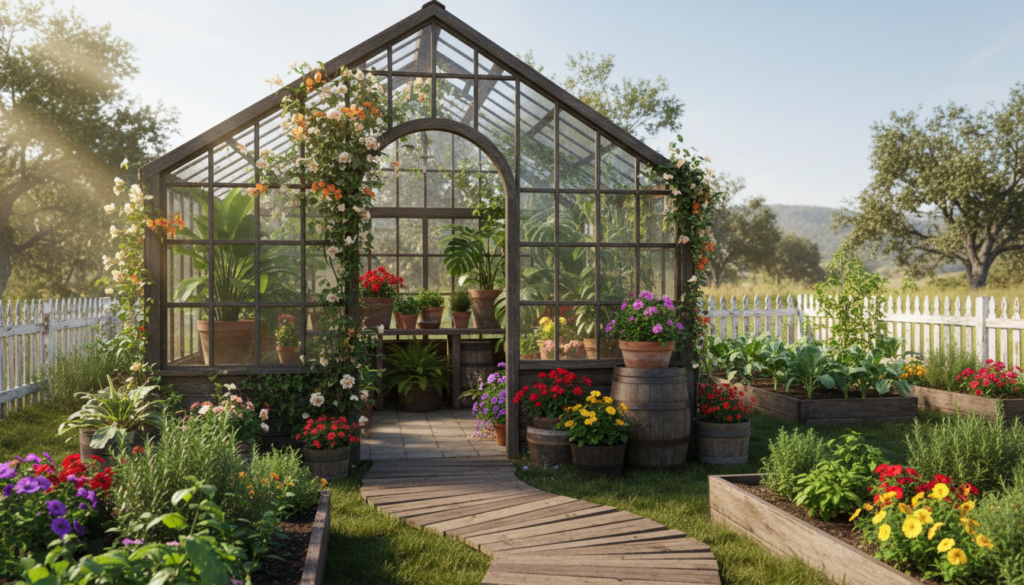
Designing Greenhouse Sanctuaries
A greenhouse can be a private refuge for cuttings, seedlings, or quiet reading. It makes a practical addition and supports year-round planting.
| Feature | Primary Benefit | Suggested Materials | Best Spot |
|---|---|---|---|
| Seating Nook | Comfort & social space | Vintage metal, reclaimed wood | Near beds or under a tree |
| Water Feature | Wildlife & ambient sound | Stone, basin, recirculating pump | Central view or hidden corner |
| Greenhouse | Propagation & shelter | Glass panels, metal frame | Sunny, level area |
| Outdoor Kitchen | Alfresco dining | Improvised stone, metal accents | Close to house, wind-sheltered |
“Small, well-placed features add variety and purpose, so your garden grows into a true living space.”
For step-by-step planning help, see our ideas for planning a garden to match features to your design and time.
Seasonal Care and Maintenance
Smart seasonal habits help your garden stay productive and full of flowers through every season.
Regular pruning and deadheading encourage fresh growth and keep beds tidy. Do quick checks monthly; remove spent blooms and thin crowded shoots. These small moves give plants room to breathe and bloom.
Proper watering matters. Use a reliable garden tool like a drip timer or watering wand to feed both greenhouse and outdoor beds. Water early in the morning to reduce evaporation and fungal issues.
Inspect metal features and supports each season for signs of oxidation. Tighten connections and touch up protective coatings to extend life. Check your mix of trees and shrubs for pests, trimming damaged branches promptly.

- Clear debris from water rills and fountains to keep circulation steady and avoid blockages.
- Rotate container plants in the greenhouse to ensure even growth and light exposure.
- Record tasks in a simple calendar to save time and spot trends each year.
Subscribe to our monthly newsletter for helpful ideas and timing tips that make seasonal gardening easier.
For a detailed routine, see our seasonal plant care guide to match tasks to your landscape and climate.
Conclusion: Embracing Your Natural Outdoor Space
Make your backyard feel like a lived-in haven by choosing durable materials and flexible plantings that grow with time. A simple mix of vintage metal, reclaimed wood, and native plants gives your yard an authentic look and lasting beauty.
Think of your project as an evolving design. Add water features, a small tree, or a greenhouse as you go. These additions make the space more useful and personal.
Use our garden design ideas for inspiration and practical tips. Sign up for the newsletter to get more expert guidance as your cottage garden or rustic garden journey unfolds.