
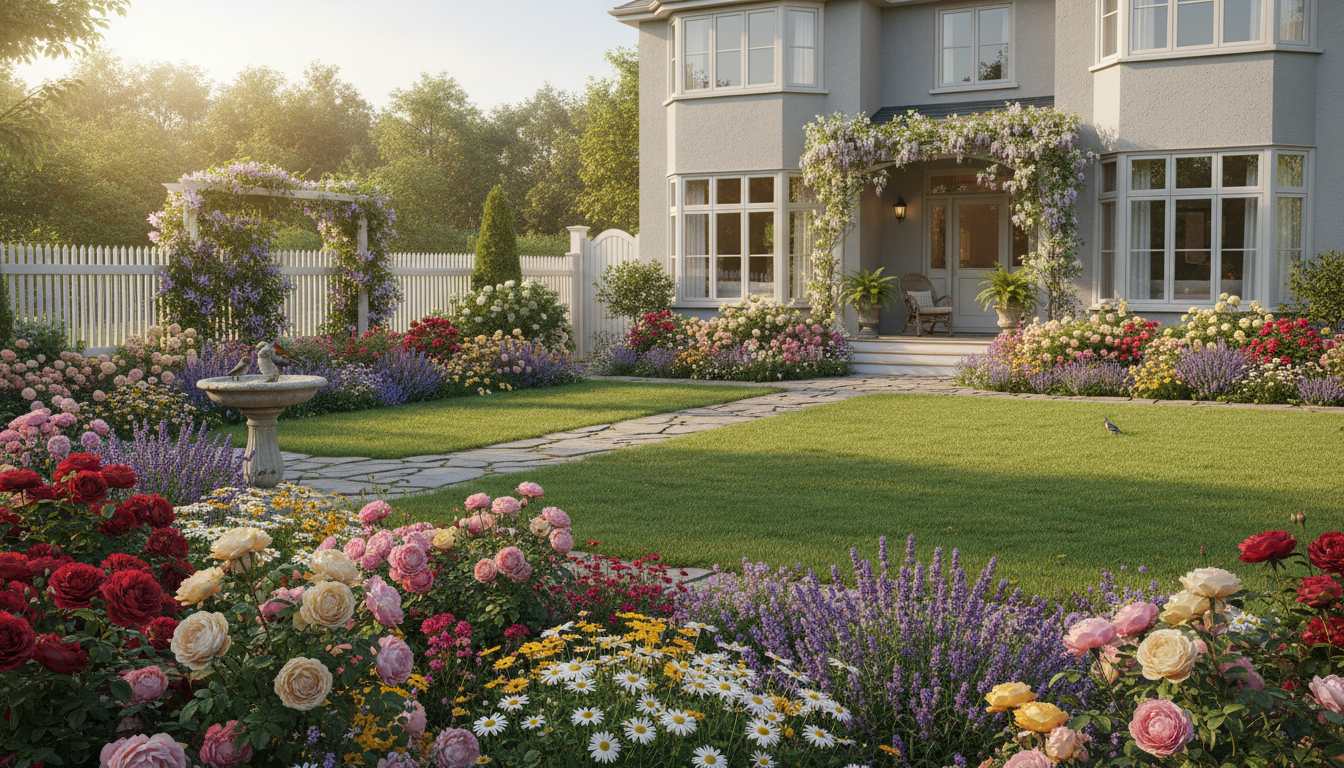
Your entryway sets the tone for neighbors and visitors. Janet Loughrey, a professional garden writer and photographer, notes that this area is the first place people form an impression of your home.
This short guide helps you plan smart landscape changes that boost curb appeal and reflect your style. Think about balance between form and function. Choose plants and design elements that add seasonal color and texture without overwhelming the space.
Whether you want simple yard landscaping ideas or a full redesign, start by assessing your current lawn and layout. Small changes can update the overall look and make the area more welcoming. Investing time now often raises long-term value and satisfaction.
Key Takeaways
- First impressions matter; this area shapes how guests view your home.
- Balance personal style with practical needs for best curb appeal.
- Mix plants and hardscaping for year-round interest and color.
- Start by evaluating existing lawn and layout before big changes.
- Small, thoughtful updates can boost value and neighborhood appeal.
Planning Your Front Yard Garden
Begin by setting clear goals so every element you add supports how you live and use the space.
Assessing Your Goals
List primary uses—play space, easy maintenance, or a welcoming entry. Pick two or three priorities to keep decisions focused.
Consider daily flow: walking to the home, driveway access, and where deliveries arrive. That helps avoid planting in high-traffic spots.
Sketching Your Layout
Draw a simple plan to place trees, shrubs, and paths. A paper sketch shows scale and balance before you spend money.
Walk the block for inspiration and note features that fit your house style. A formal home often needs symmetry, while a casual property can be looser.
- Reserve space for plants to reach full size.
- Mark access routes to doors and parking.
- Use the sketch to share your vision with help or contractors.
Evaluating Your Outdoor Space
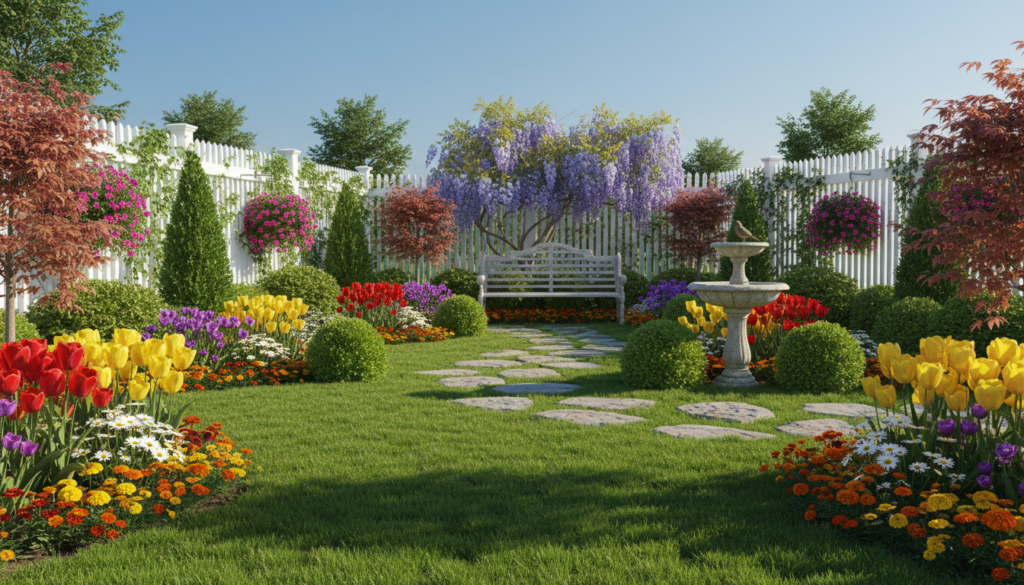
Start by surveying light, traffic, and soil so your design choices match real conditions. Note areas of full sun, partial shade, and deep shade. That decides which plants will thrive and where to place hardscape.
Check privacy and flow. Decide whether you want a secluded feel or an open, welcoming approach. If the front yard faces a busy street, consider low hedges or screens to reduce noise and boost privacy.
Inspect the home’s features — windows, walkways, and the main entrance — so plantings highlight, not block, architecture. Also test soil quality; compacted soil often needs amendment before planting.
- Map water drainage after a heavy rain to avoid standing water near beds or the foundation.
- Measure pathways to ensure comfortable movement to the door and driveway.
- Match the scale of your landscape to the property’s size; small lots need tight composition, large lots allow broader planting groups.
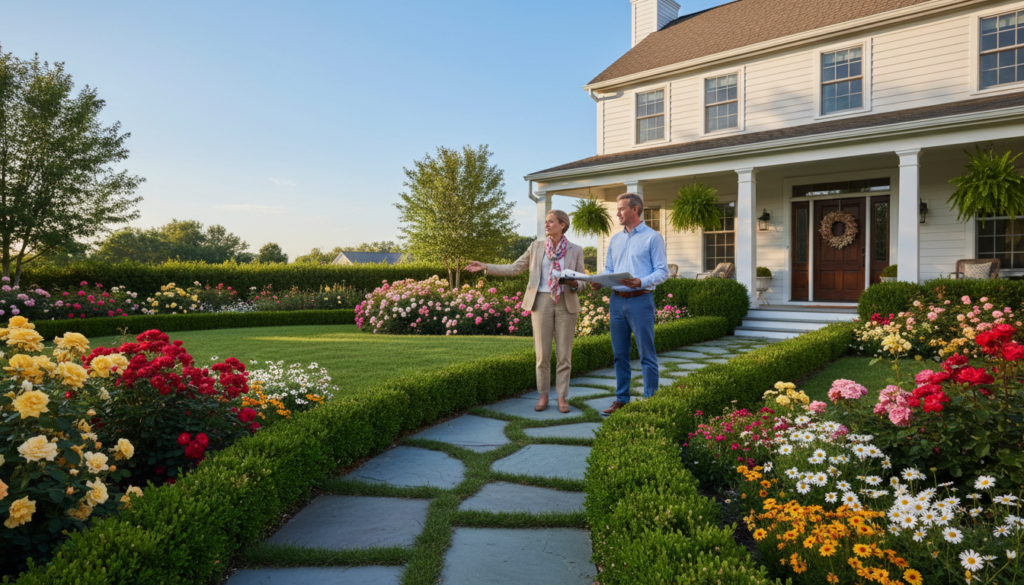
Make a plan from this assessment. A thorough evaluation lets you pick plants and materials that create a beautiful, sustainable space for your home. Learn more about practical steps in how to plan garden design.
Essential Design Principles for Curb Appeal
When scale is right, each plant and path feels like it belongs to the house instead of fighting it. Start by thinking about proportion: match plant size and hardscape to your home’s mass so nothing feels out of place.
Understanding Scale and Proportion
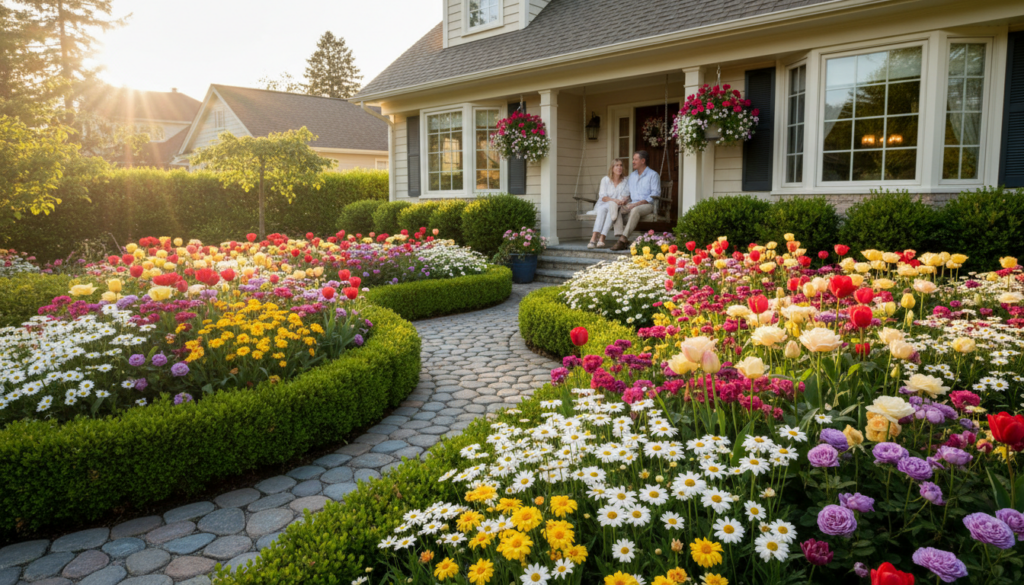
Keep elements in balance. Small homes need modest trees and grouped shrubs so the structure remains visible. Large houses benefit from taller plantings and bolder features so the composition reads as intentional.
Foundation plantings soften the transition between house and landscape and boost curb appeal. Aim for heights that do not block windows or entry views.
“Scale makes all the difference.”
- Choose a fence style that complements your house to maintain cohesion.
- Repeat shapes and limit your color palette to create unity across the yard.
- Use stone or brick edging to define beds and give a finished look.
Thoughtful proportion keeps the property inviting and easy to maintain. For more practical ideas, see front of house landscape ideas.
Choosing the Right Plants for Your Front Yard Garden
Smart plant selection builds a resilient planting palette that thrives in local conditions and matches your home’s style. Start by assessing light, soil, and how much time you want to spend caring for beds.
Selecting Native Species
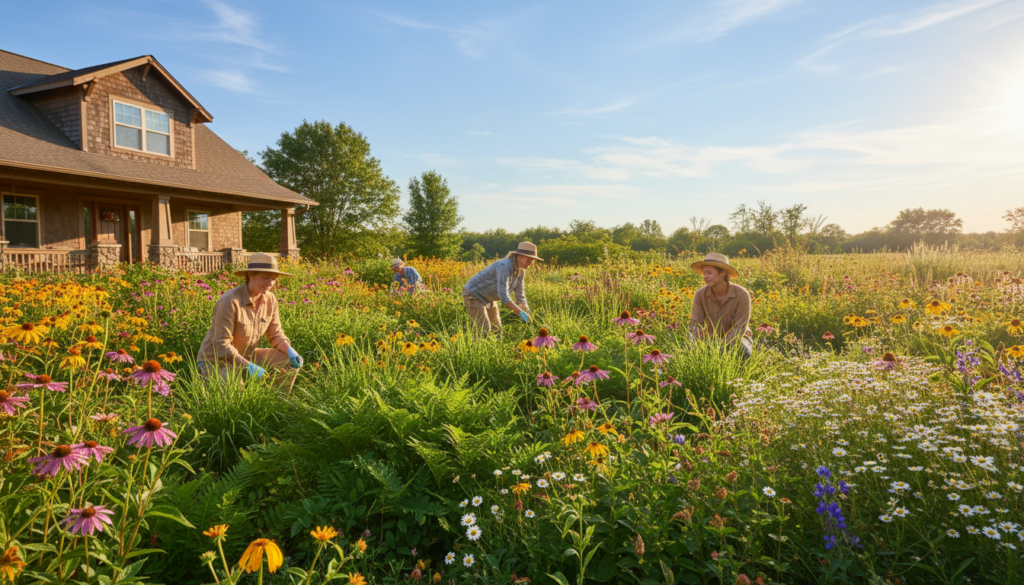
Native plants work well because they are adapted to regional climate and soil. They need less water and fewer inputs, which saves time and helps local wildlife.
Tip: Group native species by light and moisture needs to give each plant the best chance to thrive.
Incorporating Evergreens
Evergreens provide year-round structure and color. Use a mix of small trees and shrubs near the foundation to frame the home without blocking windows.
Balance evergreens with seasonal perennials so you get steady form plus changing blooms.
Using Ornamental Grasses
Ornamental grasses add texture and movement to beds. They pair well with flowers and perennials and require little maintenance.
- Choose varieties sized for your space.
- Plant in odd-number groups for a natural look.
- Check mature height to avoid crowding trees or the lawn.
Incorporating Hardscaping Elements
Hardscaping anchors your landscape and turns traffic paths into lasting design features. Use stone or pavers to define routes that feel deliberate and tidy.
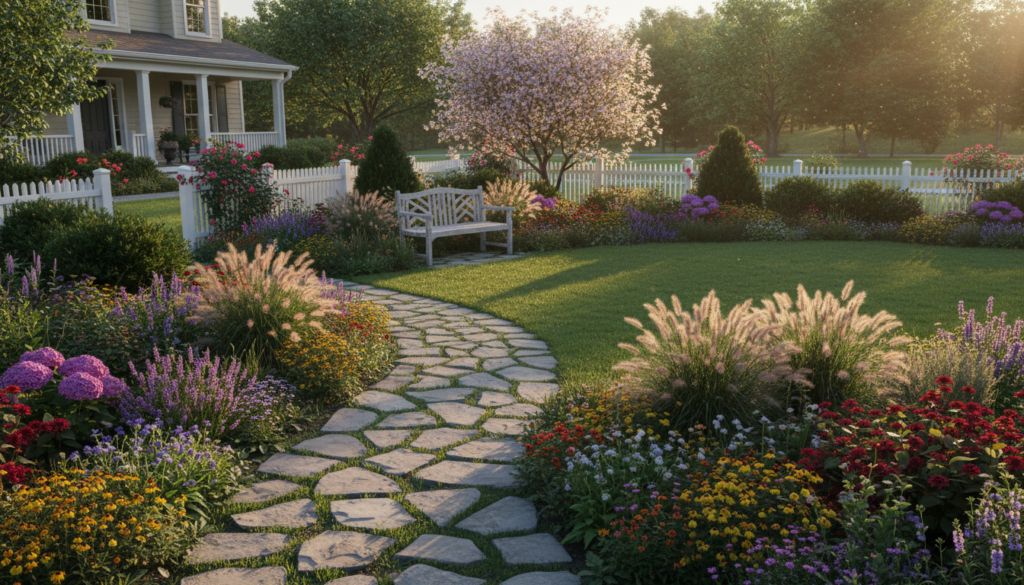
Designer Marina Wynton used eco-friendly permeable pavers and gravel to make a durable, low-impact walkway in a front yard landscape. This approach improves drainage and keeps surfaces usable after rain.
Hardscaping ideas like raised beds, retaining walls, and a simple stone bench create useful edges and focal points. A well-placed fence can add privacy and act as a backdrop for colorful plantings and climbing vines.
- Choose natural stone or quality pavers for longevity and minimal upkeep.
- Use materials whose color and texture complement your home for a unified look.
- Integrate paths to reduce lawn area and cut mowing time.
Thoughtful hardscape provides contrast to soft plantings and gives your yard landscaping ideas the structure they need. Small, durable features deliver big benefits for curb appeal and ease of care.
Creating a Welcoming Entrance
The gateway to your home should feel intentional, welcoming visitors before they reach the porch.
Make a clear focal point. Designer Donna Giguere framed a walkway with a wisteria-covered arbor to create a memorable approach to the front yard. That simple element adds structure, soft scent, and seasonal color.
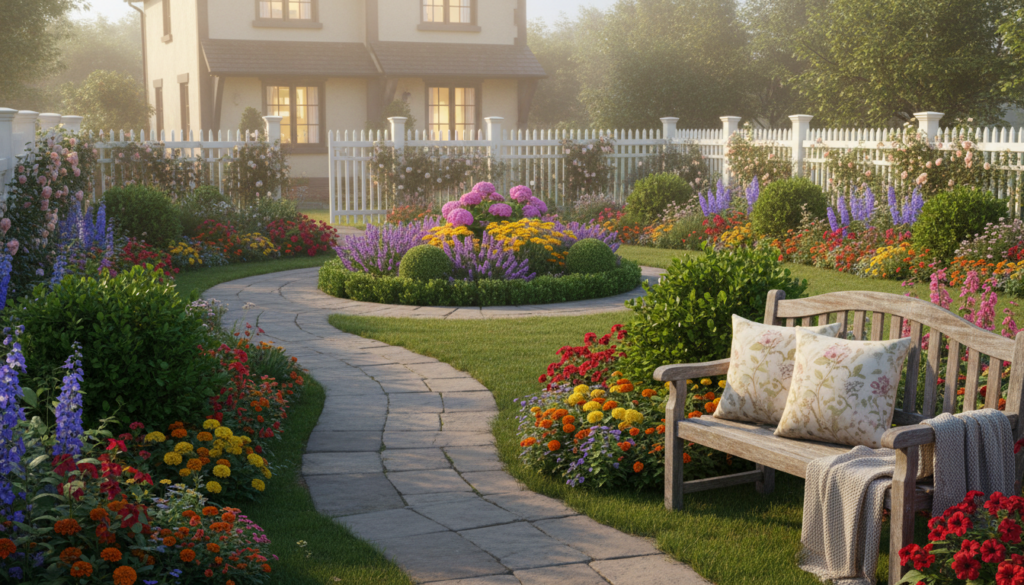
Small touches boost curb appeal fast. A fresh coat of paint on the door and containers filled with seasonal blooms add a friendly pop. Layered plantings around the porch soften edges and draw the eye toward the entry.
Think about comfort and safety. Add lighting along paths and a well-placed fence or gate to define the area and give gentle privacy without feeling closed off.
- Keep the entrance tidy and free of clutter.
- Provide seating so the entry becomes a useful space for the house.
- Focus on details to leave a strong, positive impression.
Designing for Low Maintenance
Keep maintenance low by picking a simple plan that favors hardy, work‑saving elements.
Choose resilient plants that need little pruning and minimal feeding. Perennials and native plants often return year after year and tolerate local conditions.
Group plantings by water needs to make irrigation efficient. Use shrubs and trees that keep their natural shape to cut pruning time.
Mulching for Weed Suppression
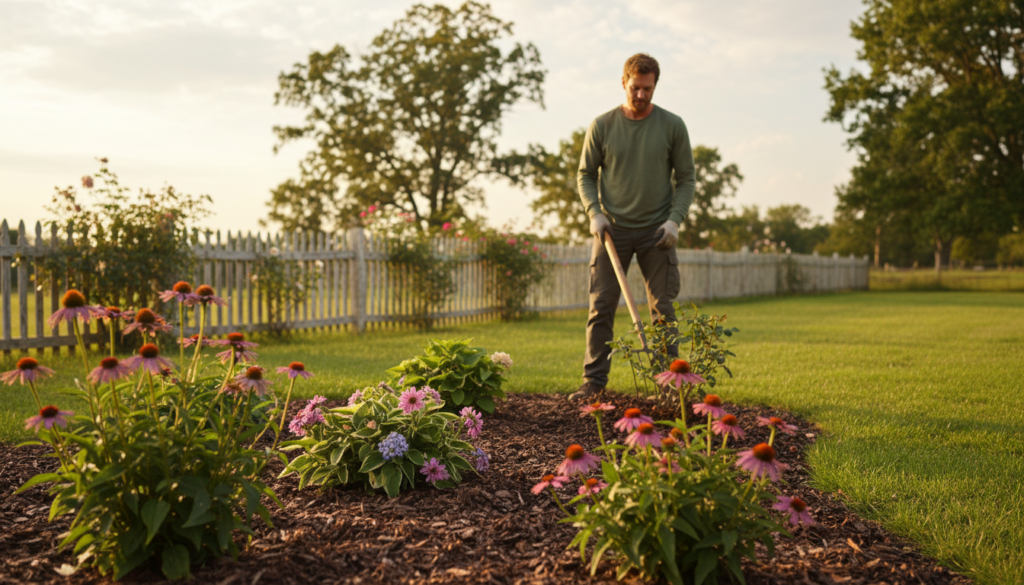
Apply a 2–3 inch layer of organic mulch over beds to retain moisture and block weeds. Mulch reduces watering and keeps roots cool in summer.
- Refresh mulch each season to maintain effectiveness.
- Use ground cover instead of large areas of lawn to lower mowing time.
- Add gravel or stone paths for durable, low‑care circulation.
| Feature | Benefit | Maintenance | Best Use |
|---|---|---|---|
| Perennials | Yearly color | Low (divide occasionally) | Beds, borders |
| Native plants | Less water & fertilizer | Low | Mixed plantings |
| Mulch & stone | Weed control, durable paths | Seasonal refresh | High‑traffic areas |
Selecting the Perfect Lawn Alternatives
Ditching a traditional lawn opens endless creative planting options for a brighter, easier-to-care landscape.
Michael Farmdale turned a nondescript space in Washington into a Zen-like, lawn-free garden using trees, shrubs, and lots of ground cover. His work shows how a mix of textures gives the area calm structure and year-round interest.
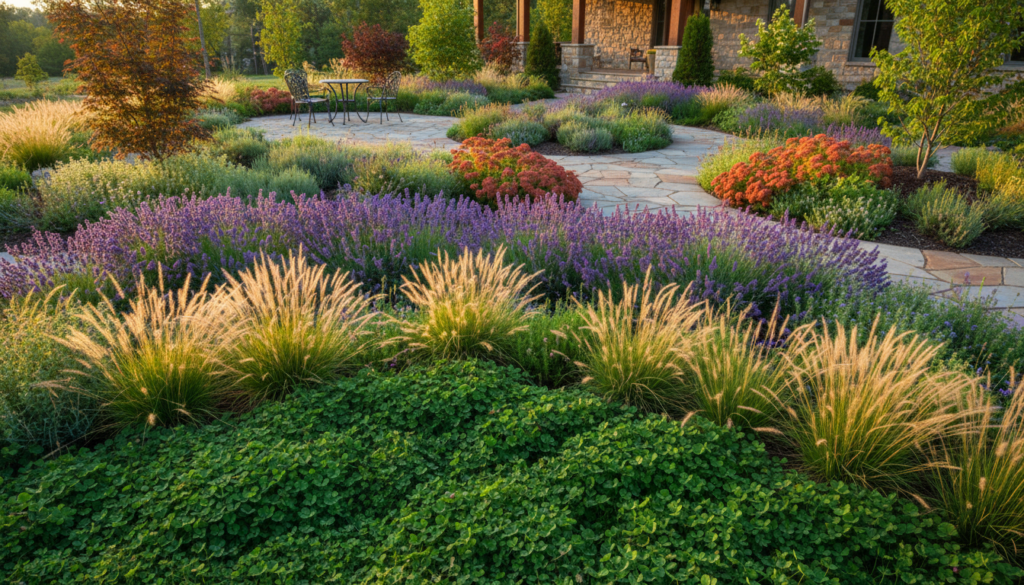
Consider clover, moss, or ornamental grasses as low-care ground cover that needs less water and fertilizer than grass. Use gravel or mulch in high-use zones for a clean, modern look and lower upkeep.
Plant a variety of flowers and shrubs to attract pollinators and add color. If you have a fence, place beds along the perimeter to showcase favorite plants and trees while maximizing space.
- Reduce lawn size to focus on high-impact beds.
- Check HOA or city rules before changing turf.
- Use mixed plantings to keep maintenance simple and visual interest high.
For practical planting tips and layout help, see garden planting design.
Adding Seasonal Interest
Layer seasonal plantings so your landscape offers fresh color and texture from winter thaw to late fall.
Plant spring‑flowering bulbs in the fall for an early burst of color. Add perennials that flower at staggered times so beds never look bare.
Include trees with bold bark or bright berries to give interest in winter months. Evergreens in foundation plantings add year‑round structure, while deciduous shrubs provide seasonal change.
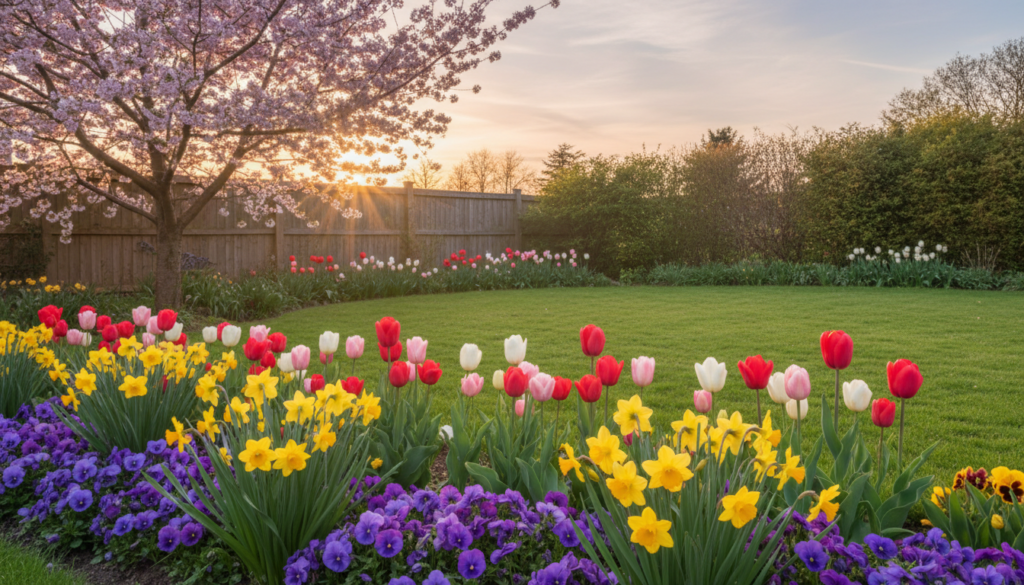
Use containers to swap in seasonal flowers quickly; rotating pots is an easy way to refresh curb appeal without a full redesign. Ornamental grasses bring movement and texture, especially in autumn and winter light.
Tip: Plan for four seasons when choosing plantings and the placement of a small fence or path. That way your yard or lawn keeps interest, and the overall design supports long-term appeal.
- Bulbs for spring
- Perennials for layered blooms
- Trees and shrubs for fall color and winter form
Utilizing Containers for Versatility
Moveable containers let you test plant groupings and color combos without committing to new beds.
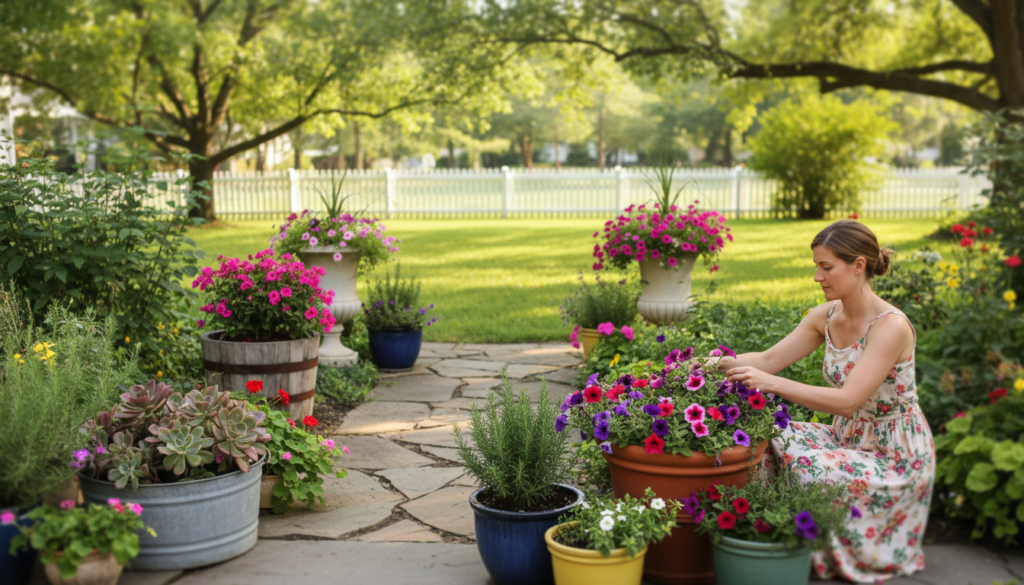
Pots are a fast way to add life to a front area, a small yard, or a porch. You can combine trees, perennials, and annuals to create seasonal displays. Change pots in spring for bright flowers, swap to evergreen plantings in winter, and try grasses for fall texture.
Stone or ceramic planters act as focal points near an entry or fence. They give structure and boost curb appeal. Group mixed sizes for height and drama. That variety helps guide the eye and frames pathways or beds.
“Containers make redesign simple: move, refresh, or remove without heavy work.”
Care tips: use well-draining soil, check drainage holes, and water to match each plant’s needs. Containers let you control soil mix, reduce grass removal, and experiment with new landscaping ideas in any area.
- Use large pots for small trees and shrubs.
- Place smaller pots on steps or near a lawn edge for pops of color.
- Rotate seasonal plantings to keep year-round appeal.
| Container Type | Best Use | Maintenance | Visual Impact |
|---|---|---|---|
| Stone | Entry focal point | Low (durable) | Classic, heavy |
| Ceramic | Porch accents | Medium (fragile) | Bright color options |
| Lightweight resin | Movable displays | Low (easy to move) | Versatile, modern |
Implementing Privacy Barriers
A well-crafted privacy plan turns an exposed area into a calm, usable retreat.
Choose the right mix. A simple fence gives immediate screening, while layered plantings soften its look. Combine a low fence with evergreen hedges and ornamental grasses for year‑round coverage.
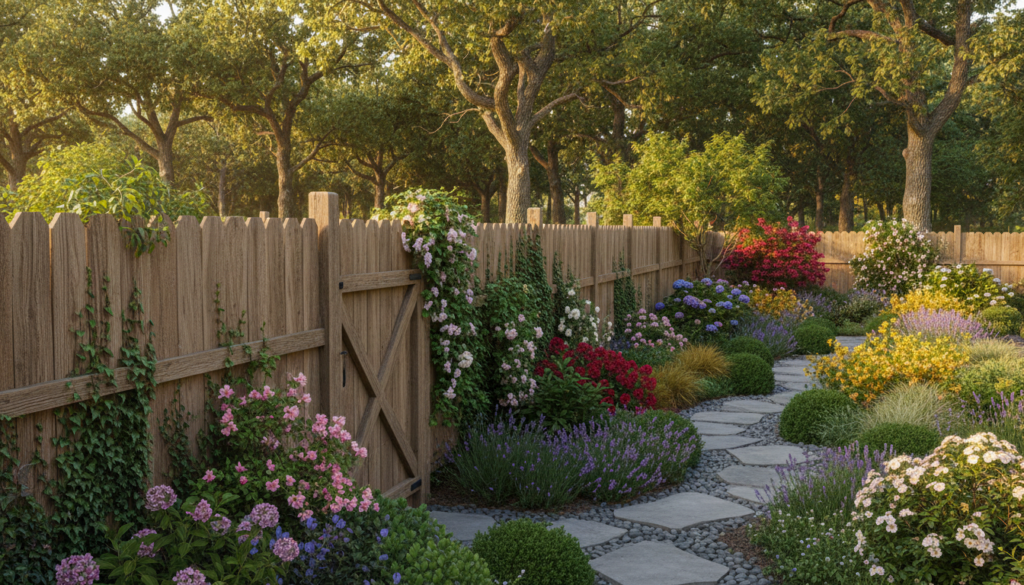
Use trees and large shrubs to define specific zones without closing off light to beds or the lawn. Tall grasses add airy texture and block sightlines quickly in spring and summer.
- Evergreen hedges provide steady screening and reduce noise.
- Climbing plants on a fence create vertical color and interest.
- Layered plantings protect views while boosting curb appeal.
Check local rules before adding tall barriers. A thoughtful layout balances privacy with sun for flowers and ground cover so your landscape stays healthy and inviting.
“Privacy should enhance comfort, not hide your home’s best features.”
Enhancing Safety and Accessibility
Simple changes to pathways and lighting can transform how people move through your entry area.
Design clear routes. Make walkways wide enough for two people side-by-side and keep them free from overgrown plants and tripping hazards. If your area slopes, add steps or a ramp so everyone can access the space safely.
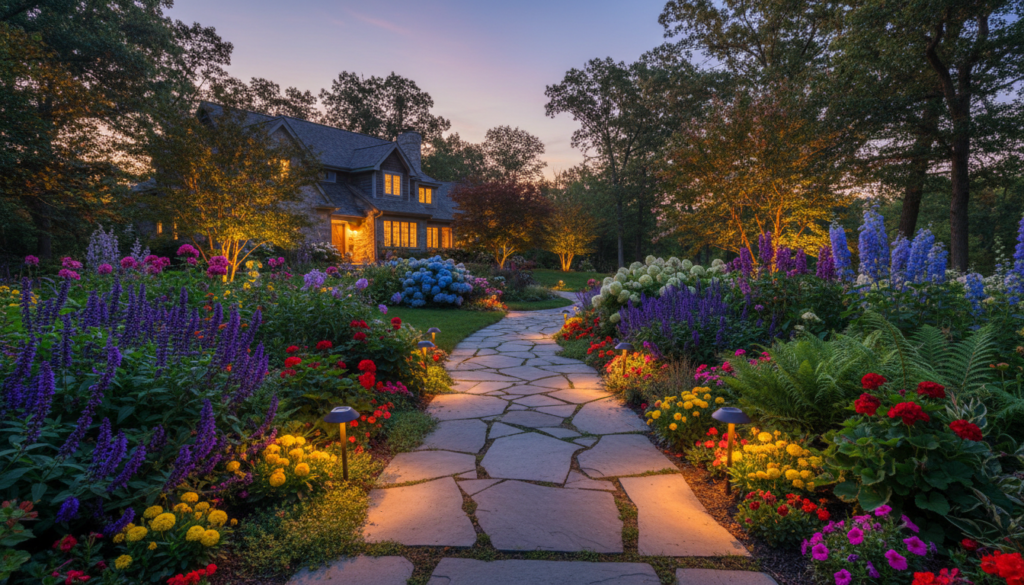
Light it well. Low-voltage landscape lighting along paths and near the entrance improves nighttime safety and highlights your landscape design. The David Best example shows how a spacious staircase and well-placed lighting can be both practical and attractive.
Keep foundation plantings trimmed so they do not block windows, driveway sightlines, or house numbers. A tidy lawn and clear beds make movement easier and boost curb appeal.
- Repair cracked sidewalks and clear ice or snow promptly.
- Place the mailbox and house numbers where carriers and first responders can find them quickly.
- Use durable, non-slip materials for steps and high-traffic areas.
Prioritizing safety and accessibility creates a welcoming, functional space for family and visitors. For planting layouts and practical ideas, see ideas for planning a garden.
Designing for Different Home Styles
Let architectural cues guide your planting choices so the landscape reads like a natural extension of the house.
Helena Wagner used rounded boxwood shrubs and bigleaf hydrangea to echo her home’s curves and materials. That approach ties plantings to the structure and creates a polished front yard landscape.
For a modern home, favor clean lines, geometric beds, and a limited color palette. Use simple pots, sculptural plants, and repeated forms for a minimalist feel.
A cottage-style property welcomes a looser mix of perennials, flowering shrubs, and winding paths. Layer textures and blooms for charm and seasonal color.
Traditional homes benefit from symmetrical beds and classic foundation plantings. Match materials—stone, brick, or siding—when choosing plants and hardscape to keep a cohesive look.
Balance and proportion are the unifying rules. Select a variety of heights and forms so your planting scheme feels intentional and easy to maintain.
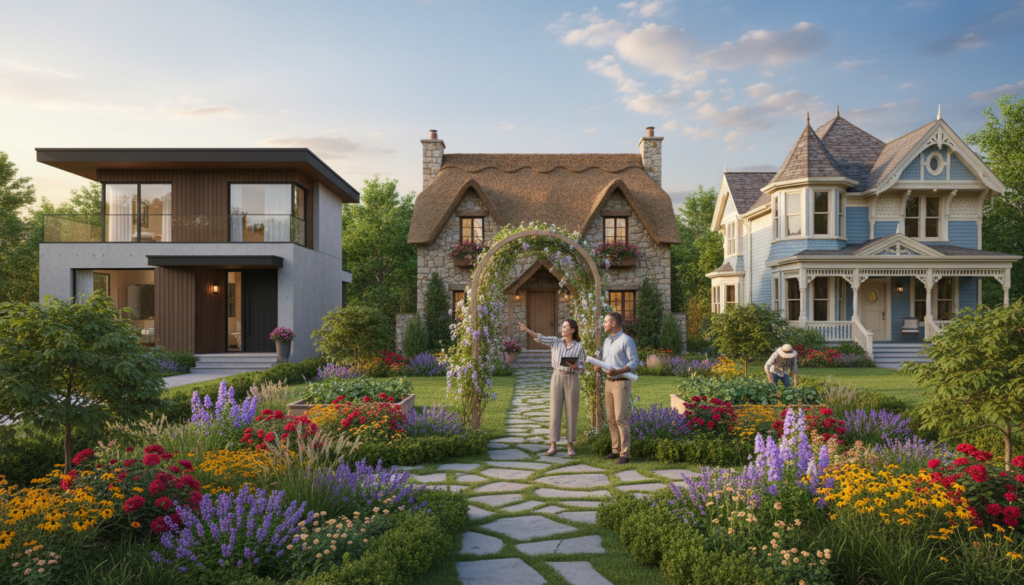
| Style | Key Elements | Planting Ideas | Best Use |
|---|---|---|---|
| Modern | Clean lines, limited palette | Grasses, boxy shrubs, sculptural trees | Minimal beds, hardscape focus |
| Cottage | Mixed blooms, winding paths | Perennials, flowering shrubs, climbers | Layered beds, informal borders |
| Traditional | Symmetry, classic materials | Evergreens, foundation plantings, hydrangea | Formal beds, framed entry |
Managing Soil and Irrigation
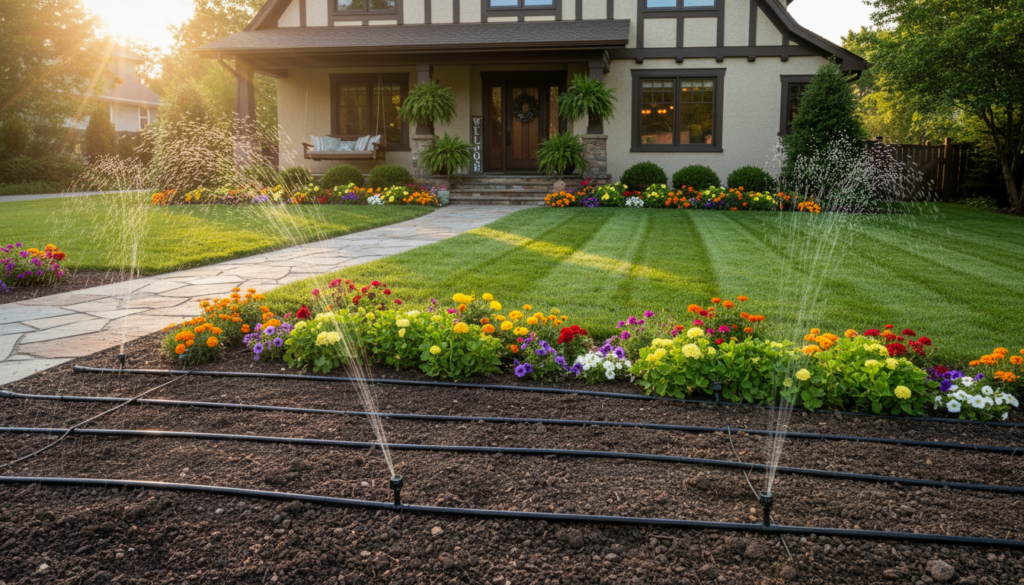
Start with the earth beneath your feet—soil and water determine how well plants perform. Test pH and nutrients before planting. Amend heavy clay or sandy soil with compost to improve drainage and fertility.
If soil is compacted, aerate so roots can spread. Good soil helps trees, perennials, and smaller plantings take root fast and need less help later.
Watering matters. Use drip irrigation to send moisture to roots and reduce evaporation. Drip lines save water and cut the time you spend hand-watering beds and lawn areas.
Choose native plants when possible. They suit local soil and climate, so they need less supplemental irrigation and fewer fertilizers.
| Practice | Benefit | Maintenance |
|---|---|---|
| Soil testing & compost | Better fertility & structure | Seasonal amendment |
| Aeration | Deeper roots, less compaction | Annual or as needed |
| Drip irrigation | Water savings, targeted delivery | Regular checks for leaks |
Monitor systems and mulch garden beds to keep moisture and reduce weeds. With a solid soil and irrigation plan, your house landscape will show healthier color and need less time to maintain.
Incorporating Water Features
Water elements give a property a restful heartbeat that complements stone and plantings. A small fountain, birdbath, or pond adds motion and a soothing sound that draws people in.
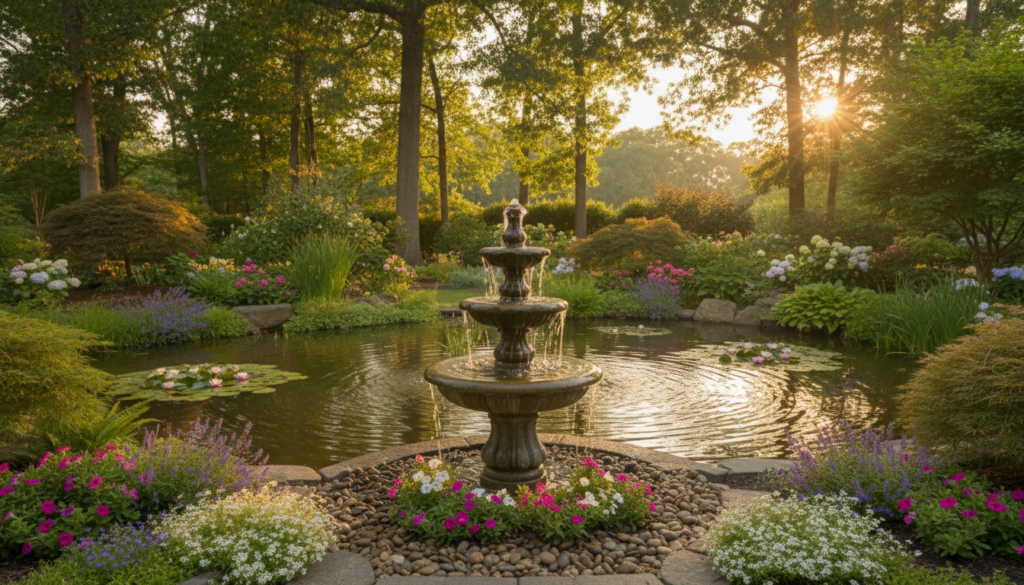
Designer Philip Thornburg combined a rock garden with a gentle water feature to make a calm, engaging front yard garden. His design uses river rocks and decorative boulders to frame the pool and tie the element into nearby beds.
Benefits include attracting birds and wildlife, masking street noise, and creating a memorable focal point. Lighting the feature at night extends its appeal and makes the area feel secure after dark.
- Scale matters: pick a feature that fits the size and style of your home.
- Use stone: river rocks or boulders give a natural edge and contrast to plant color and foliage.
- Maintain: check pumps, clean filters, and remove debris seasonally to keep water clear.
From simple basins to tiered waterfalls, there are many options to suit different budgets and tastes. For more inspiration on integrating a water element into your scheme, see designer garden ideas.
Conclusion
A thoughtful plan turns small changes into a lasting, confident landscape that suits your home and daily life.
Take your time and choose a few priorities. Add native plants, practical hardscape, and seasonal containers to build interest without overwork.
These tips help you shape the look you want. Use simple paths, layered planting, and steady care to boost curb appeal and make the area welcoming.
Whether you try front yard landscaping or subtle yard landscaping updates, every small step improves the yard landscape. Enjoy the process—your garden will repay your effort for years to come.