
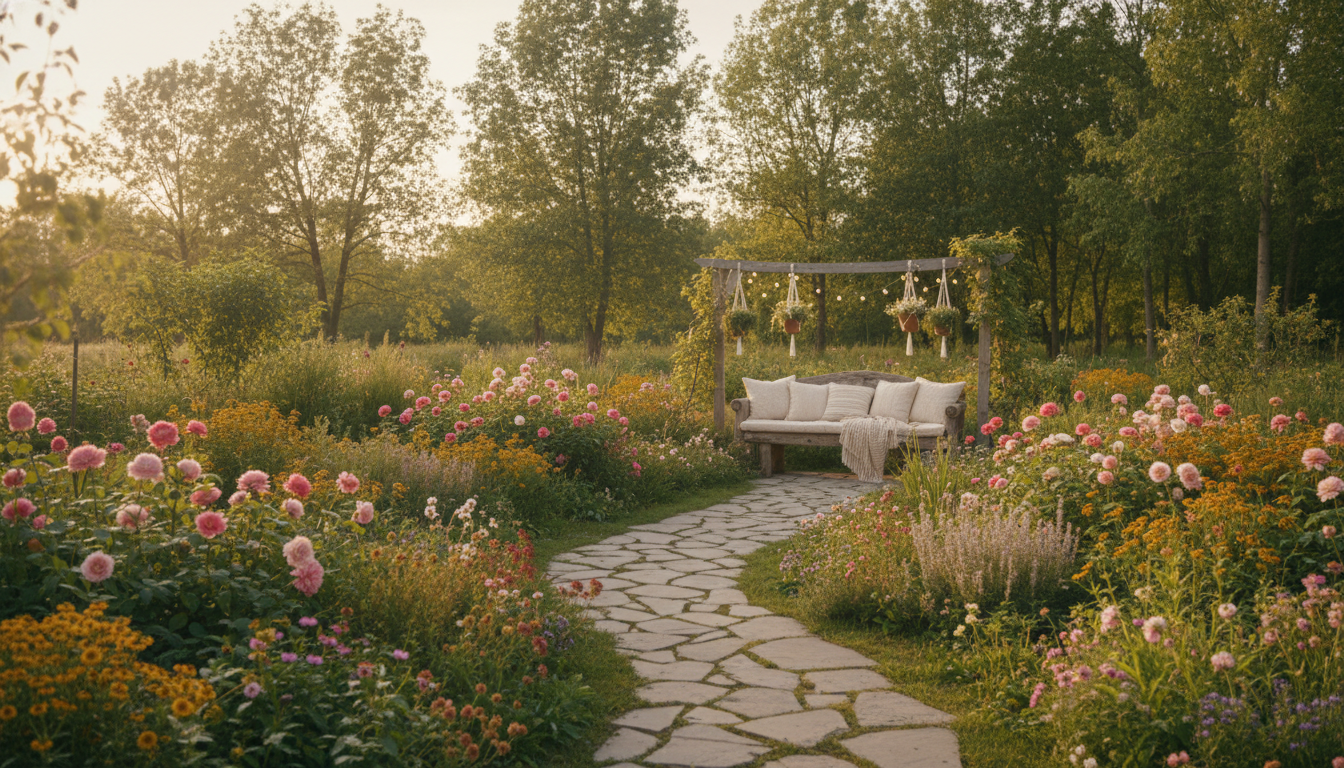
Creating an outdoor space that reflects your style starts with simple planning. Choose plants that match your lifestyle and the local climate. Small steps in layout and plant selection make a big difference.
As we move toward 2026, homeowners seek fresh inspiration for transforming yards into peaceful, functional retreats. Exploring diverse gardens from around the world will spark new ideas for color, texture, and flow.
Whether you start from scratch or refresh an existing area, thoughtful garden design helps the space feel like a natural extension of home. With the right plants and layout, your backyard can become a place that brings joy year-round.
Key Takeaways
- Plan with purpose to make your outdoor area match daily life.
- Select plants for year-round interest and ease of care.
- Look to gardens worldwide for fresh design ideas.
- Simple layout changes improve function and beauty quickly.
- Use gentle color and texture contrasts to create calm.
Understanding the Importance of Your Garden Aesthetic
Your outdoor setting can reflect who you are and shape how you feel every day. A clear vision helps you choose plants, colors, and layouts that fit your routines and the way you want to use the space.
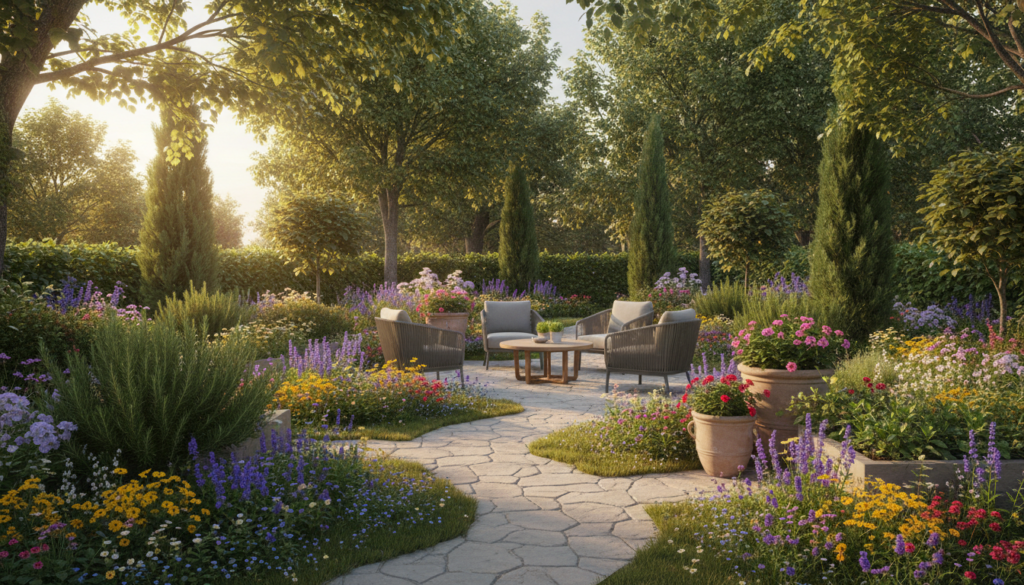
Defining Your Personal Style
Start by listing what you love: textures, colors, and how much upkeep you want. This makes it easier to pick plants and hardscape that match your lifestyle.
Think of your outdoor area as an extension of your home. Mix practical choices with touches that show personality.
The Impact of Design on Well-being
A well-designed outdoor area promotes calm and helps you unwind. Time outside can reduce stress and boost focus.
- Gardening lets many people escape daily pressures while engaging their senses.
- Exploring styles and ideas makes spaces both useful and beautiful for your needs.
- Professionals say gardens should act like living canvases where plants and decor work together.
“A thoughtful layout invites relaxation and brings a stronger sense of place.”
Designing with Naturalistic and Wild Landscapes
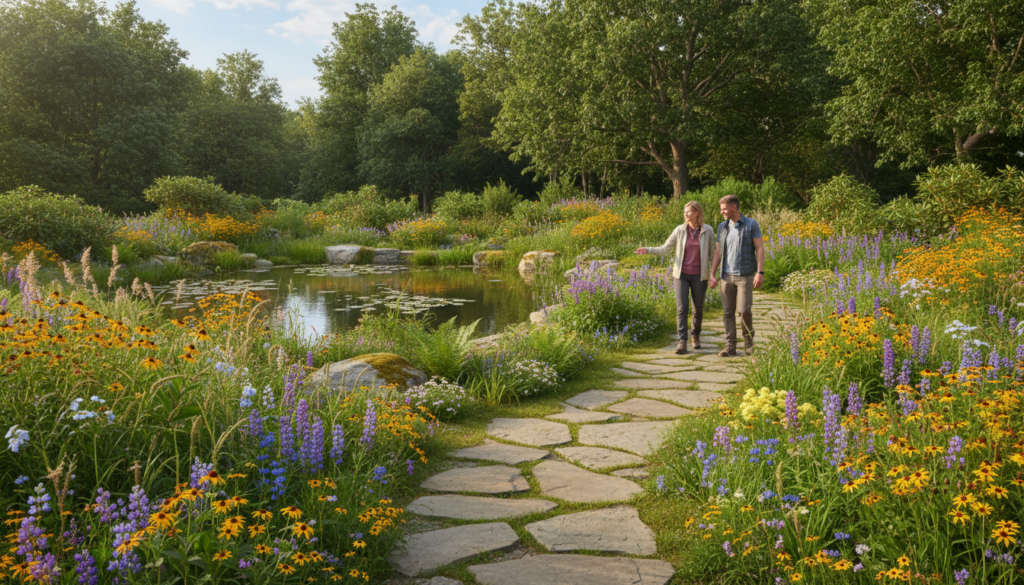
A wild, naturalistic layout brings the free rhythm of the countryside into small urban spaces.
Start with perennials and native plants to create a loose, eco-friendly look that mimics the wild world.
Use plant groupings to shape the layout and unify beds. Masses of flowers and perennials make a bold color statement and invite pollinators.
Incorporate trees like Cornus florida for seasonal interest and scale. Add ornamental grasses such as Pennisetum spp. to give texture and movement.
These gardens feel exuberant but need clear design to avoid looking overgrown. Plan paths, define edges, and place water features to add life without clutter.
- Structure: trees and grasses anchor beds.
- Planting: mass flowers for habitat and color.
- Maintenance: light pruning keeps the wild look intentional.
“Naturalistic planting balances wild beauty with thoughtful design.”
For more planting inspiration and practical layouts, see garden plant design ideas.
Creating a Modern and Contemporary Outdoor Space
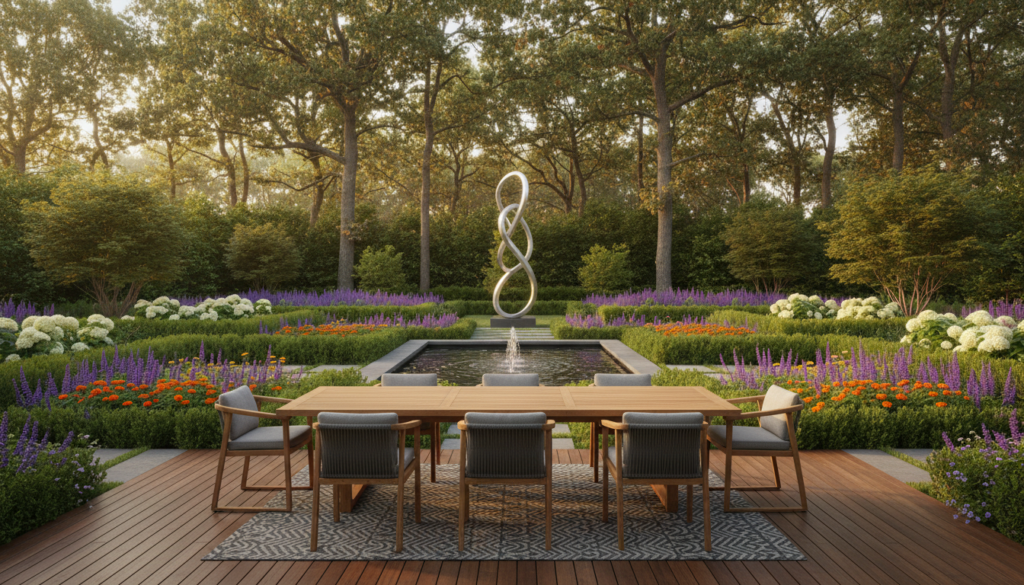
Clean geometry and pared-back planting create modern outdoor rooms that feel calm and intentional.
Contemporary spaces rely on strong structure, limited color, and repeat planting to deliver a cohesive look that fits city and suburban lots.
Focusing on Clean Lines and Sculptural Plants
Buxus sempervirens (boxwood) is a go-to plant for defining edges and giving structure to beds. Use clipped hedges or simple cubes to form clear lines that guide the eye.
Combine gravel and hardscape materials to craft pathways and patios. These materials balance the softness of ornamental grasses and perennials while keeping care low.
- Repeat a few plant varieties to create order across the layout.
- Limit your color palette and play with texture for year-round interest.
- Use geometric beds and structured planting to keep the space tidy and modern.
“Simplicity in form and repetition of plants yields a timeless, low-maintenance look.”
For more practical ideas and layouts, see designer garden ideas.
Embracing the Charm of Cottage and Vintage Gardens
Soft, overflowing beds and vintage finds give small outdoor rooms an inviting, storybook quality.
Elements of Cottagecore
Cottagecore planting favors informal groupings and a free, playful layout. Use curved lines, massed flowers, and classic perennials to create movement and color.
Start with seven simple tips:
- Choose heirloom plants and repeat them for cohesion.
- Design curved paths to soften hard edges.
- Allow some self-seeding for a natural look.
Adding Vintage Decorative Touches
Weathered benches, antique watering cans, and patina pots add personality. These touches turn planting into a lived-in, cozy space.
Mix soft pastels with deeper bloom tones to maintain an old-world sense without feeling fussy.
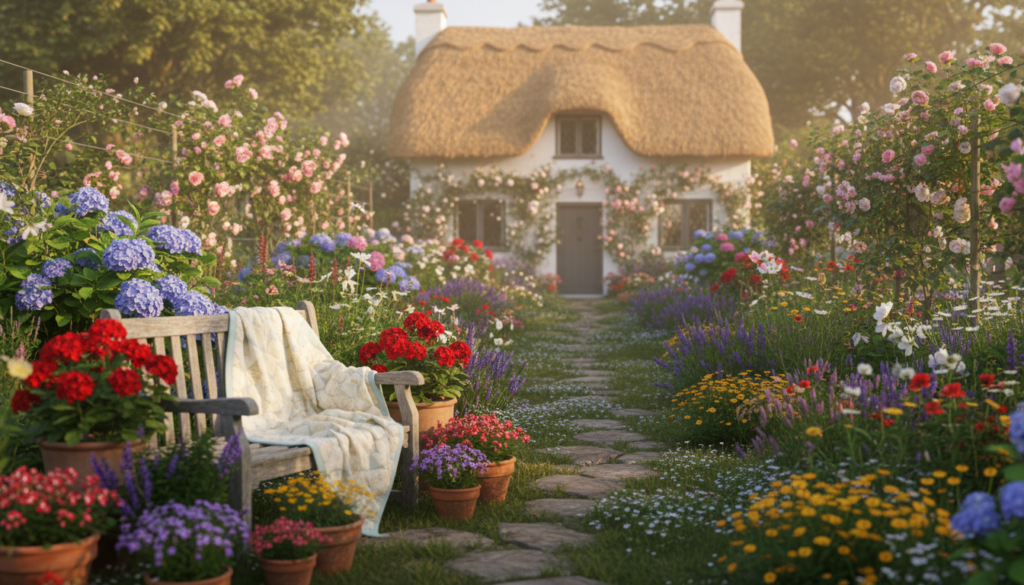
“A few well-placed antiques can make new planting feel storied and warm.”
| Feature | Why It Works | Quick Tip |
|---|---|---|
| Curved beds | Soften lines and guide movement | Use gravel edges to define curves |
| Classic flowers | Provide nostalgia and scent | Plant foxglove, roses, and lavender |
| Vintage decor | Add character and focal points | Integrate a weathered bench or urn |
For more castlecore and period-inspired ideas, explore castlecore inspiration to blend whimsy with practical planting.
Cultivating a Tropical or Mediterranean Oasis
Bring the warmth of the Mediterranean or the lush pulse of the tropics into your outdoor rooms with a few bold choices. Use sun-loving plants and warm materials to shape a unique look that suits your climate.
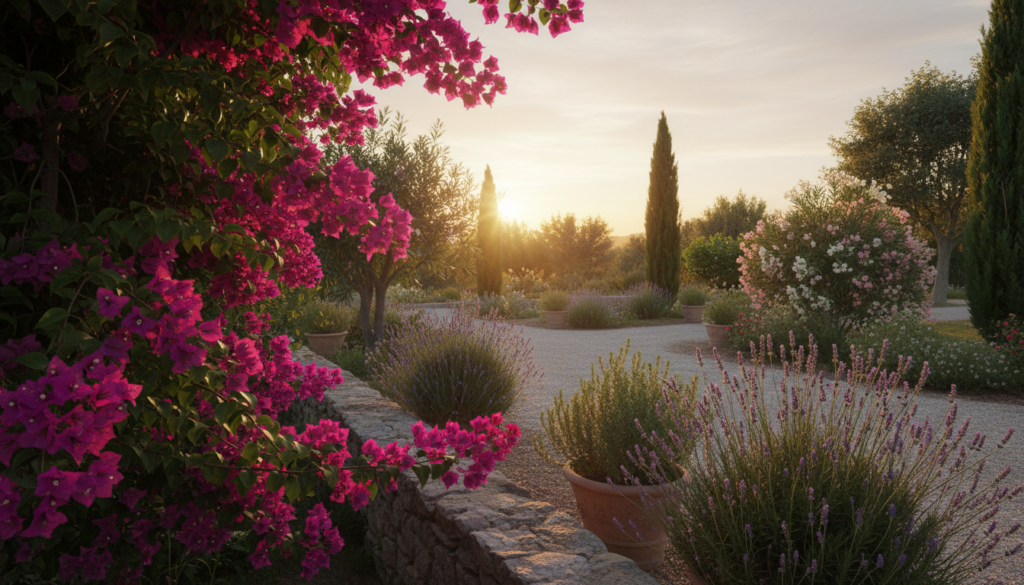
Mediterranean schemes favor gravel paths, stone accents, and drought-tolerant Lavandula spp. for scent and long bloom times.
Tropical spaces rely on large-leafed plants, bright color, and layered planting for a vacation feel. Add a water feature like a small fountain to boost calm and sound.
- Materials: stone patios, terracotta pots, and gravel walkways anchor the design.
- Plants: mix Lavandula spp., olive or citrus where hardy, and bold foliage species for contrast.
- Layout: group plants for drama and pick materials that match your local landscape and maintenance level.
“A well-chosen mix of water, stone, and plants makes any yard feel like a getaway.”
For poolside and boho-inspired ideas that pair well with this look, see boho pool decor ideas.
Incorporating Functional Edible Landscapes
Blend edible beds into ornamental borders to enjoy fresh flavors without sacrificing visual design. This approach turns small plots into useful, beautiful spaces that support daily cooking and year-round interest.
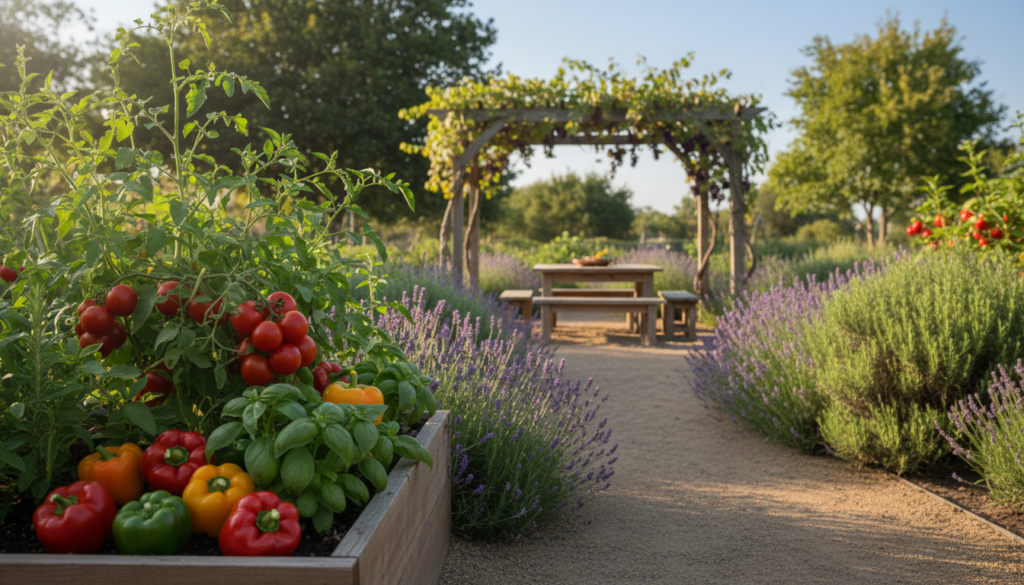
Integrating Herbs and Vegetables into Borders
Plant herbs like thyme, rosemary, and chives at the front of beds to add scent and instant utility. Mix leafy greens and small vegetables with perennials so the area reads as intentional planting rather than a patchwork.
Companion planting helps deter pests and improves flavor. Use marigolds near tomatoes, basil with peppers, and chives close to roses for dual-purpose color and pest control.
- Potager style: combine flowers and edible plants in neat beds for a framed, lively layout.
- Raised beds and containers maximize limited space while keeping soil and water management simple.
- Choose low-maintenance perennials to reduce work and keep the space looking fresh across seasons.
“Edible landscapes make outdoor living richer by pairing beauty with bounty.”
For practical planting ideas and layouts that suit small yards, explore outdoor garden designs. These ideas help you plan a productive layout that fits your style and routine.
Designing for Sensory Engagement and Well-being
Design that engages the senses turns outdoor rooms into restorative places for daily living.
Select plants that invite touch and scent. Stachys byzantina (lamb’s ear) adds soft texture underfoot and pairs well with aromatic perennials. Use a limited color palette to calm the eye and highlight tactile contrast.
Introduce a small water feature to add soothing sound and cool the space. Ornamental grasses give movement and sound in the breeze, enhancing a sense of calm.
Layer trees and perennials to create seasonal interest and a feeling of depth. Mix stone, gravel, and natural materials to add texture and durable paths that guide the experience.
- Senses: sight, smell, touch, sound, and taste (herbs) work together for therapeutic benefit.
- Movement: ornamental grasses bring life and gentle motion.
- Structure: trees and perennials build layered landscapes that feel safe and whimsical.
“A sensory plan turns a simple space into a living place that restores and inspires.”
Utilizing Water Features and Lighting for Ambiance
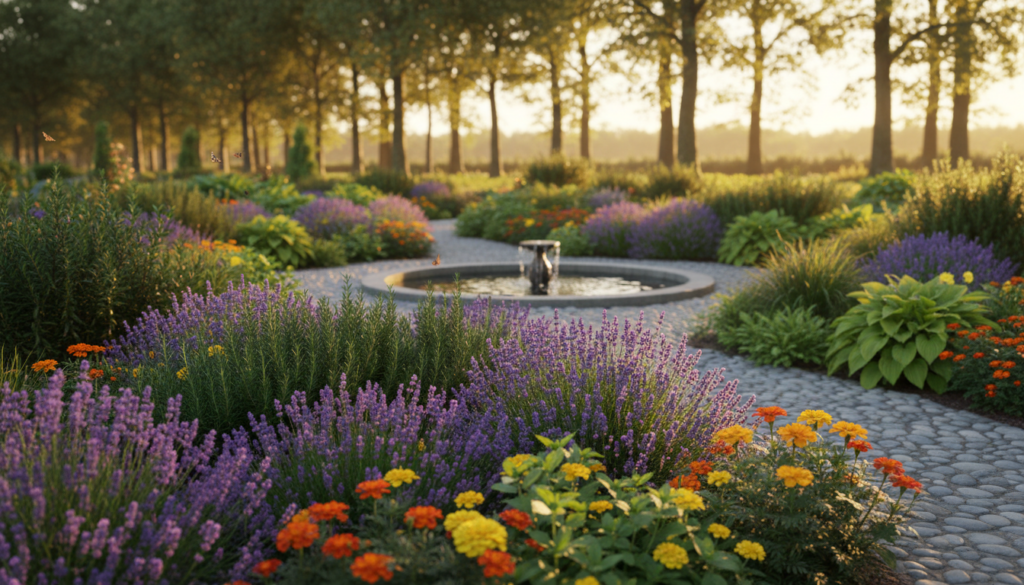
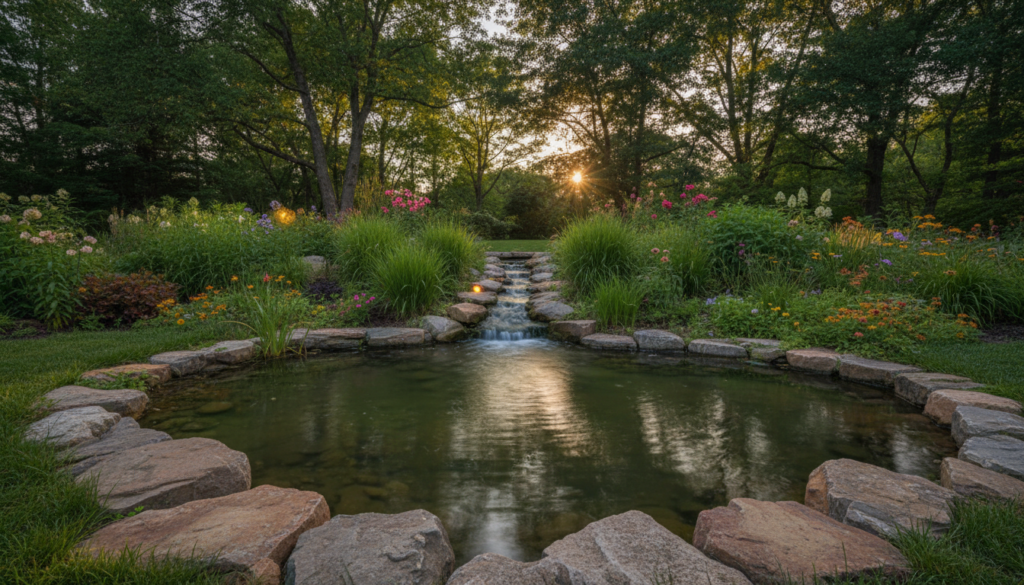
Introducing moving water and layered light brings depth and a soothing rhythm to your planting scheme.
Selecting the Right Water Feature
Choose a feature that fits the scale of your garden and the overall style you want. A small bubbling bowl suits compact spaces, while a pond or fountain works in larger yards.
Think about sound level—gentle trickle for calm, stronger flow for drama. Match materials and color to your hardscape to make the element feel integrated.
Strategic Landscape Lighting
Use layered lighting to extend the time you enjoy outdoor spaces. Path lights guide movement and keep steps safe. Spotlights highlight specimen plants and key feature points.
Low-voltage LED fixtures save energy and offer warm color that flatters foliage at night. Place lights low and aim them up for soft, natural shadows.
- Balance: pair water with subtle light to create a focal point.
- Function: light pathways and seating for safe evening use.
- Design tip: test placements at night before final installation.
“A single water feature and a few well-placed lights can change how you live outdoors.”
Essential Tips for Maintaining Your Garden Aesthetic
Caring for plants with a steady schedule preserves style and prevents small issues from growing. Start with regular pruning of trees and shrubs to keep clean lines and healthy growth.
Follow lessons learned from famous gardens to manage beds and perennials so flowers stay vibrant. Clean paths and refresh mulch each season to protect soil, keep texture crisp, and suppress weeds.
Apply practical design tips for outdoor living: group plants by water need, repeat key colors, and trim for clear edges. These small moves save time and keep the landscape functional and charming.
Use a quick seasonal checklist: prune, deadhead, mulch, inspect irrigation, and tidy hardscape. Over weeks, these habits preserve beauty and seasonal interest without heavy effort.
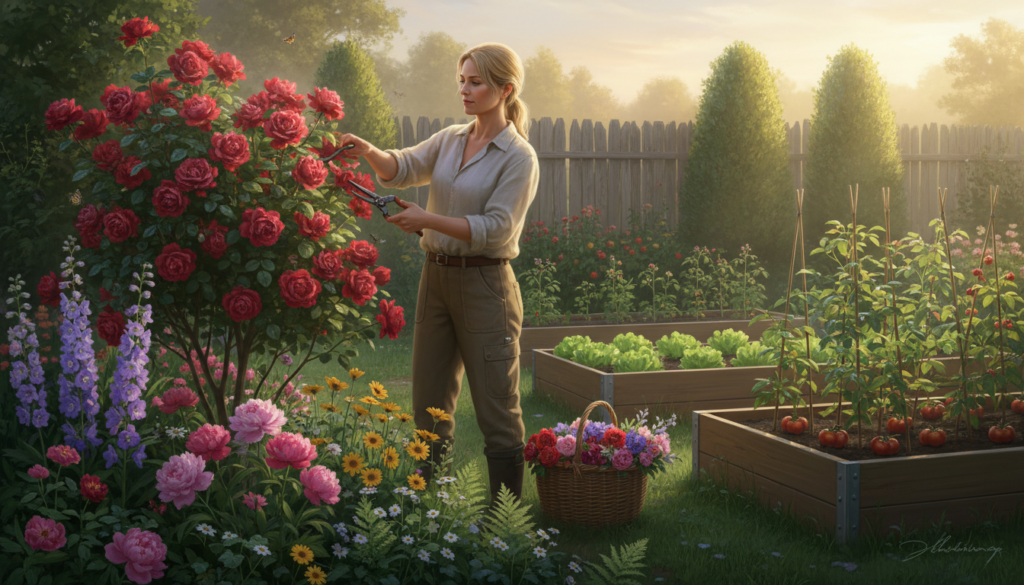
“A little maintenance every week keeps tasks manageable and the space inviting.”
For a full planning guide and more long-term ideas, see how to make a garden plan. Good routines turn planting ideas into lasting charm.
Final Thoughts on Crafting Your Personal Outdoor Sanctuary
Crafting an outdoor refuge starts with honest choices about plants, use, and the comforts you crave.
Whether you lean toward whimsy or neat structure, the journey is rewarding. Your garden becomes a living extension of your home as you add color, planting ideas, and small comforts that match your daily life.
Use simple routines to care for the space and keep a sense of play as you try new styles. For boho touches and quick inspiration, see boho garden decor. Enjoy the process—your gardens will evolve with you and bring calm for years to come.