
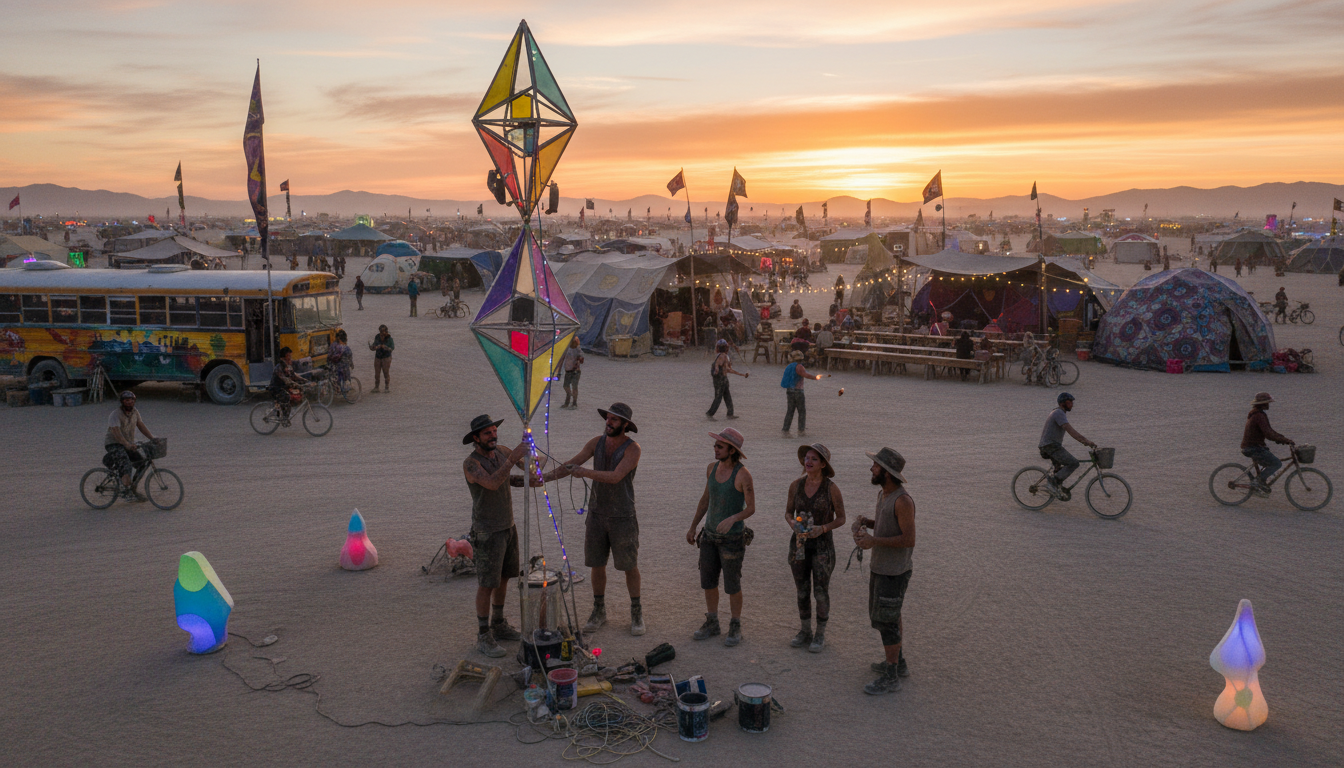
How long does burning man last is the core question for first-timers and repeat visitors. The plain answer depends on what you mean: official event dates or the full trip commitment that includes travel, setup, exodus, and recovery.
Burning Man is a gift-economy cultural movement shaped by ten principles. Each year participants build Black Rock City, a temporary metropolis in the Nevada desert. That setup and teardown change how you should think about time and planning.
This is not a typical festival schedule. The city runs 24/7 and participants shape the experience, so days often blur together. Practical logistics—tickets, vehicle passes, supplies, biking, dust, and lighting—can stretch how long you will feel inside the event, even before the gate opens.
What you will learn: 2025 dates, key burn nights, arrival and departure windows, exodus realities, and tips on planning work time-off to avoid peak congestion.
Key Takeaways
- The official gather runs on set dates, but your trip often spans more days.
- Black Rock City is built and torn down each year; plan extra days for setup and exit.
- The experience is participant-driven and operates around the clock.
- Logistics and travel can extend your personal time in the event.
- Plan leave to avoid peak exodus and to recover after the trip.
Quick answer: how long does burning man last and what “counts” as the event
Treat the event as a temporary metropolis with a nonstop pulse. The official dates cover a set block of days, but your actual trip will usually include travel, staging, setup, and strike time.
What counts as the event: staging in a nearby city, supply runs, gate entry, camp build, the burn nights, MOOP sweep, and the drive out. Plan each of these as part of the total time commitment.
Official days vs. real-world planning
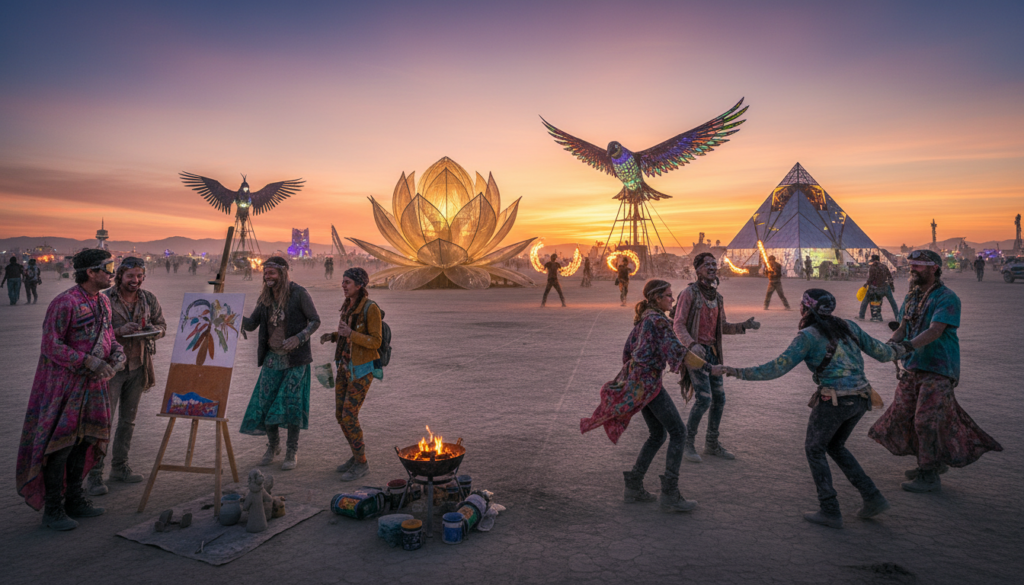
Many people arrive a day early to stage, spend a day getting in and building, several days exploring, and then 1–2 days for strike and exodus. That realistic timeline turns an eight-day festival into a 10–12 day door-to-door experience.
Why Black Rock City feels like a full-week, 24/7 life
Black Rock City runs like a city, not a venue with headliner times. You’ll find art, music, and performances at odd hours, so staying up late is common and you can still miss things.
- One staging day in a nearby town
- One arrival and build day on the playa
- Several days of roaming and events
- One to two days for strike, MOOP sweep, and exit
Remember that extreme temperature swings and dust events can change how much you do in a single day. Always add buffers for traffic, weather, and fatigue so your plans survive real-world surprises. For more pre-event ideas, check staging and prep suggestions at glamping activities and staging tips.
Burning Man 2025 dates and duration at a glance
Mark your calendar: the 2025 gathering runs from Sunday, August 24, 2025 through Monday, September 1, 2025.
That official window is eight days on the calendar, but plan more time for travel, setup, and exit. Treat the listed dates as the core of the trip, not the full door-to-door commitment.
Key nights to anchor your plans
The large Saturday burn of the man takes place on August 30, 2025. The Temple burn follows on August 31, 2025. Many people schedule arrival to catch the Saturday peak and stay through the Temple for a quieter, reflective close.
- Official event span: August 24–September 1 (calendar days)
- Practical trip length: typically 10–12 days including travel and teardown
- Major milestones: Man burn (Aug 30) and Temple burn (Aug 31)
| Item | Date (2025) | Why it matters |
|---|---|---|
| Event window | Aug 24 — Sep 1 | Official days to be inside Black Rock City |
| The Man burn | Aug 30 | Peak party night; many arrive before this |
| Temple burn | Aug 31 | Quieter closure; many delay exit to attend |
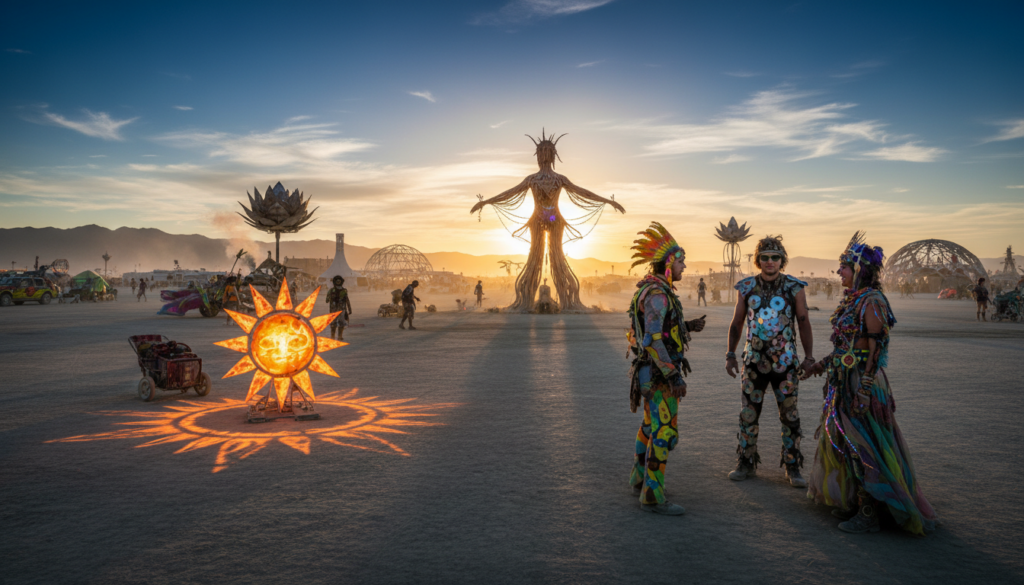
Plan your must-see priorities around these milestones. If you must pick one night, choose based on whether you want the high-energy peak or the reflective send-off. Build extra buffer days for dust, traffic, and the famous exodus.
For staging tips and nearby lodging ideas, consider a practical pre-event stay at glamping options and staging to make travel and arrival smoother.
Understanding the Black Rock City timeline from arrival to departure
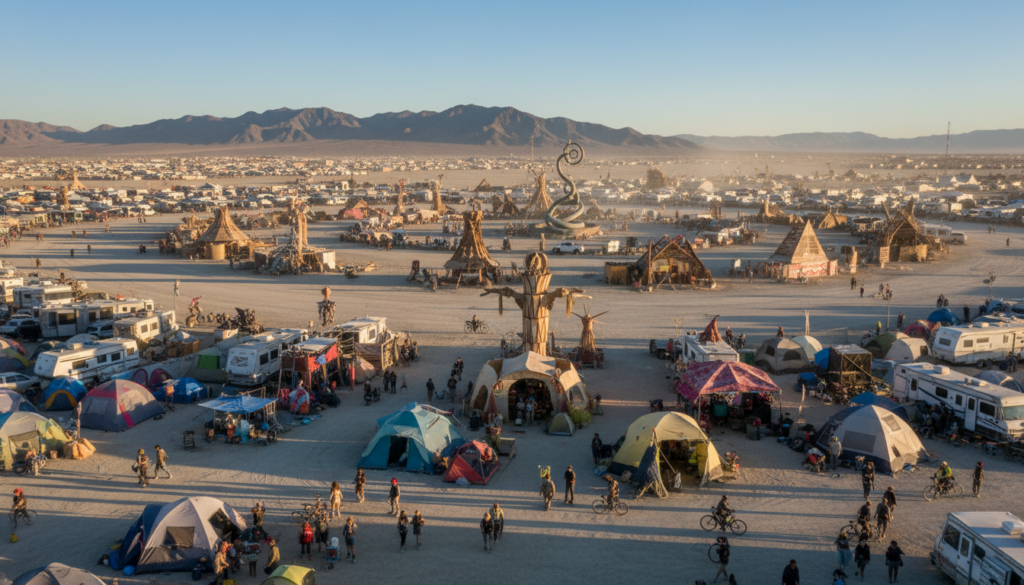
Arriving at the playa begins with gate lines and a brief navigation puzzle that turns into the rhythm of camp life. Expect slow traffic at the gate, then a push to find your address and unload before dark. Early orientation sets the tone for the week.
Arrival day on the playa: gate entry, finding camp, and first-night basics
Gate delays are common. Once inside, follow coordinates to your camp, meet neighbors, and set a simple marker for night. Get essential water, shade, and a working light before you roam.
Build days: setting up shelter, shade, bike, and lights before you roam
Build days matter. Prioritize sturdy shelter, shade structure, a tuned bike, and reliable night lighting. If you skip this, you’ll spend later hours fixing basics instead of enjoying art and community.
Midweek momentum: art, theme camps, and pacing your energy
Midweek is the sweet spot for exploring installations and visiting theme camps. Plan your pace to avoid an energy crash.
Remember wind and dust change travel time across the flats. Bikes are great, but distances add up; factor riding time when scheduling meetups.
Burn weekend: why the final days feel like the peak
As crowds swell, routes shift and the emotional arc intensifies. Pick meeting points, pack warm layers, and stay hydrated. Expect a surge of communal energy during the major nights.
Strike and pack-out: leaving no trace and handling MOOP
Packing out takes hours. Dismantle camps, secure loads, and complete a meticulous MOOP sweep. Even small items—feathers or ash—count. Only ice and coffee are usually sold on site, so bring essentials to avoid extra trips.
- Arrival: gate, find camp, orient before dark
- Build: shelter, shade, bike, lights first
- Midweek: explore art and camps; pace yourself
- Burn weekend: plan for crowds and changing routes
- Strike: thorough MOOP sweep and careful pack-out
How many days should you take off work for Burning Man
Work leave for this trip should include buffers for transit, setup, and post-event cleanup. Plan with fatigue and delays in mind rather than assuming a neat calendar fit.

Minimum time-off plan for first-time burners
A bare-minimum approach means arriving after staging, staying through the main nights, and leaving quickly. This saves official days but is exhausting.
- Leave: 3–4 calendar days off (arrival, two core days, exit).
- Expect fast pace, lots of standing and late nights.
Comfortable plan that includes rest and recovery
For a safer and kinder rhythm, add a staging day before entry and a decompression day after exodus.
- Leave: 7–10 days off to include prep and recovery.
- Include at least one true rest block each day—a nap or quiet morning.
Make sure your schedule protects against driving fatigue, heat exposure, and gear cleanup. Dust and sleep debt often spill into the work week, so a recovery day is risk management, not a luxury.
What happens each day in Black Rock City so you can plan your time
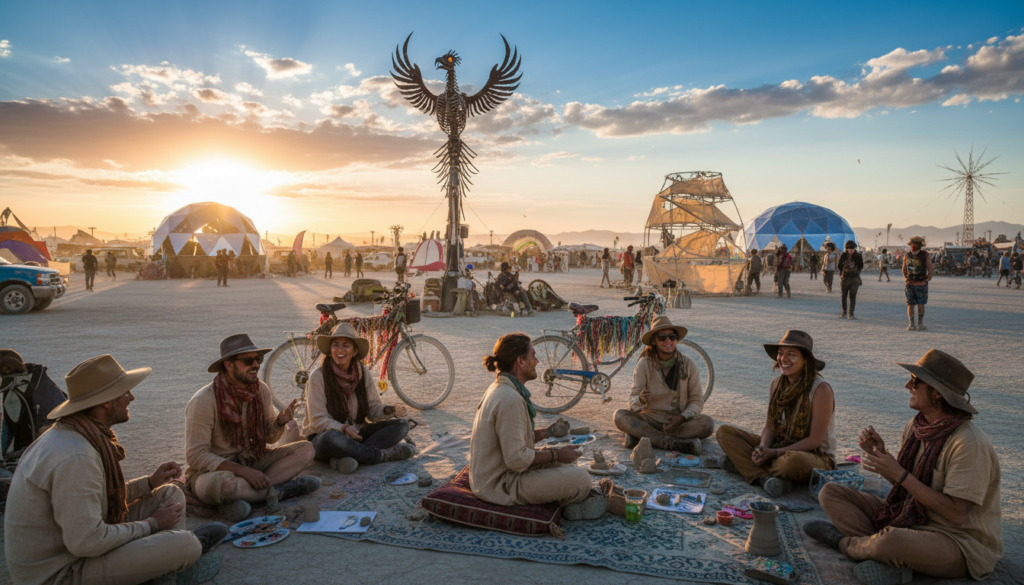
Each day in Black Rock City unfolds like a choose-your-own-adventure full of surprise performances and quiet pockets of rest.
Daytime: exploration, workshops, and community events
Mornings are for regrouping, coffee fixes, and small repairs. Use that time to hydrate and apply sun protection.
Midday is best for workshops, art viewing, and visiting theme camp offerings. Pick a few anchor activities so you do not overcommit and burn out.
Check the daily listings in the booklet or app as a guide, but stay flexible; many of the best moments are unplanned.
Nights in Rock City: art cars, music, and navigating by bike
Nights become a different world—art cars and late-night sound camps change the vibe. Bring reliable lighting for safe riding and walking.
Mark your bike, set meet-up points, and assume trips will take longer than maps suggest. Plan quick gear wipe-downs: playa dust harms lenses, electronics, and contacts.
Plan small routines—a quick wipe, a gear cover, and a water stop—to protect comfort and keep your focus on things that matter most.
The burns explained: The Man burn vs. the Temple burn
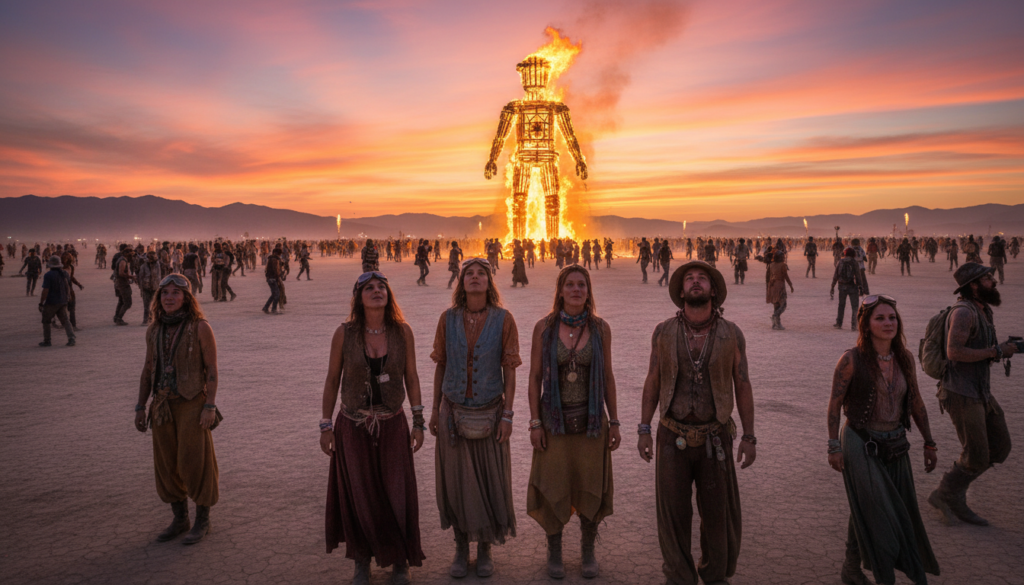
The event culminates in two distinct moments—one full of pulse and spectacle, the other heavy with memory and silence. Both mark emotional peaks and shape your plans for arrival, crowds, and exit.
The Man as a major Saturday-night milestone
The Man burn is the loud, communal climax. It draws big crowds, art cars, and late-night energy.
Plan to arrive early, set a clear meeting spot, and expect tight bike traffic. Layer clothing for cooling nights and rapid temperature drops.
The Temple as a quieter, reflective close
The Temple burn is often silent and intensely emotional. Many people use it for remembrance and introspection.
If you want closure, stay past the big night. Bring quiet respect, keep phones low, and keep group communications realistic so you do not miss the moment.
“Choose which ritual matters more to you: the bursting celebration or the slow, meaningful goodbye.”
Both rituals are part of the larger burning week. Your choice to attend one or both shapes the overall experience of place, art, and community.
Exodus timing: how long it takes to leave after the burns
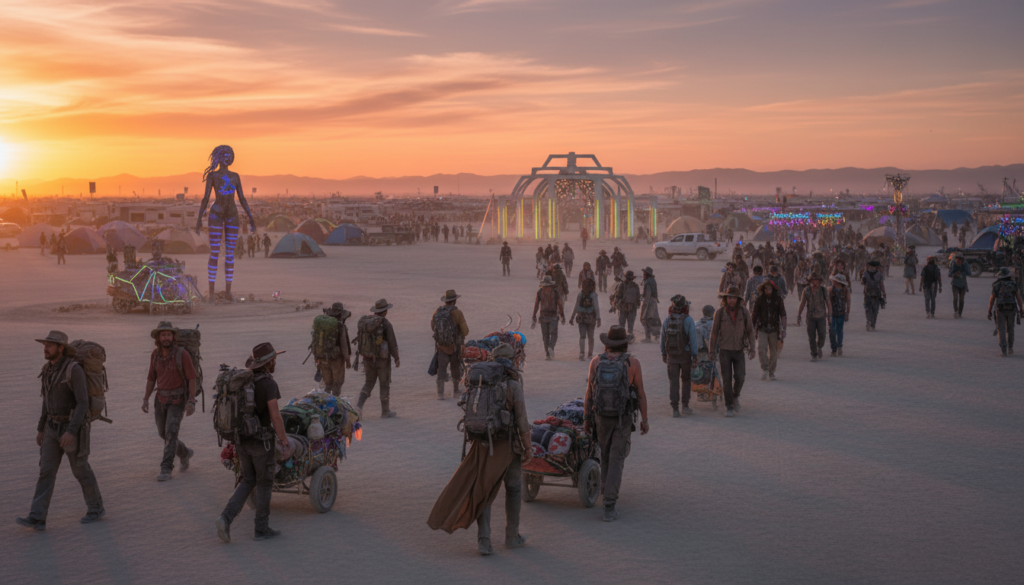
Exodus is the mass departure that can turn a short drive into an exhausting wait. When the big nights end, thousands funnel toward the same gates and roads. Plan for slow movement and unexpected pauses.
Leaving right after the big Saturday vs. staying for the Temple
Leaving right after the main Saturday event creates a huge immediate surge. Traffic near the main exit can crawl for hours.
Staying through the Temple shifts the surge later. That wave is often quieter but still busy and emotionally heavy.
Weather, road conditions, and practical tips
Weather and road conditions can stretch departures dramatically. Rain, wind, or dust reduce speed and close lanes.
- Look for the short “lull” mornings after peak nights; conditions vary each year.
- Bring extra food, water, and fuel—delays are common.
- Coordinate strike and departure with campmates to avoid conflicting timelines.
- Build a buffer day into your trip to protect flights and safe driving.
What Burning Man is (and isn’t) so your expectations match the duration
Expect a week shaped by participation, not by set stage times or lineups.
Not a festival in the usual sense: you can find music, but performers are not promoted like at commercial events. The best moments often come from joining a camp activity or an impromptu project.
Not a “show up unprepared” trip. Radical Self-Reliance is one of the core principles. Bring water, shelter, tools, and a plan. Failing to prepare turns small problems into constant chores that stretch your days.

Not what you see on Instagram. Photos skip the cold nights, heat, and playa dust. Those realities change how much time you can spend outside and how you pace each day.
- Reset expectations: plan participatory time, not a stage schedule.
- Pack basics to save energy for art and community.
- Pace activities around weather and rest.
For practical staging and comfort tips before arrival, consider a pre-event stay and planning guide at beach glamping staging. These suggestions preview the essentials that follow in the next sections.
| Expectation | Reality | Action |
|---|---|---|
| Festival vibe | Participant-built world | Join camps; check daily postings |
| Pack light | Need supplies and tools | Create a checklist and test gear |
| Picture-perfect | Heat, cold, dust, fatigue | Pace yourself; plan rest blocks |
The 10 principles that shape how you spend your week
Larry Harvey wrote the ten principles in 2004 as guiding ideas that shape daily choices in Black Rock City.
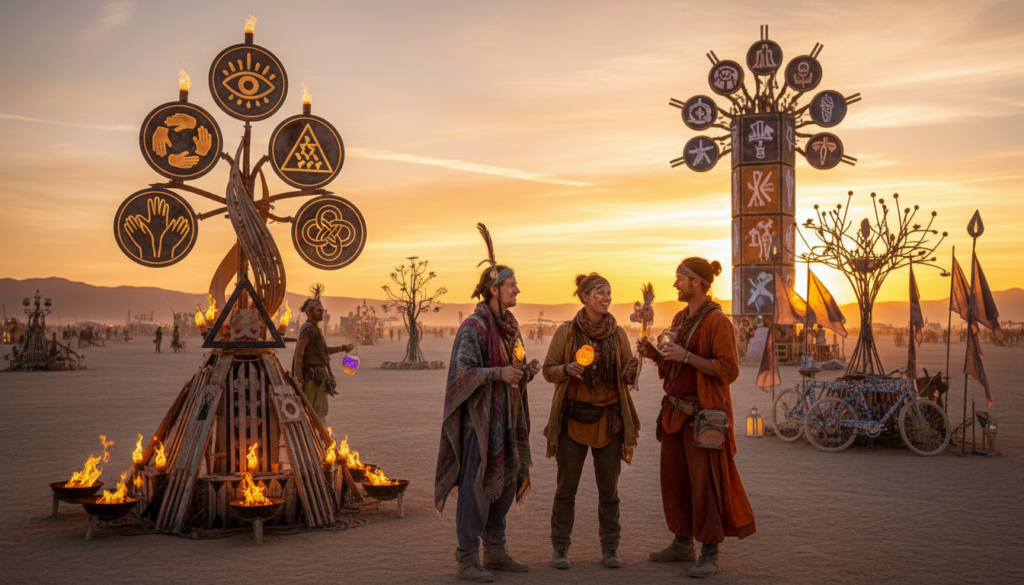
- Radical Inclusion — welcome others and be open to new connections.
- Gifting — offer a gift without expecting payment or trade.
- Decommodification — money is mostly absent on-site; only ice and coffee are sold, so plan accordingly.
- Radical Self-Reliance — bring water, shelter, and tools; rely on your preparation.
- Radical Self-Expression — share your creativity respectfully.
- Communal Effort — camps and volunteers build shared experiences through practical effort.
- Civic Responsibility — follow safety, traffic, and camp norms.
- Leaving No Trace — budget time for MOOP sweeps and a careful strike.
- Participation — join projects, host a workshop, or help a camp activity.
- Immediacy — be present and responsive to the moment.
Gifting differs from bartering: gifts are given freely and deepen community bonds. Camps run much of the schedule by hosting events, which means your participation and labor often create the best moments.
Make sure your plan matches the culture: bring something useful to share, help with camp infrastructure, and set aside hours at the end for a thorough pack-out. For packing tips, see our glamping packing guide.
Planning essentials that affect how long you’ll feel “in the event”
Good logistics turn unpredictable days into more time for art and rest. Prepare simple systems for daily needs so you spend hours exploring, not solving avoidable problems.
Food, water, and sleep: pacing a week-long buffet of experiences
Bring enough food and water for your full stay; there is almost no onsite shopping. Pack easy meals, salty snacks, and water beyond bare minimums to protect energy and avoid emergency runs.
Schedule short naps, quiet blocks, and earplugs to preserve sleep. A steady plan for rest keeps you from crashing midweek and extends the overall experience.
Bike time: why getting anywhere can take more minutes than you expect
Bikes are the main transport, but distances lie. Wind and routing multiply travel time; treat each ride as a small trip and plan fewer must-do stops per block.
Dust strategy: protecting body and gear from playa dust
Playa dust is pervasive. Use goggles, a respirator mask, and wipes for quick daily cleanup. Shield cameras and electronics to avoid damage.
Lighting up at night to avoid collisions
Visibility saves injuries. Light your bike and body with bright, steady LEDs and reflective tape. Night navigation is busy; good lighting keeps you safe and seen.
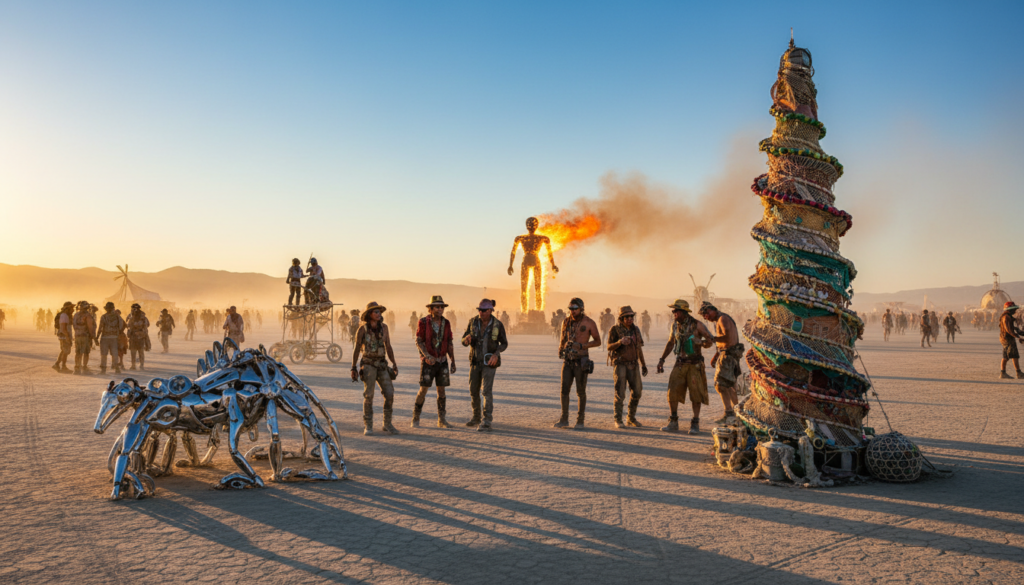
| Need | Plan | Why it matters |
|---|---|---|
| Food | Ready meals, snacks | Prevents energy drops and extra trips |
| Water | Extra gallons per person | Desert heat depletes fluids fast |
| Bike | Lights, repair kit | Reliable transport across wide distances |
| Dust | Goggles, masks, wipes | Protects lungs, eyes, and gear |
Good prep shortens friction and lengthens enjoyment. For staging and nearby comforts, see glamping ideas.
Tickets and timing: how ticket logistics shape your Burning Man calendar
Ticket windows and sale rhythms shape nearly every major choice on your trip calendar. Knowing sale dates tells you when to request PTO, book staging nights, and confirm transport.
2025 ticket sale timing: TOMORROW Sale pre-registration and sale date
Pre-registration runs April 21–29, 2025 at 12:00 PM PDT. The TOMORROW Sale opens April 30, 2025 at 12:00 PM PDT. Set reminders and test your login on the site before the sale.
2025 price tiers and vehicle pass cost
The 2025 price tiers are $550, $650, $750, $950, $1500, and $3000. Add taxes and fees when you budget. The vehicle pass cost is $150 per pass.
| Item | Price | Notes |
|---|---|---|
| Standard ticket tiers | $550–$3000 | Budget for taxes and fees |
| Vehicle pass | $150 | Limits apply: max 2 tickets + 1 vehicle pass per purchase |
| Purchase limits | 2 tickets + 1 pass | Per transaction, plus taxes/fees |
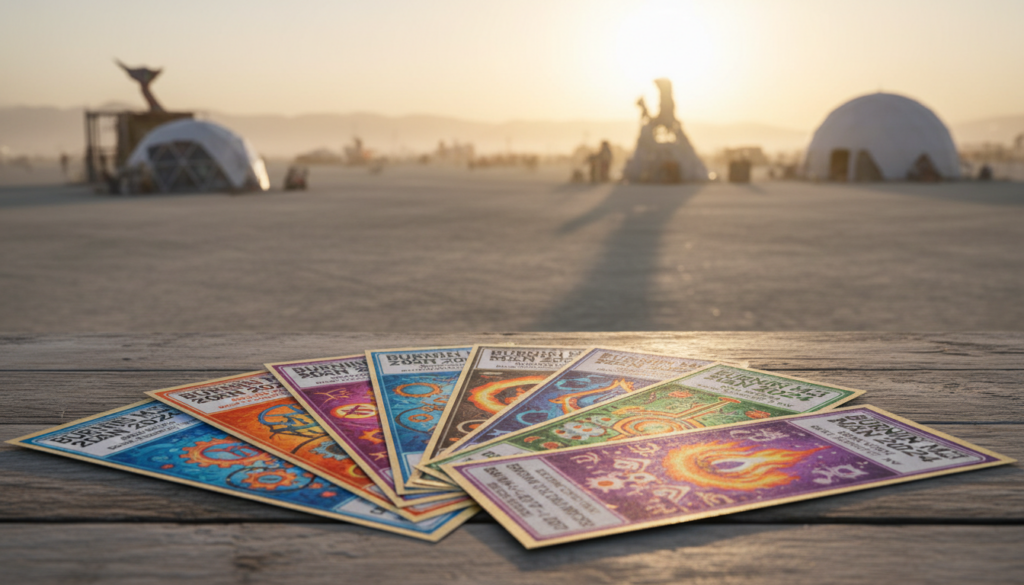
Last-chance options: OMG Sale and STEP ticket exchange timing
The OMG Sale has registration July 21–29, 2025 at 12:00 PM PDT and runs July 30, 2025 at 12:00 PM PDT. It offers 3,000 tickets at $575 and 1,500 vehicle passes at $150, but it is not a guarantee—arrive ready to move fast.
STEP is the official ticket exchange and runs until August 24, 2025 at 12:00 PM PST. Use it to buy or sell through the authorized channel before arrival.
“Ticket timing is planning time—book your leave and staging after tickets are secured to avoid extra costs and stress.”
- Lock tickets first, then reserve hotels and flights.
- Plan who buys the vehicle pass to stay within limits.
- Factor taxes, fees, supplies, and staging nights into your budget.
Where to stay before and after Black Rock City to extend (or shorten) your trip
Your staging city is the practical heartbeat of any desert adventure. Picking the right base changes arrival timing, supply access, and how brutal the exodus can feel.
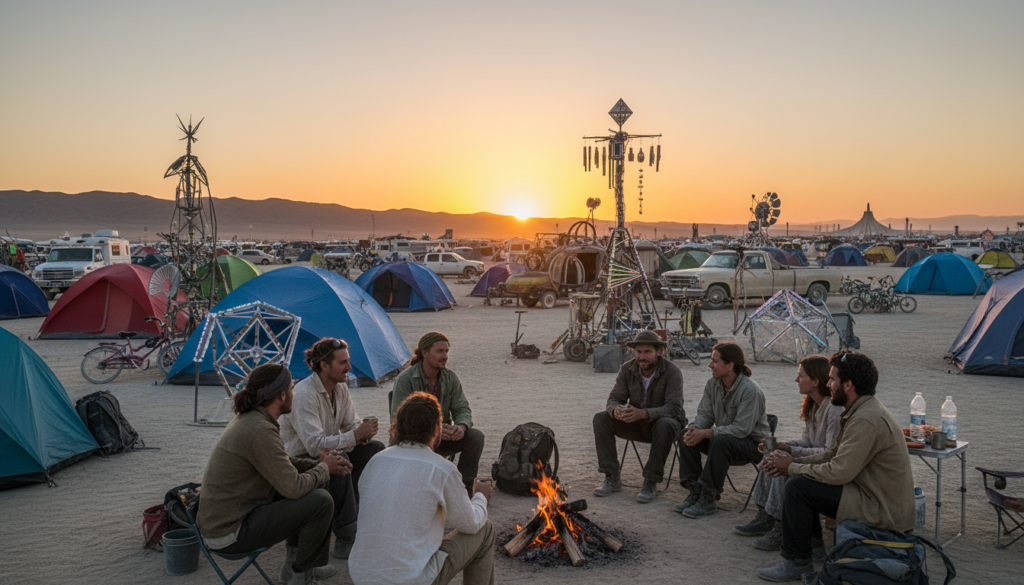
Common staging choices and quick comparisons
Reno is closest and fastest on a clear drive—about ~2 hours to Black Rock City. It offers flights, last-minute supplies, and a real bed before entry.
Sacramento has good road options and stores but adds roughly ~4.5 hours of driving. Use it if flights or cost are better there.
San Francisco gives more flight choices and urban comforts, but expect a long haul to the playa and extra fatigue before the event.
Drive-time reality checks and local limits
Drive-time reality checks: those no-traffic estimates rise fast during exodus. Traffic, dust, and weather can make a short hop into many hours.
Gerlach is the closest town; services near Black Rock are limited. That means top off fuel and groceries before the final leg.
- Do a final grocery and gear run the night before.
- Top off fuel and secure loads early.
- Get a true night’s sleep to reduce driving risks.
Staging is part of the adventure: do it well and your trip feels relaxed; skip it and the drive becomes the hard part. For staging comfort ideas, see pre-event options.
Conclusion
Treat the official dates as the core and the full trip as the reality: travel, staging, build, participation, and a careful exodus add days beyond the calendar. For 2025 plan around Aug 24–Sep 1, with the big Man burn on Aug 30 and the Temple burn on Aug 31.
Black Rock City feels bigger than a festival because it runs 24/7 and is built by people. Community, art, gifting, and decommodification shape each day more than headliners.
Quick checklist: confirm tickets, pick a staging city (Reno/Sacramento/SF), pack for dust, prep your bike and lights, pace sleep, and expect only ice and ice coffee sold on site.
Bring curiosity, leave no trace, and take that “welcome home” feeling back to the default world. For practical pre-event comfort, see our bell tent sleepover ideas.