
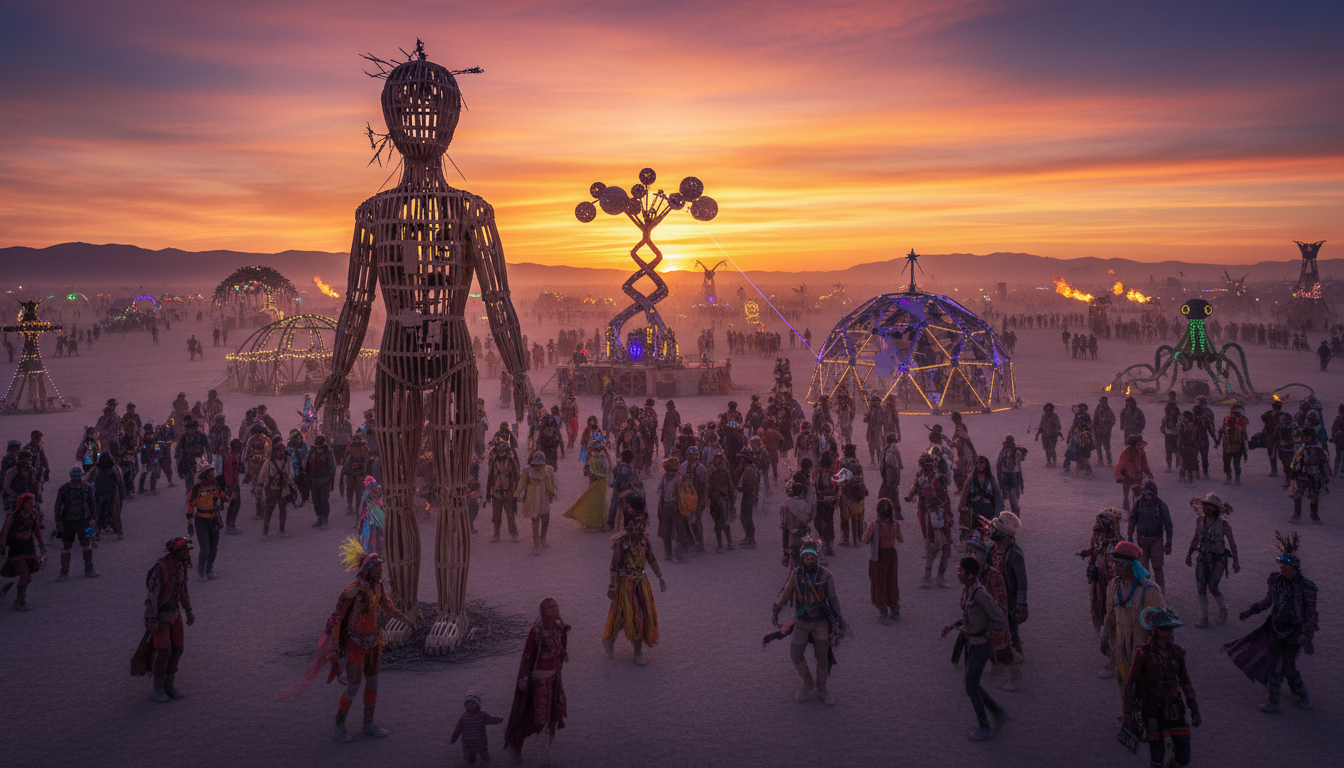
This ultimate guide explains burning man, why it matters, and how the desert event grew into a cultural phenomenon.
Expect a clear, practical intro for first-timers. This is a look at a temporary city built each year, not a typical festival with stages and vendors. You will get simple definitions, key terms used by participants, and a friendly roadmap for the rest of the guide.
The story runs from small gatherings on a San Francisco beach to the wide playa of Black Rock City in Nevada. Over decades the history shaped rules, principles, and a unique culture built by the people who attend.
The signature burn — the ritual ending each week — is described calmly here as symbolic rather than sensational. We also flag common misconceptions about celebrities and influencers, plus real constraints like weather, permits, and safety.
Key Takeaways
- The guide defines burning man and frames the event as a temporary city and culture.
- Learn where it happens and how the history shaped today’s experience.
- Understand the ritual burn as symbolism, not a stunt.
- Find practical notes on rules, safety, and common misconceptions.
- Expect clear vocabulary and next steps for first-time visitors.
What Is Burning Man, Really?
Each late-summer week the Nevada playa becomes a temporary city shaped by people who build the art, services, and social life together.
A week-long desert gathering built around community
Burning Man is a participant-created event where the community builds the city, the art, and the social fabric.
Neighbors share shade solutions, plan water, and solve problems side by side. That hands-on care makes a small civic life feel real.
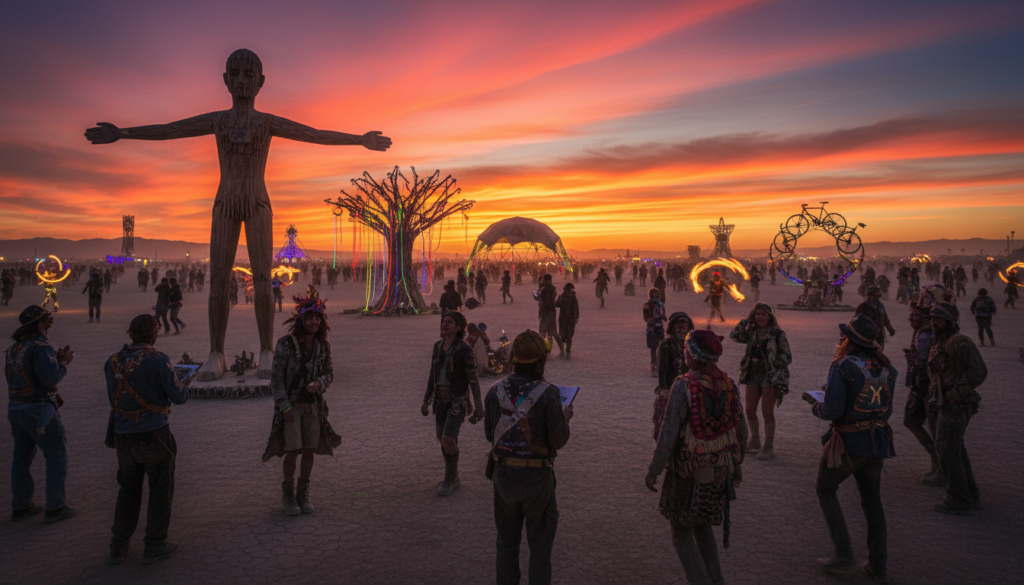
The signature moment: the Saturday night burn
The Man effigy is traditionally lit on the Saturday night before Labor Day. This ritual marks the peak of the week and the close of the shared experience.
More than a festival — a temporary city
This event differs from pop concerts. Music appears, but participation matters more than spectating.
Streets, camp addresses, services, and responsibilities form a functioning place. Tens thousands of people co-create that city each year. First-timers meet long-time participants called Burners, who keep the culture moving.
| Feature | Typical Music Festival | Temporary City Model |
|---|---|---|
| Primary focus | Headliners and stages | Community-built art and shared life |
| Economic model | Tickets plus vendors | Gifting and communal resources |
| Duration | Weekend | Weeklong desert experience |
Burning Man What Is It: A Simple Definition for First-Timers
First-timer definition: Burning Man is a participant-built city in the Nevada desert centered on art, community, and self-reliance, ending with the burning of the Man.
The core idea is Black Rock City: not a preexisting town, but a temporary place assembled by people who bring what they need and contribute what they can.
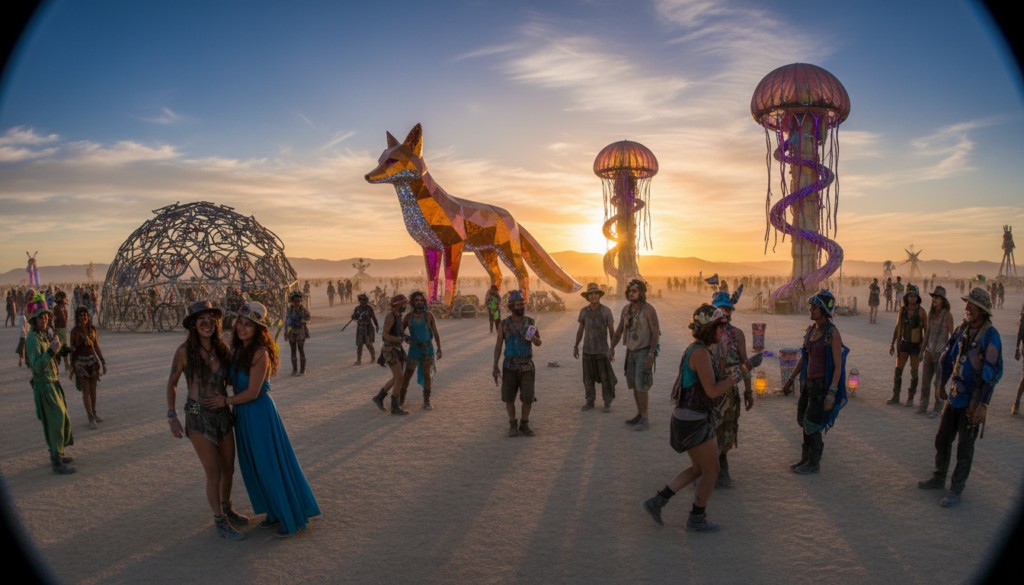
How Black Rock City works
Participants plan camps, build art, and run small services. Streets and addresses appear for safety and logistics.
That setup makes the event feel like a real, short-lived city where everyone helps keep life running.
What you won’t find
- No mainstream headliners or a single official concert schedule to follow.
- No normal vending economy—there are few sales and no advertising.
- No expectable vendor lineups like at a typical music festival.
Decommodification and gifting, simply
Decommodification means interactions stay personal: no ads, little selling. People trade kindness, services, or small items instead.
A simple gift might be a shared cup of coffee, a free meal, or an invitation to a hands-on art project.
| Concept | How it looks on the playa | Why it matters |
|---|---|---|
| Participants | Everyone builds and contributes | Keeps the city functional and creative |
| Decommodification | No ads, minimal sales | Promotes human connection |
| Gifting | Food, favors, experiences | Forms the event’s social currency |
| Music | Present but camp-driven | Not organized as a lineup |
If you want a quick primer on how temporary community events differ from traditional options, read this short piece on glamping differences for a similar contrast of expectations and reality.
Where Burning Man Happens: Black Rock City in the Black Rock Desert
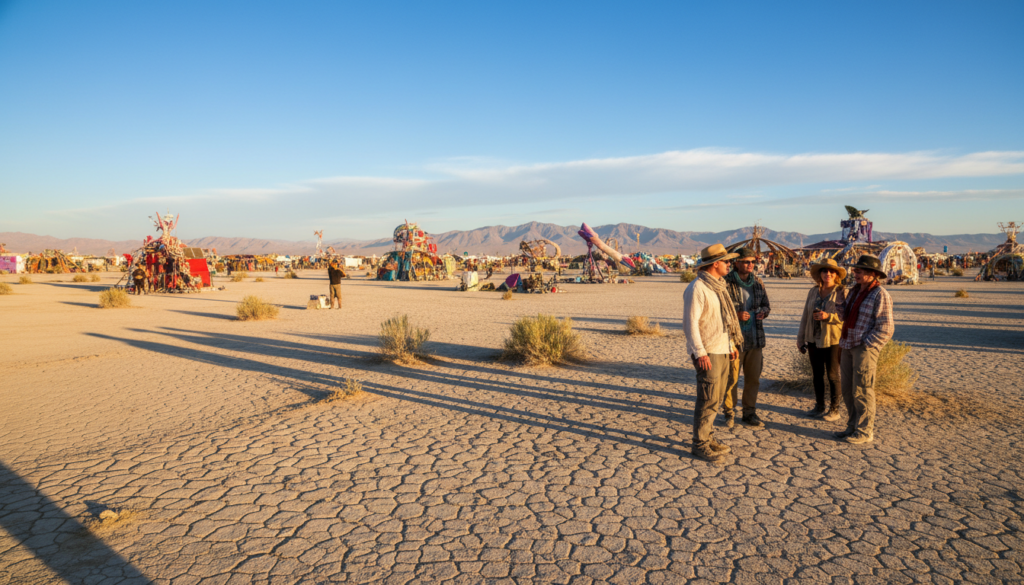
A wide, flat playa in northwestern Nevada provides the stage for an extraordinary temporary city. Black Rock City sits in the Black Rock Desert, roughly 100 miles (160 km) north-northeast of Reno. The remoteness is part of the location’s character and affects every plan made by participants.
Northwestern Nevada setting
The place is a dry lakebed called a playa. In dry weather the surface turns to fine dust. When wet, the same ground becomes deep, clinging mud that can strand vehicles and gear.
Practical notes about the environment
- Coordinates: 40.7869°N, -119.2042°W — a concrete marker of how remote the site is.
- The open horizon lets artists build huge installations and gives long sightlines for navigation at night.
- The harsh desert climate demands preparation, so radical self-reliance and community support are practical necessities.
Local anchors
People traveling to the event often reference Reno or the Gerlach area as nearby points of orientation. That regional context helps explain access, but the playa itself shapes rules, building methods, and safety practices.
Origins on Baker Beach, San Francisco
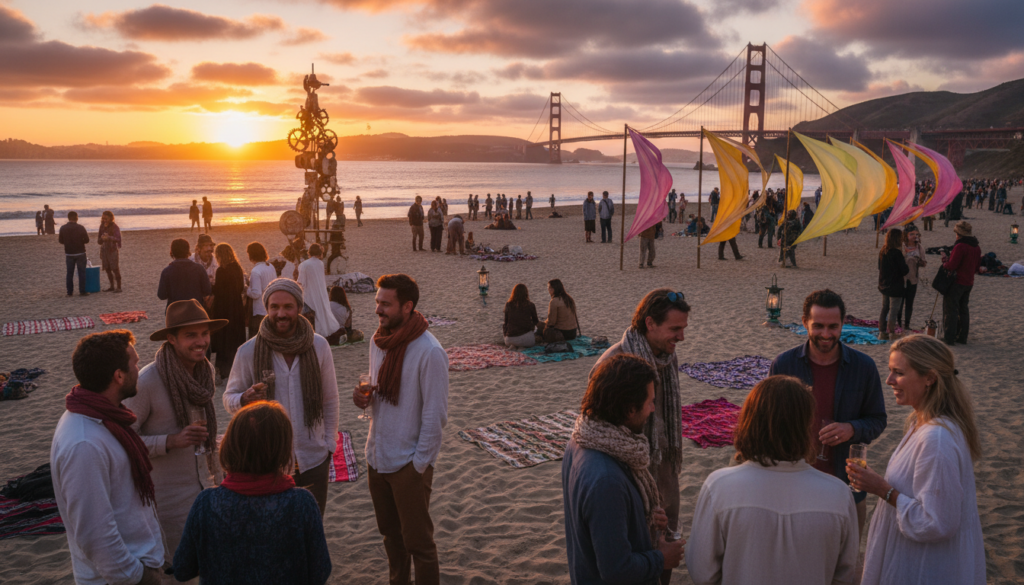
A small group gathered on a foggy Baker Beach in June 1986 and held a summer solstice ritual that would grow quickly. On June 22, 1986, Larry Harvey and Jerry James burned an 8-foot wooden effigy at that beach san francisco site. The act was simple and local, not a commercial spectacle.
The first burn on the summer solstice in 1986
The first ceremony on Baker Beach drew friends and neighbors. They marked the date with a shared creative act and conversation.
“We wanted a moment of collective expression, not a show.”
The early effigy: rapid growth from 8 feet to 30+ feet
Interest rose fast. In 1987 the figure grew to about 15 feet, and by 1988 the structure reached roughly 30 feet. That growth showed year-over-year change in scale and attention.
The expanding form mattered because more people arrived to help build, watch, and shape the meaning of the ritual. Over a few short years the title “Burning Man” became attached to the annual gathering, turning a one-off event into a recurring tradition.
| Year | Location | Effigy size | Significance |
|---|---|---|---|
| 1986 | Baker Beach, san francisco | 8 ft | First small community ritual |
| 1987 | Baker Beach, san francisco | 15 ft | Growing local interest |
| 1988 | Baker Beach, san francisco | ~30 ft | Rapid scale-up; tradition forming |
- Simple origins: A creative beach ritual started the history.
- Concrete facts: June 22, 1986 and the 8-foot effigy anchor the timeline.
- Meaning over spectacle: Early participants emphasized expression and community.
Founders and Early Influences That Shaped the Event
A handful of artists and friends turned a small beach ritual into a set of experiments that shaped a new festival culture.
Larry Harvey and Jerry James
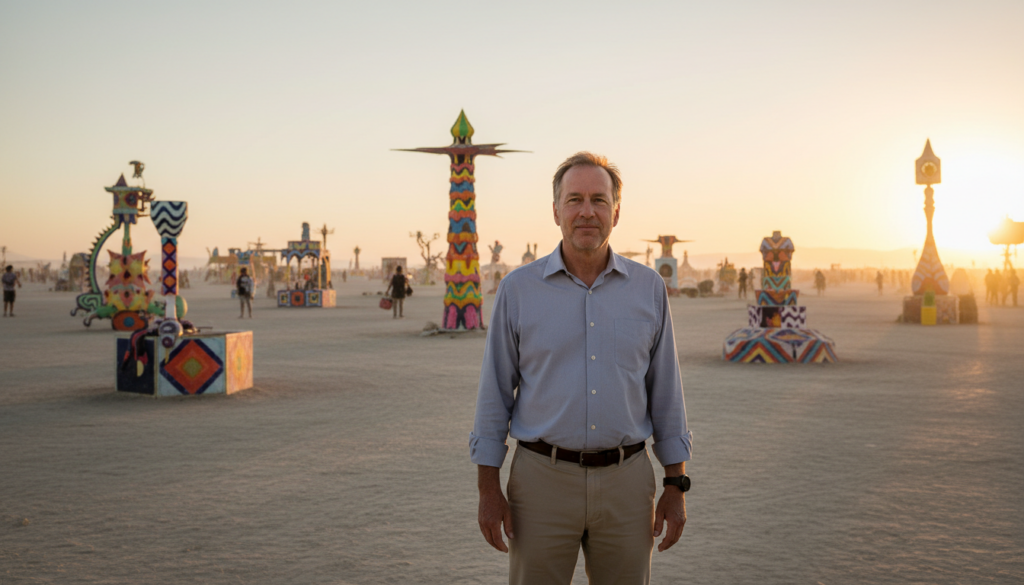
Larry Harvey and Jerry James built the first effigy on Baker Beach in 1986. Their wooden figure and simple ceremony set a concrete starting point for later growth.
The Cacophony Society and Zone Trips
The Cacophony Society brought playful counterculture tactics from San Francisco into the desert. Their organized “Zone Trips” pushed more participants toward large, creative gatherings.
The influence of Stalker and temporary spaces
The 1979 film Stalker inspired experiments in creating temporary autonomous zones. Artists used that idea to test new civic forms and social practices in public space.
Data matters: Zone Trip No. 4 in 1990 at the Black Rock Desert hosted the first desert effigy burn, a turning point that helped the event take rough shape.
- Founders provided the initial form; community provided scale.
- Cacophony tactics turned local ritual into regional culture.
- These early moves made the event a project participants created together.
How Burning Man Moved From Beach to Desert—and Why It Stayed
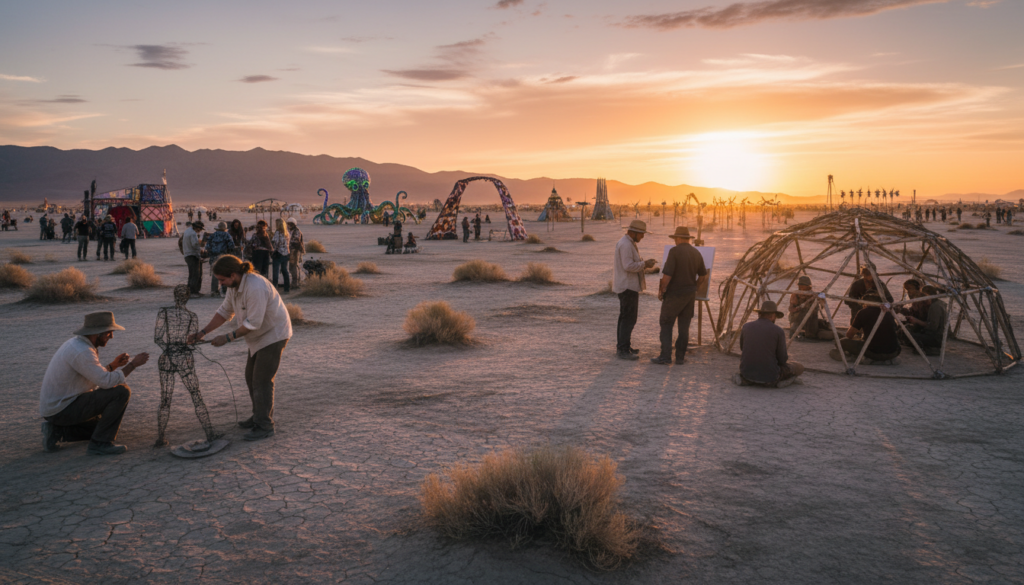
In 1990 the group tested Zone Trip No. 4 and found a new home on a wide playa. That experiment gave the project room to grow into a temporary city with large-scale art and safer logistics.
1990: a turning point on the playa
The Black Rock Desert offered open space where big installations could stand and camps could spread out. For many participants, that empty horizon changed how the event worked and how people interacted.
Permits, the BLM, and formal steps
By 1991 the Bureau of Land Management issued a legal permit, which marked the start of official oversight. Permits introduced obligations—safety plans, environmental rules, and more coordination with authorities.
Growth pressures and practical changes
As the event drew more participants over the years, organizers added structure: volunteer teams, medical services, and clearer rules. Tickets became necessary to manage capacity and cover infrastructure needs.
“Moving to the desert turned an ad-hoc ritual into a functioning, participant-built community.”
The place stayed because the playa shaped the experience. The wide, remote landscape became part of the identity of burning man and the city that grows there each summer.
What Happens at Burning Man Each Year
The annual theme is a creative prompt chosen by the Burning Man Project. Camps, artists, and volunteers interpret that idea in many ways. It nudges color palettes, installation concepts, and event programming without forcing costumes or strict rules.
Theme-driven creativity
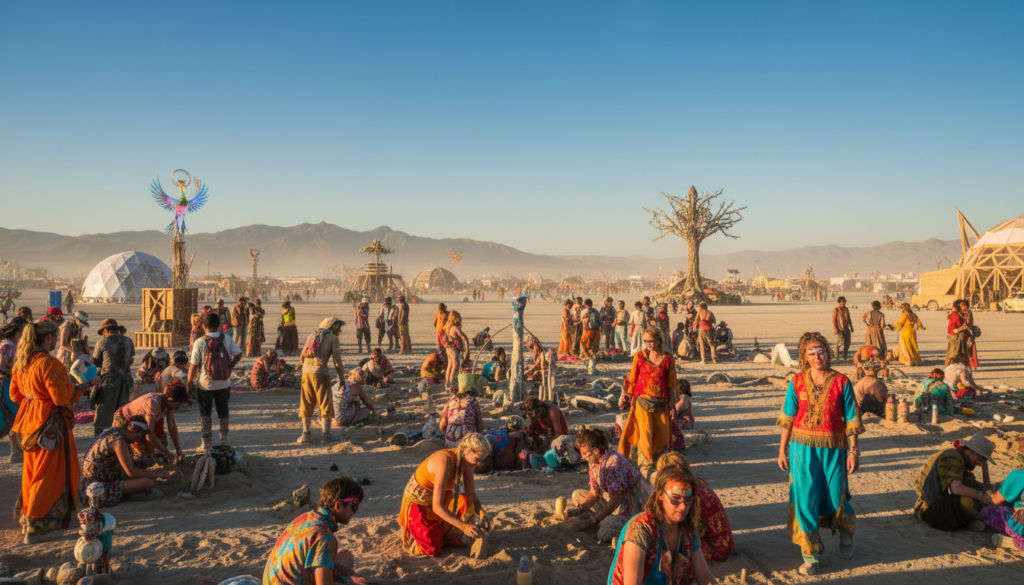
The theme influences large sculptures, small interactive pieces, and roaming art cars. Teams use the concept as a starting point for experiments and collaborations.
Art, performances, and interactive builds
You will find experimental sculptures, walk-through buildings, pop-up shows, and workshops. Theme camps host meals, panels, dance floors, and maker sessions.
The Man and the Temple as anchors
The iconic effigy burning marks a communal climax and spectacle. By contrast, the Temple offers a quiet place for reflection, remembrance, and personal ritual.
How theme camps shape the city
Theme camps act as neighborhood engines. Some run sound camps, others offer classes or art-making spaces. They turn the temporary city into dozens of lived micro-communities.
The overall experience is self-directed. There is too much to see, so participation and curiosity matter more than following any schedule. People arrive ready to contribute, not just consume, and that builds the event into a living, civic artwork.
The Ten Principles That Guide Burning Man Culture
A formal list of guiding ideas arrived in 2004 to describe a living culture rather than to govern it. Larry Harvey wrote the ten principles to capture common practice and help regional groups align, not to create hard rules.
Why they matter: the principles describe shared values that shape daily choices by participants and camps. They guide behavior without replacing laws, safety, or consent.
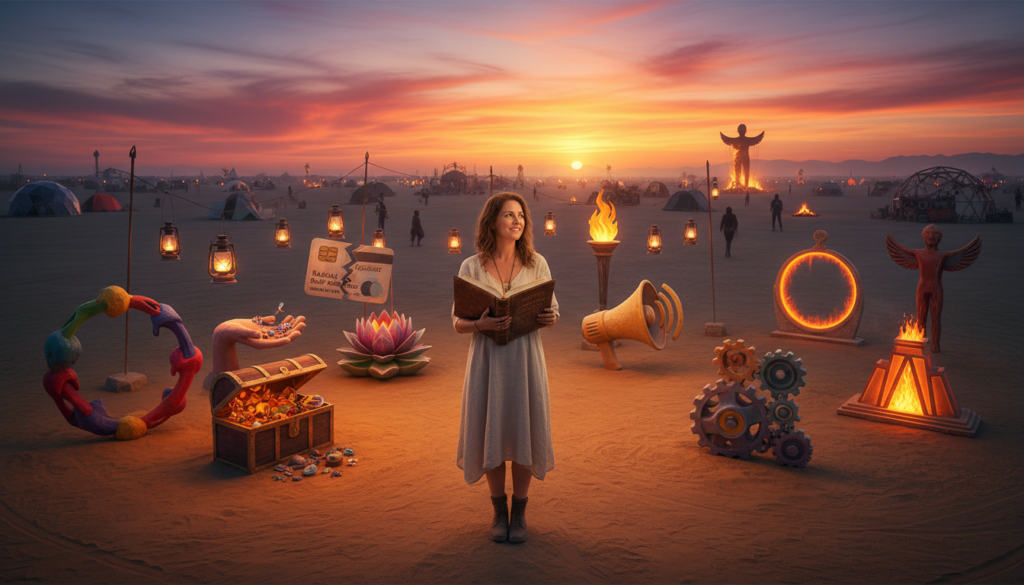
- Radical inclusion — welcome newcomers without judgment.
- Gifting — give freely; expect nothing in return.
- Decommodification — avoid ads and commercial exchange.
- Radical self-reliance — plan for your own needs.
- Radical self-expression — share your personal creativity safely.
- Communal effort — collaborate to build and maintain the space.
- Civic responsibility — follow safety and local laws.
- Leaving no trace — pack out what you bring.
- Participation — engage rather than just observe.
- Immediacy — value direct experience and presence.
Do-ocracy means if you want something done, you help do it. That mindset turns ideas into action: people staff projects, fix problems, and clean up afterward. These principles shape community life and influence small daily choices Burners make, from sharing water to hosting a workshop.
| Principle | Plain meaning | Everyday example |
|---|---|---|
| Gifting | Give without selling | Free coffee at a camp |
| Participation | Join in | Help build a shade structure |
| Leaving no trace | Leave the place clean | Pack out trash and recyclables |
Next: learn how gifting and decommodification shape a unique playa economy and practical ways that affects gear and supplies. For a related perspective on packing and comfort, see glamping packing tips.
Gifting and Decommodification: How the Playa Economy Works
The community economy here runs on thoughtful giving, not retail stalls. Decommodification aims to reduce transactional ties so people meet as neighbors rather than customers.
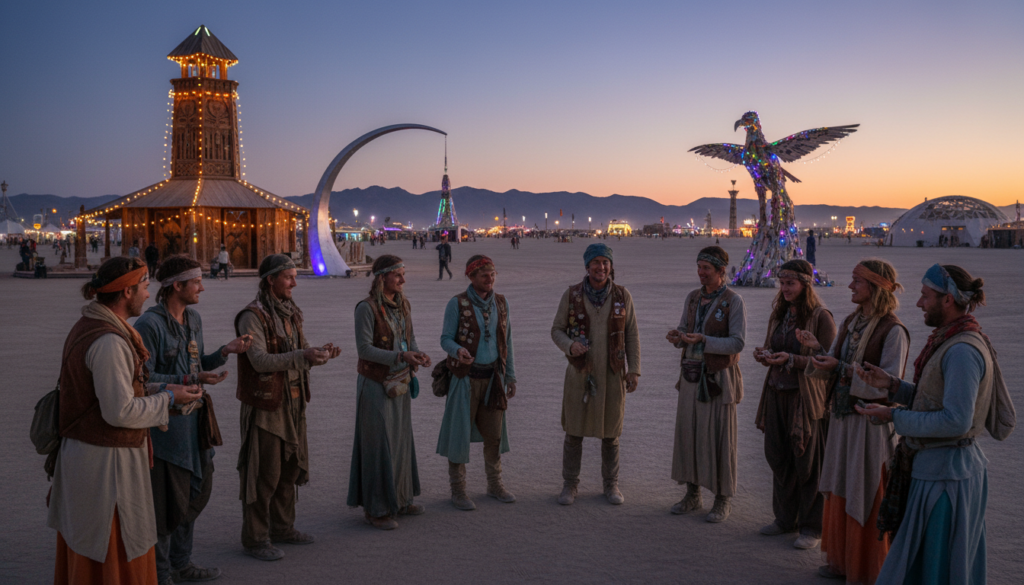
Why you don’t buy and sell in Black Rock City
In practice, sales are discouraged to keep personal exchange sincere. The rule helps preserve creativity and direct connection among people.
Common exceptions: coffee and ice
Practical services sometimes appear. Coffee and ice are typical exceptions, often sold by camps that need funds for operations. These sales are limited and context-driven.
What gifting looks like
Gifts range from a cold drink or fixing a bike to teaching a skill or hosting a full camp experience. A small handmade item or a short class counts as a meaningful gift.
“Mutual support makes this event work; gifts keep the community resilient.”
Gifts must be offered freely, without pressure, and without creating waste. That ethic shifts how people interact and helps the temporary city survive harsh conditions.
Art, Mutant Vehicles, and Theme Camps: The City’s Creative Engine
Sculpture, rolling creative rigs, and neighborhood camps power much of the city’s daily life.
Mutant vehicles and safe operation
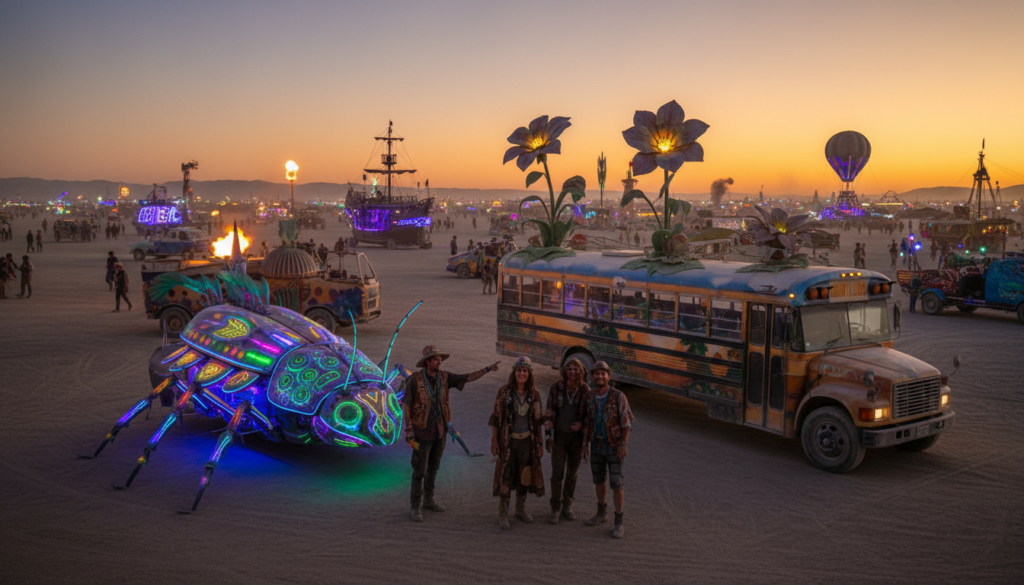
Mutant vehicles (also called art cars) are mobile artworks built to carry people around. They transform ordinary vehicles into moving sculptures.
These vehicles must pass safety checks. Rules cover lighting, secure seating, and driver limits to protect nighttime visibility and traffic flow.
Theme camps as neighborhood hubs
Theme camps act like blocks in a small town. Camps run shared kitchens, music spots, workshops, and free services offered as gifts to the wider city.
Many camps plan schedules and volunteer shifts. That organization turns dozens of camps into a functioning neighborhood network.
How large-scale art is made and managed
Big installations start off-playa with fundraising and build teams. On site, crews place, tune, and test interaction points for safety and access.
Some pieces are designed to be ephemeral and end in a controlled burn. Others remain as long-term public works carried off responsibly at the close.
Support: grants, honoraria, and participation
Burning Man Arts offers grants and Black Rock City honoraria to help artists finish ambitious projects. These funds prioritize participatory work, not commercial sale.
“Artists receive support so the city can host large, interactive work that invites people to join.”
| Element | Typical practice | Why it matters |
|---|---|---|
| Mutant vehicles | Registered, inspected, lit for night | Prevents accidents and keeps traffic flowing |
| Theme camps | Shared kitchens, workshops, performances | Creates neighborhood life and social services |
| Large art | Funded off-playa, installed on-site, sometimes burned | Fosters participation and dramatic public works |
| Support | Grants and honoraria | Helps artists realize interactive projects |
For a closer look at creative camping and comfort strategies, see this short guide on glamping ideas.
Rules, Infrastructure, and Why Burning Man Needs Them
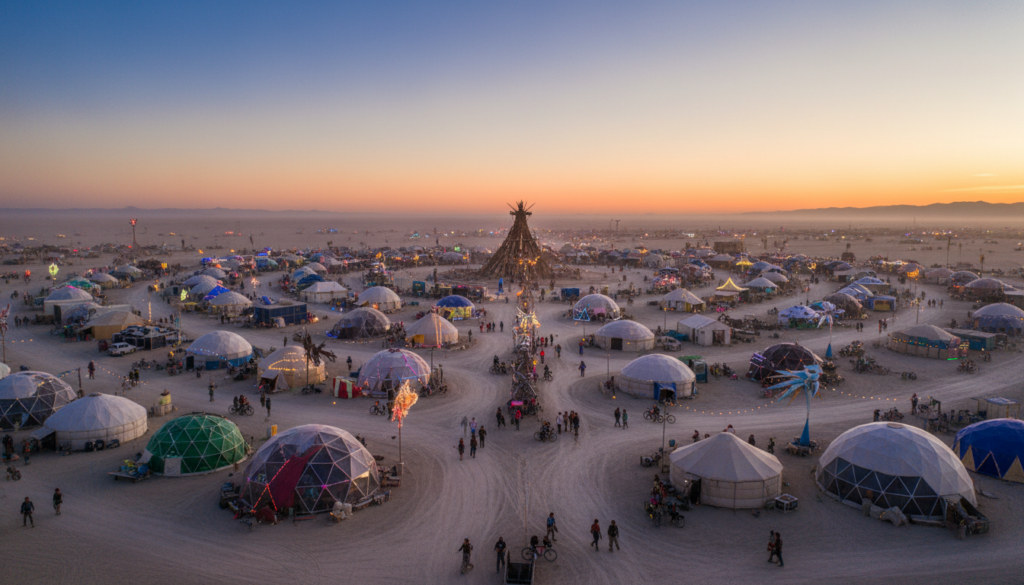
Practical systems—from a mapped grid to perimeter fencing—turn a creative gathering into a functioning city. These measures are about access, response, and shared responsibility.
Grid layout and emergency addresses
The street grid gives every camp a readable address. That layout is an emergency tool first: medics and safety teams find people fast when minutes matter in Black Rock City.
Speed, vehicles, and traffic limits
A 5 mph speed limit keeps streets safe for pedestrians and cyclists. Most personal driving is banned; only approved art vehicles and service rigs may operate after checks.
Trash fence, perimeter, and leaving no trace
A 9.2-mile temporary fence catches windblown debris and marks the event boundary. The barrier helps keep the playa clean and supports the operational meaning of leaving no trace.
Fire and safety basics
Art burns must use approved platforms and follow strict permits. Fireworks are banned. These rules reduce runaway hazards and protect crews, visitors, and installations.
Bottom line: rules and infrastructure exist so thousands can coexist safely, enjoy art, and leave the place as they found it.
Attendance, Timing, and Scale: How Big Is Burning Man Today?
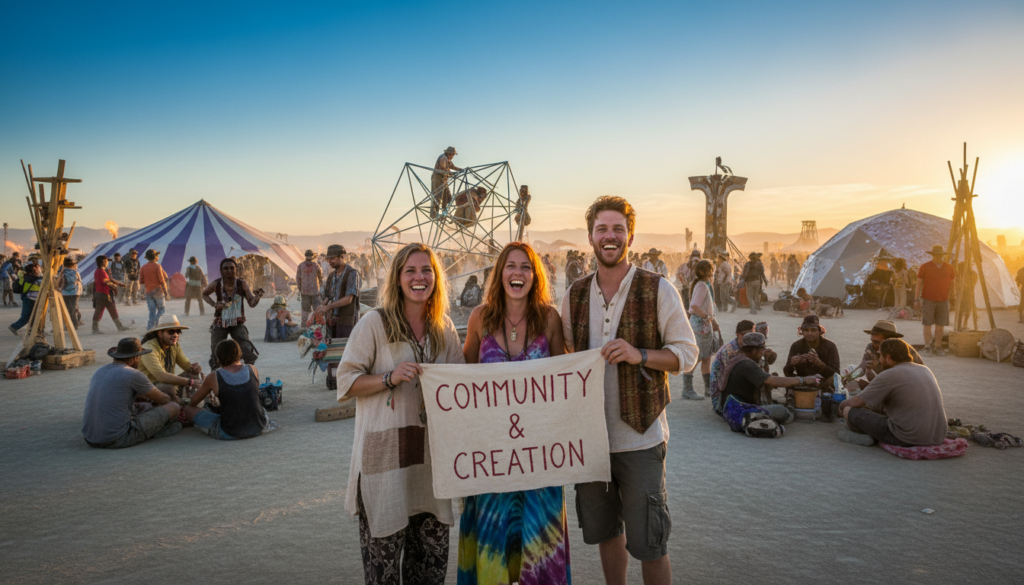
Each late-summer gathering follows a clear calendar. The event runs nine days ending on Labor Day. The signature effigy burn normally takes place the Saturday before that holiday.
Typical schedule: the late-summer run through Labor Day
Timing: The nine-day window gives people time to arrive, set up camps, share projects, and then clean up. Setup and teardown matter as much as the busiest days.
How tens of thousands of attendees build a functioning temporary city
Turning open playa into a working city takes planning. Layout planning creates a readable grid. Camp placement, art placement, and service hubs follow that plan.
- Neighborhoods form as camps set addresses and schedules.
- Volunteer teams run medical, safety, and sanitation.
- Art crews install pieces and coordinate permits.
Despite thousands of people, many attendees experience the week through small camp communities and repeated interactions. That keeps the event personal.
2019 participation as a reference point for modern scale
As a reference, official participation in 2019 reached 78,850. Numbers vary by year, and ticket systems reflect the reality of permits and operations.
For practical prep and related community projects, see this new homesteading guide.
Misconceptions vs. Reality: Party Myth, Media Spotlight, and Everyday Burners
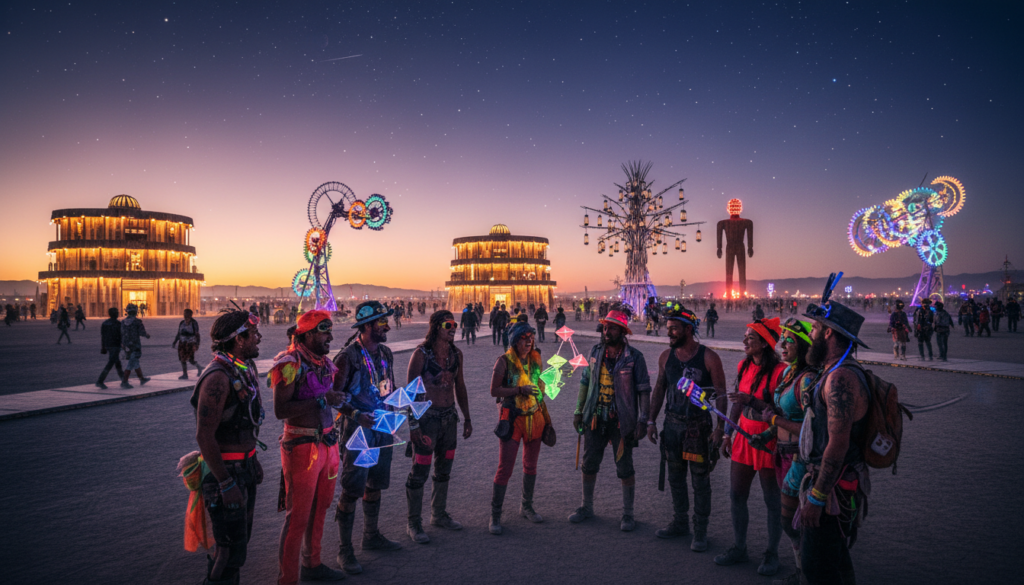
Headlines love dramatic moments, but everyday life at the event is quieter and more civic than many expect. Photos of late-night shows and large costumes travel fast. That makes an “anything goes” story stick in the public mind.
Why the sensational story spreads
Viral images focus on extremes because they grab attention. A single dramatic clip can eclipse months of camp planning and volunteer work. As a result, the world often sees spectacle instead of steady neighborly effort.
Influencers, celebrities, and tech culture
After 2019, media noted rising celebrity and influencer visits. Those appearances shape expectations for first-time attendees. Still, many camps remain practical, service-driven, and creative.
“A few high-profile stories don’t reflect the whole community.”
Laws, safety, and life in the Nevada desert
Reality check: local laws and safety rules apply in the nevada desert. Organizers enforce permits, speed limits, and fire rules. Consequences for violations are real and can affect public safety.
- Music and nightlife: present and lively, but not the event’s central structure.
- Everyday burners: volunteers, artists, and builders keep the culture grounded.
- Expectation tip: plan to participate, not just observe.
For practical prep and comfort ideas that match the community spirit, see these helpful glamping hacks.
Hard Years and Real-World Disruptions: Cancellations, Weather, and Change
Recent seasons showed how quickly plans can change when a major outdoor gathering meets real-world shocks. The last few years forced both organizers and attendees to rethink safety, logistics, and community response.
2020–2021 cancellations and unofficial gatherings
Official events were canceled in 2020 and 2021 due to the pandemic. That pause was a major turning point for the culture and the operational model.
Even so, people still came together. An estimated 20,000 attended an unofficial 2021 gathering, showing the strong impulse to meet despite canceled plans.
2023 flooding and the “wet playa” survival reality
Heavy rains in 2023 created a wet playa that stopped vehicle movement. Organizers issued guidance to conserve food, water, and fuel and to avoid driving until the surface dried.
For attendees, the practical lesson was clear: the desert can shift from passable to impassable in a short time, and preparation is not optional.
Dust storms, logistics, and financial pressure in the mid-2020s
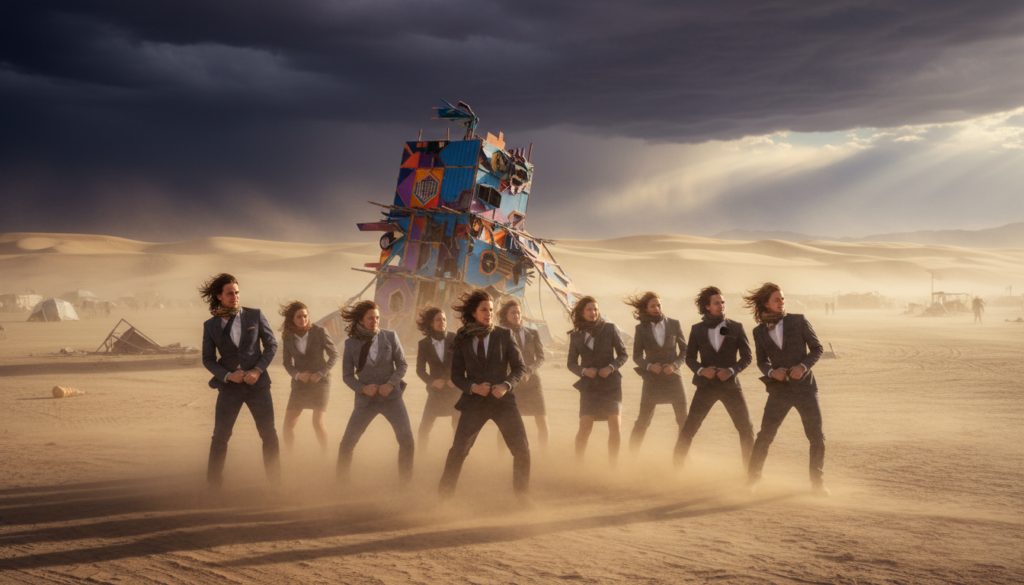
Recurring dust storms also challenge visibility, travel, and gear longevity. They add operational strain for crews and comfort issues for thousands of people on site.
At the same time, mid-2020s reports noted growing logistical and financial pressure on the organization that runs the event. Those pressures affect planning, permitting, and services that attendees rely on.
- Key takeaway: plan for fluctuation—bring extra supplies and expect delays.
- Preparation: waterproofing, spare filters, and conservative fuel planning help in unstable conditions.
- Community resilience: neighbors, theme camps, and volunteers often provide vital practical support.
For related prep and comfort tips on outdoor community gatherings, see a practical guide to glamping types and planning — glamping types.
Burning Man Beyond Black Rock City
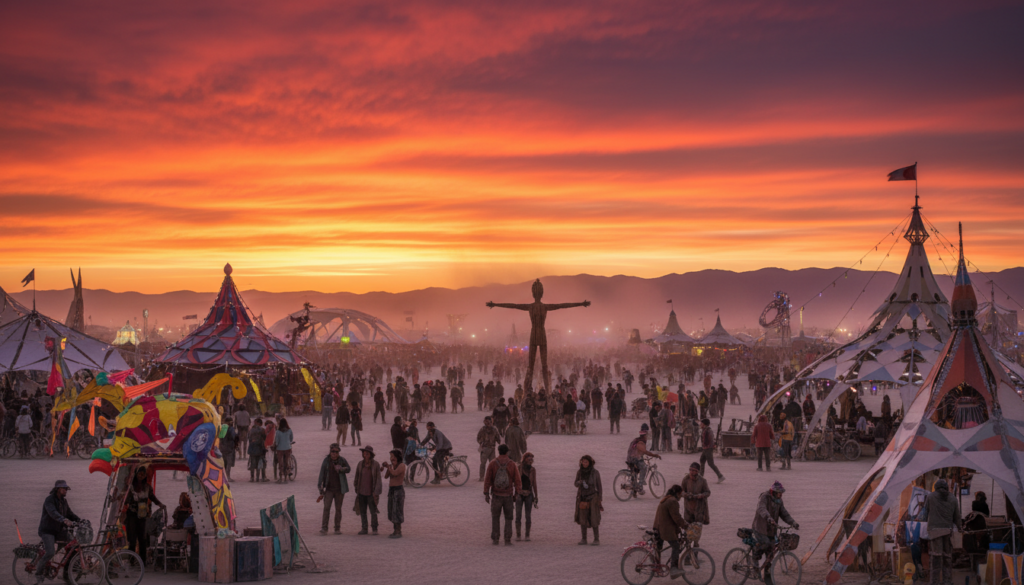
Regional gatherings translate playa values into backyard projects, city parks, and community halls. These smaller events are endorsed by the Burning Man Project and follow the same guiding principles.
Regional events and the wider community
Regionals are local, participant-run meetups across the United States and the world. They recreate core practices—gifting, decommodification, and civic effort—on a manageable scale.
How people bring participation, service, and creativity back home
Many people use skills learned on the playa to serve their neighborhoods. Volunteers organize mutual-aid drives, maker workshops, and public art in parks and plazas.
- Volunteering at local drives or shelters.
- Community art projects and pop-up workshops.
- Neighborhood repair clinics and skill shares.
This spread keeps the culture active year-round. You don’t have to travel to Nevada to join. Participation is the bridge between a week on the playa and everyday civic life. The broader message: the event grows into lasting community practice wherever people decide to build it.
Conclusion
This guide ends with a simple point: the event asks participants to trade a normal festival model for a short-lived, co-created city where community and contribution matter more than commerce.
From an 8‑foot ritual on Baker Beach (June 22, 1986) to a playa home in the Black Rock Desert since 1990, the arc shows creative scale and civic invention. Black Rock City hosts thousands each year (78,850 in 2019) and centers on shared art, theme camps, and two anchors: the Man burn and the Temple.
Plan ahead: learn the ten principles, consider regional events, and read official guidance before you go. For a related look at comfort and camp life, see beach glamping.
Coordinates: 40.7869°N, -119.2042°W — a remote place that proves how people can build a city for a short time and leave no trace.