

This short guide shows practical, no-gym methods that support real weight loss through small, lasting changes. It explains food choices, sleep habits, stress control, hydration, and tiny daily routines that cut calories and help your body shift over time.
Designed for busy schedules or limited mobility, the article promises simple methods that fit real life. You will learn realistic steps for calorie control, mindful eating, protein and fiber focus, alcohol and liquid choices, sleep hygiene, stress tools, and optional clinician-led strategies.
Note on safety: “Fast” does not mean extreme. Rapid loss may be risky with certain medical histories or medications. This guide favors steady results and respect for individual metabolism and health conditions.
The plan is present-focused and evidence-informed. With consistent changes over weeks, small habits usually drive lasting loss rather than one quick trick.
Key Takeaways
- Small habit shifts can lower daily calories and aid weight loss.
- Focus on protein, fiber, hydration, sleep, and stress management.
- Methods fit busy lives, limited mobility, or those who dislike exercise.
- Fast does not mean extreme; check health or medications first.
- Consistency over time yields the best, lasting results.
What “fast” weight loss really means without exercise
Many early wins on the scale come from fluid and glycogen changes rather than true fat loss. That matters because numbers can jump around day to day, and feelings of progress may not match changes in body composition.

Setting realistic expectations
Short-term drops often reflect water shifts and depleted glycogen. Fat reduction usually takes steady change over weeks and months.
A common clinical guideline suggests a safe range near 1–2 pounds per week for many adults. Faster loss can raise risks and may be unsustainable.
When rapid loss becomes a health risk
Watch for red flags: dizziness, fainting, severe fatigue, gallbladder pain, or disordered eating patterns. Seek medical advice if these appear.
- Scale weight vs. fat vs. waist: treat each as a different signal.
- “Without exercise” here means no formal workouts needed, but daily habits still alter calories and appetite.
- Sleep loss and chronic stress can change hunger hormones and make progress less predictable.
| Measure | What it shows | Typical time frame |
|---|---|---|
| Scale weight | Fluid, food, and glycogen swings | Hours–days |
| Body fat | True fat reduction with caloric deficit | Weeks–months |
| Waist changes | Fat loss and reduced bloating | Weeks |
“Expectations should be personal and guided by health, not social media timelines.”
How to lose weight fast without exercise by creating a calorie deficit
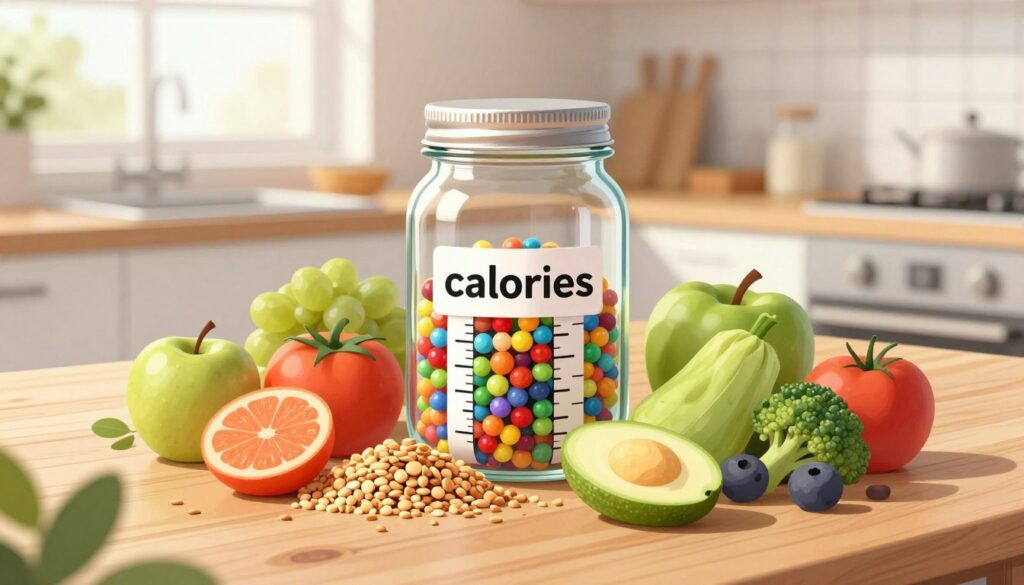
Creating a steady calorie gap is the clearest route toward lasting body changes. A calorie deficit means you eat fewer calories than your body uses. That simple idea still underpins most weight loss, even when metabolism and hormones differ among people.
Why calories matter despite metabolic differences
Metabolism, hormones, gut signals, and stress change appetite and hunger. Those factors shape how easy adherence feels. Still, the basic math remains: burn calories or eat fewer of them over time and fat loss follows.
Simple, non-restrictive ways to cut intake
Small swaps beat extreme diet rules for most people. Try slightly smaller portions, use smaller plates, and pre-portion snacks.
- Choose high-volume foods like broth-based soups, vegetables, and fruit for fullness.
- Prioritize protein and fiber to tame hunger without severe cuts.
Portion cues and environment shifts that help
Set up your kitchen so the easy choice is the healthier choice. Keep trigger food out of sight and put wholesome items at eye level. Plan grocery runs so weeknight decisions are simpler.
| Plate cue | Portion |
|---|---|
| Non-starchy vegetables | Half the plate |
| Protein | Palm-sized |
| Higher-fiber carbs | One fist |
| Healthy fat | Measured serving |
Pick one or two changes and stick with them. Small, steady changes help people keep results and avoid feeling deprived, so progress becomes lasting rather than short-lived.
Mindful eating habits that help you lose weight without workouts
Mindful eating can turn a hurried meal into a steady tool for better appetite control. It gives your brain time to register fullness and cuts back on automatic bites.

Eating slowly to support hunger and fullness hormones
Use the 20-minute rule. Research shows the brain often needs about 20 minutes to notice fullness. Slower eating links with lower BMI and smaller waists in a systematic review.
Practical steps: chew more, pause between bites, sip water, and aim for 15–20 minutes per meal.
Reducing distractions to prevent mindless overeating
Screens and multitasking raise mindless intake and make it harder to feel satiety. Try eating at a table and plating meals instead of snacking from a bag.
Cravings vs. true hunger and how to tell the difference
Use HALT: are you Hungry, Angry/anxious, Lonely, or Tired? This quick check helps separate urges from real hunger.
Be imperfect and kind to yourself: even a few mindful meals each week can support lasting weight loss and a healthier lifestyle.
snack ideas can make mindful choices easier when cravings strike.
Build meals around protein to stay full and protect lean mass
Centering meals on protein can improve satiety, raise thermogenesis, and help preserve lean mass during planned calorie reduction.
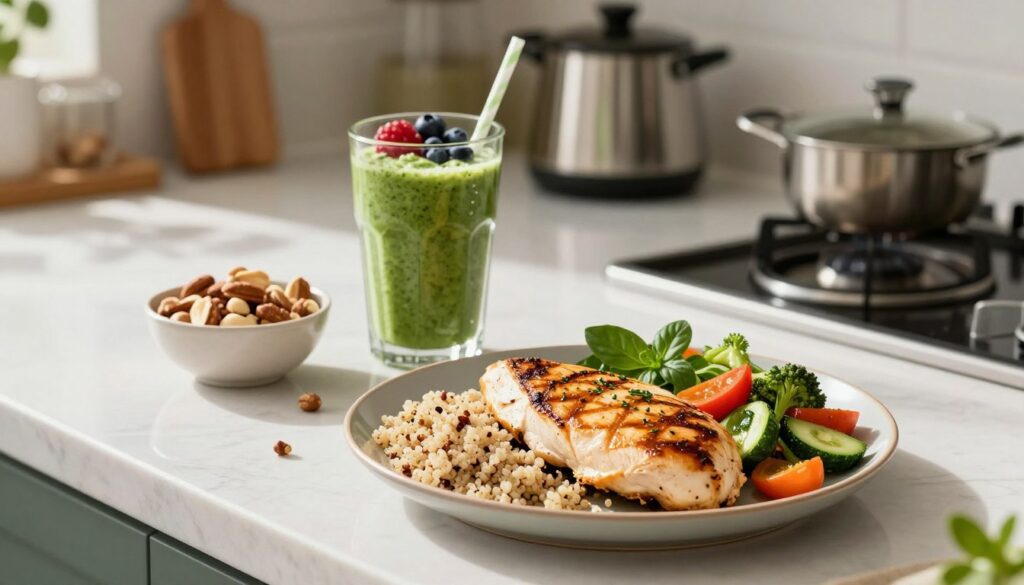
Evidence from nutrition research shows adequate protein supports loss without formal workouts by making meals more filling and by increasing energy used for digestion.
Why protein matters for fullness and metabolism
Protein slows hunger signals and sparks a modest rise in calories burned during digestion. It also signals the body to hold onto muscle rather than break it down when dietary intake falls.
Plant-based options with added blood and heart benefits
Swap some animal protein for beans, lentils, tofu, tempeh, or edamame. Studies in people with type 2 diabetes show these swaps can help blood glucose control and support heart health when replacing refined carbs.
Easy, budget-friendly meal ideas from common US groceries
- Greek yogurt + berries and a sprinkle of nuts.
- Egg scramble with spinach and salsa.
- Rotisserie chicken salad with bagged greens.
- Tuna packets or canned salmon on whole-grain toast.
- Turkey chili with canned beans or tofu stir-fry with frozen vegetables.
| Staple | Portion cue | Why it helps |
|---|---|---|
| Eggs | 1–2 per meal | High-quality protein, cheap and versatile |
| Canned beans | 1/2 cup | Fiber + protein; lowers calorie density |
| Greek yogurt / cottage cheese | 3/4 cup | Satiating dairy protein for snacks or meals |
| Frozen shrimp / tofu | Palm-sized portion | Quick protein for fast meals |
“Protein works best alongside vegetables, whole grains, and sensible fats — not as a solo trick.”
Prioritize fiber-rich, minimally processed foods for easier weight loss
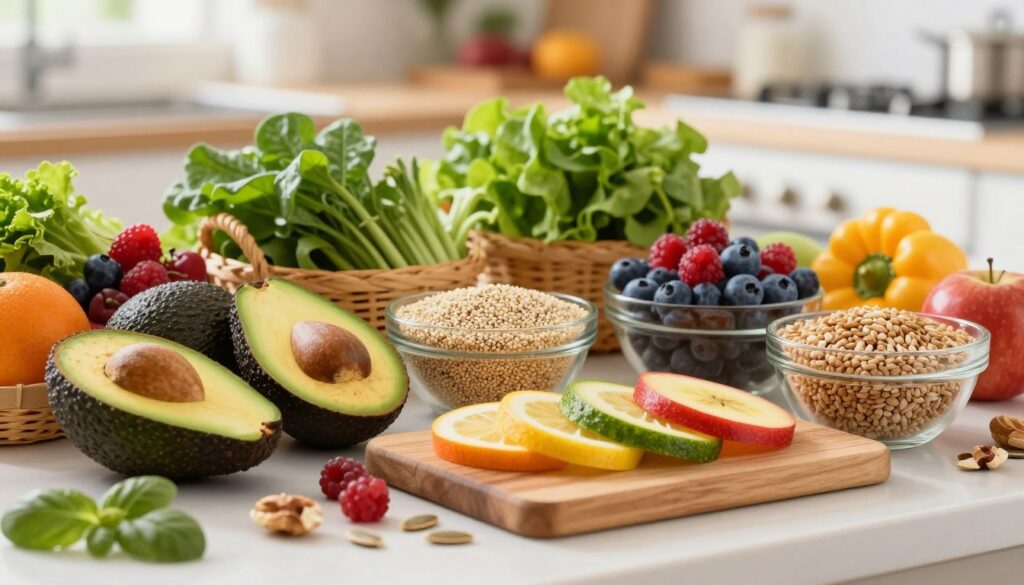
Choosing whole, fiber-rich foods makes daily eating more filling and simpler to sustain. These choices help you feel satisfied longer and make a calorie deficit easier without constant hunger.
Swapping refined carbs for vegetables, beans, and whole grains
Simple swaps work: trade white bread for whole grain, chips for air-popped popcorn, and sugary cereal for oats. Balance a smaller portion of refined pasta with a heap of vegetables and a scoop of beans.
Add before you subtract: serve a big salad or steamed vegetables first. People often eat fewer refined carbs naturally when their plate is already partly full of plants.
Healthy fats in sensible portions for lasting energy and fullness
Fats help meals feel satisfying and steady energy. But fats are calorie-dense, so portion control matters.
| Fat | Portion visual | Why it helps |
|---|---|---|
| Olive oil | Thumb-sized drizzle | Heart-healthy fat for flavor |
| Nuts | Small handful | Portable, filling snack |
| Avocado | Quarter fruit | Creamy texture, lasting fullness |
“Repeatable meals built around whole foods often move the scale more than perfect but unsustainable diets.”
- Fiber and whole foods aid fullness and steady energy.
- Swap refined items for vegetables, beans, and whole grains.
- Use clear portion visuals for fats to keep calories in check.
Cut liquid calories to accelerate weight loss results
Liquid calories often slip past awareness, yet they influence body fat and hunger. Sugary drinks — soda, sweet tea, specialty coffee drinks, many juice blends, and sports drinks — can add hundreds of calories in one sitting. That intake stacks up across a week and slows loss.

Why sugary beverages promote fat storage
When sugar is swallowed faster than the body needs for energy, the liver helps clear the excess. Some of that sugar can convert into stored fat through a process called lipogenesis. Regular high-sugar drinks raise total calorie load and nudge metabolism toward fat storage.
Better swaps that still feel satisfying
Swap ladder: start by halving sweeteners, then shift to unsweetened choices. Try sparkling water, iced herbal tea, or black coffee with a splash of milk. These changes cut calories while keeping flavors you enjoy.
Simple hydration routine and a thirst test
Drink one glass of water on waking, one mid-morning, one mid-afternoon, and have water with meals. If a craving hits between meals, drink a glass and wait 10 minutes. Thirst often mimics hunger.
- Common culprits: soda, sweet tea, specialty lattes, juice blends, sports drinks.
- Swaps: flavored water (lemon, mint, cucumber), iced herbal tea, plain coffee.
- Note: some herbal teas interact with medications — check with your clinician.
| Choice | Typical calories | Better option |
|---|---|---|
| 12 oz soda | 140–160 kcal | Sparkling water with lemon |
| 16 oz sweetened coffee drink | 250–400 kcal | Black coffee or coffee with splash of milk |
| 12 oz fruit juice | 120–180 kcal | Iced herbal tea or diluted juice (half water) |
“Small swaps in drinks can cut daily calories more easily than changing whole meals.”
Reduce alcohol to support fat loss, sleep quality, and blood sugar
A single drink can add hundreds of hidden calories and quietly stall progress. Alcohol is calorie-dense and the body prioritizes clearing alcohol over burning stored fat. That shift lowers the rate your body can burn calories and can nudge food choices toward higher-calorie options.

Why alcohol makes progress harder
Alcohol raises total calories quickly and loosens inhibition, making late-night snacking more likely. While the liver metabolizes alcohol, fat oxidation falls, so less stored fat gets used for energy.
Low-effort strategies that keep social life intact
- Set a drink limit before you go out and stick with it.
- Choose light beers, wine spritzers, or drinks with no sugary mixers.
- Alternate each alcoholic drink with a glass of water or seltzer.
- Make weeknights alcohol-free defaults: seltzer + lime, zero-proof beer, or simple mocktails without syrup.
Track drinks like any habit—counting them without judgment often reduces intake. Awareness alone can create meaningful change in a short time.
“Small reductions in drinking often improve sleep and lower cravings the next day.”
Safety note: Alcohol interacts with many medications and some medical conditions. If you have health concerns, check with your clinician before changing drinking patterns.
Improve sleep to support appetite control and healthier food choices
Improving sleep often has a ripple effect: calmer appetite, clearer food choices, and steadier energy during the day. Aim for 7–9 hours per night and try to keep bedtime and wake time consistent most days.

How short sleep changes hunger and cravings
Inadequate sleep disrupts appetite hormones like ghrelin and leptin. When nights are short or fragmented, cravings for sugary and fast foods rise and diet quality often falls.
That makes calorie control harder and can slow progress in any planned loss effort.
Sleep routine upgrades: schedule, screens, and caffeine timing
Set a regular sleep/wake schedule; regular timing matters nearly as much as total hours. Power down screens about an hour before bed and keep the phone across the room.
Make the bedroom cool, dark, and quiet—blackout curtains and white noise machines are low-cost fixes that help most people.
Avoid late coffee or caffeinated drinks. Caffeine can have a long half-life in some people and an afternoon cup may still affect bedtime.
Diet patterns linked with better sleep quality
A large review found better sleep in people eating more plant foods, whole grains, legumes, and healthy fats like olive oil and seafood.
Minimize sugary, highly processed items at evening meals. Choose a lighter dinner, limit alcohol near bedtime, and include a simple wind-down: reading, gentle stretching, or a warm shower.
- Quick sleep targets: 7–9 hours nightly; consistent timing.
- Bedroom tips: cool temp, blackout curtains, white noise, phone out of reach.
- Evening habits: lighter meal, limit drinks, 1-hour screen curfew, calming routine.
“Small sleep gains often make daily food choices easier and support long-term health.”
For bedroom ideas that blend calm and style, see zen bedroom design for practical inspiration that supports better rest.
Manage stress to lower cortisol-driven overeating and belly fat storage
Stress rewires appetite and can nudge the body toward holding more belly fat. Cortisol, a core stress hormone, raises cravings and can shift metabolism so more energy stores near the belly. That pattern makes steady weight loss harder over time.

Stress, sleep, and food form a loop: poor rest raises hunger, higher cravings worsen choices, and those choices then make sleep and mood worse. Breaking the loop helps both health and progress.
Simple stress tools that fit any day
Try 60-second box breathing: inhale 4, hold 4, exhale 4, hold 4. Use a five-minute guided meditation before bed or after work.
A short walk after meals or gentle yoga can calm nerves and lower cortisol without formal workouts. Keep high-protein snacks handy and a plain dinner fallback for busy nights.
| Tool | Duration | Effect |
|---|---|---|
| Box breathing | 1 minute | Quick calm, lowers immediate stress |
| Guided meditation | 5 minutes | Improves mood and sleep readiness |
| Post-meal walk | 10–15 minutes | Reduces cravings and aids digestion |
| Screen curfew | 30–60 minutes before bed | Better sleep and clearer food choices |
Measure success by consistency, not perfection. Small, repeatable ways of managing stress multiply gains across diet, sleep, and activity. If anxiety or depression persists, seek professional support as part of a complete plan.
For simple home ideas that support calm and better rest, see zen house tips.
“Reducing stress often unlocks steady progress across other healthy habits.”
Optional strategies to discuss with a clinician
If steady habits stall, there are clinical options and targeted dietary paths worth discussing with a clinician. This section is optional and individualized — it should inform a conversation, not replace medical advice.

Intermittent fasting, ketogenic approaches, and calorie tracking
Intermittent fasting may help some people reduce overall intake and improve metabolic markers, but it can cause dizziness, low energy, or disrupted sleep for others.
Structured personalities or stable schedules often find time-restricted eating easier to follow. Those with a history of disordered eating, pregnancy, or certain medical conditions should be cautious.
Keto and low-carb diets can reduce cravings by lowering carbohydrate intake, yet high fat can still overshoot calories and affect metabolism if not planned.
Calorie tracking (CICO) helps many people spot trends, though it does not capture hormonal or microbiome nuances in the data.
Prescription medication options: benefits, costs, and side effects
Medications such as GLP-1 receptor agonists (semaglutide, liraglutide, tirzepatide) and Contrave (bupropion + naltrexone) aim to reduce appetite and slow gastric emptying.
Benefits include meaningful appetite control and often marked early loss. Drawbacks include cost, access, and side effects like nausea or GI upset.
“Medications are tools best used with clinical oversight and realistic expectations.”
Micronutrients, supplements, and IV hydration
“Nutrition insurance” matters: even with appetite changes, prioritize protein, fiber, and vitamin-rich foods to avoid deficiencies.
- Magnesium: legumes, whole grains, leafy greens.
- Zinc: shellfish, meat, pumpkin seeds.
- B vitamins: meats, beans, fortified cereals, greens.
- Vitamin C: bell peppers, citrus, strawberries.
IV therapy and hydration infusions can help in specific type cases like malabsorption or acute dehydration. They require qualified providers and safety screening for contraindications.
| Option | Who it may suit | Key considerations |
|---|---|---|
| Intermittent fasting | Structured schedules | Can aid appetite control; discuss side effects |
| Keto / low-carb diets | Those limiting carbs | May reduce cravings; monitor fats and calories |
| GLP-1s / Contrave | Clinically appropriate candidates | Effective appetite reduction; cost and side effects matter |
| IV hydration | Dehydration or malabsorption | Medical oversight required |
Bottom line: these options can offer benefits, but they are best considered with a clinician. Bring your goals, medical history, and current medications to that discussion so decisions rest on data and safety, not trends.
A simple, no-exercise weight loss plan you can start today
Use a clear daily framework so small changes stack into steady progress. Start with a seven-day routine that focuses on meals, drinks, sleep, and stress. The plan repeats easy habits each day so you can build confidence over time.

Day-by-day starter structure
Daily basics: protein at every meal, a fiber-rich side, no sugary drinks, and snacks only if truly hungry.
- Day 1–7: Breakfast with protein (eggs or Greek yogurt), lunch and dinner with a palm-sized protein and half the plate vegetables.
- Drink plan: water as your default, black coffee or unsweetened options, and herbal tea in the evening. Check medication interactions if needed.
- Social tip: alternate any alcoholic drink with a glass of water and set a limit before you begin.
Sleep and stress habits
Sleep plan: aim for 7–9 hours nightly, pick a fixed bedtime and wake time, and power down screens 60 minutes before bed. Set a personal caffeine cutoff based on sensitivity.
Stress plan: five minutes of breathing or a short guided meditation daily and a gentle 10-minute walk after at least one meal. These are calming, not a formal workout requirement.
Tracking progress beyond the scale
Record simple markers each day: waist measurement once weekly, daily hunger rating, and notes on energy and eating quality.
| Measure | Frequency | Why it matters |
|---|---|---|
| Waist | Weekly | Tracks changes not shown by the scale |
| Hunger rating (1–5) | Daily | Shows appetite control and meal timing |
| Energy note | Daily | Reflects sleep and food quality |
Consistency beats intensity. Small, repeatable ways of eating and resting usually create the fastest, lasting loss over time.
For practical home routines that save time and support habits, check simple home habit tips like this guide.
Conclusion
Practical daily moves—what you eat, sleep, and sip—stack into measurable progress over time. A manageable calorie gap, mindful eating, protein-focused meals, more fiber-rich foods, and fewer liquid calories form the core ways that support weight loss and lasting change.
Sleep, stress, and alcohol strongly influence hunger, cravings, and follow-through. Improving rest and calming stress often makes healthy food choices easier and helps your body use calories more predictably.
Start by picking two habits you can keep: a protein-rich breakfast and no sugary drinks are a good pair. For recipe ideas that make swaps simple, try these comfort food recipes.
Follow the day-by-day plan for one week, then reassess waist, energy, hunger, and consistency rather than obsessing over scale swings. Simple methods, done consistently, move you toward a healthier weight and better body health over time.